Manual vs Automatic Watches: Which One Truly Connects You to Time?
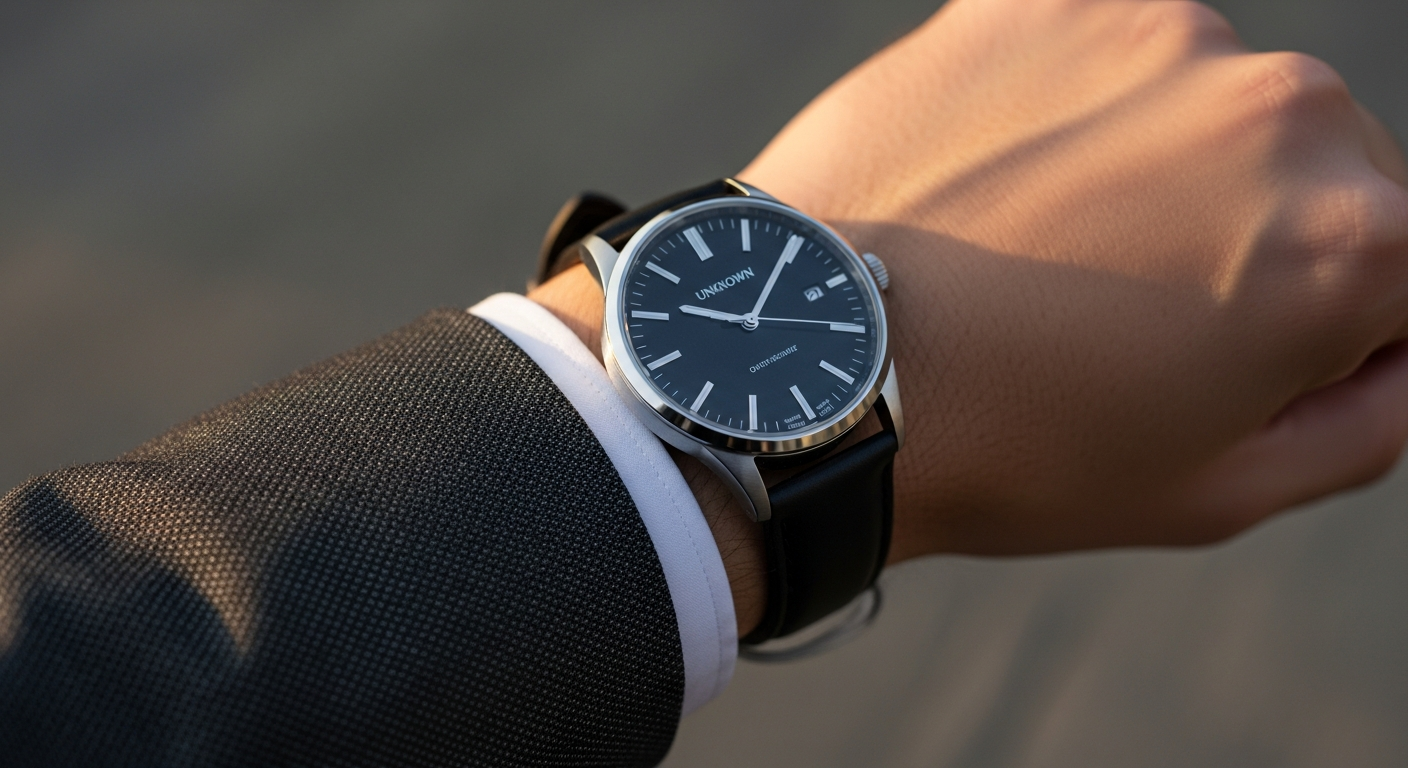
The first time I felt a watch truly speak back to me, it wasn’t through a screen lighting up with notifications, or a vibrating reminder that the day had moved on without my permission. It was late, the room quiet in that particular way nights get when you’ve finished what you were supposed to do but still can’t quite let the day go. A friend had placed a small mechanical watch in my palm as if it were a secret. It looked modest—steel case, plain dial, a thin leather strap—but when I held it close, I heard something alive in it: a faint, persistent ticking, not loud enough to announce itself, just steady enough to insist it was there.
I remember turning it over, searching for a switch, a port, a clue that would tell me how it wanted to be treated. “Wind it,” my friend said, like it was the most natural instruction in the world. So I did. I pinched the crown between my fingers, and with each turn there was a gentle resistance, a soft mechanical insistence that changed ever so slightly as the spring tightened. It wasn’t difficult, but it demanded attention. It wasn’t an action I could do while thinking about something else. And when I put it on my wrist afterward, it felt less like I was wearing time and more like I was participating in it.
That memory sits at the center of the debate that watch people love to perform for anyone willing to listen: manual versus automatic. Which one is better? Which is more authentic? Which connects you to time? The arguments can become technical quickly—power reserves and beat rates, service intervals and rotor efficiency—but underneath all that, the question is quietly human. When you choose a watch, you aren’t only choosing how it measures hours. You’re choosing how you want to feel the hours passing.
A manual watch is honest about its dependency. It will not pretend to be self-sufficient. It will stop if you ignore it. It asks for a daily ritual, a little devotion, a moment in which you acknowledge that time is not merely happening to you; you are choosing to set yourself inside it. There’s a kind of dignity in that bargain. The watch offers precision constructed from tiny parts—gears, levers, jewels, a balanced wheel swinging back and forth like a breath—and in exchange you offer it a few turns of the crown, a tiny recharge of potential energy. It’s a partnership you can feel in your fingertips.
An automatic watch, on the other hand, is the smoother talker. It will keep going as long as you keep going. It harvests your motion the way a sail catches wind. A rotor swings inside the case, a weighted half-moon turning with each step, each gesture, each shift in posture—small human movements translated into mechanical continuity. To wear an automatic is to be reminded that you are not separate from your timekeeping. Your life powers it. In a modern world obsessed with frictionless convenience, it’s easy to reduce that to “no winding required,” but that misses the point. The automatic doesn’t eliminate the relationship; it relocates it. It connects you to time through your body rather than through your hands.
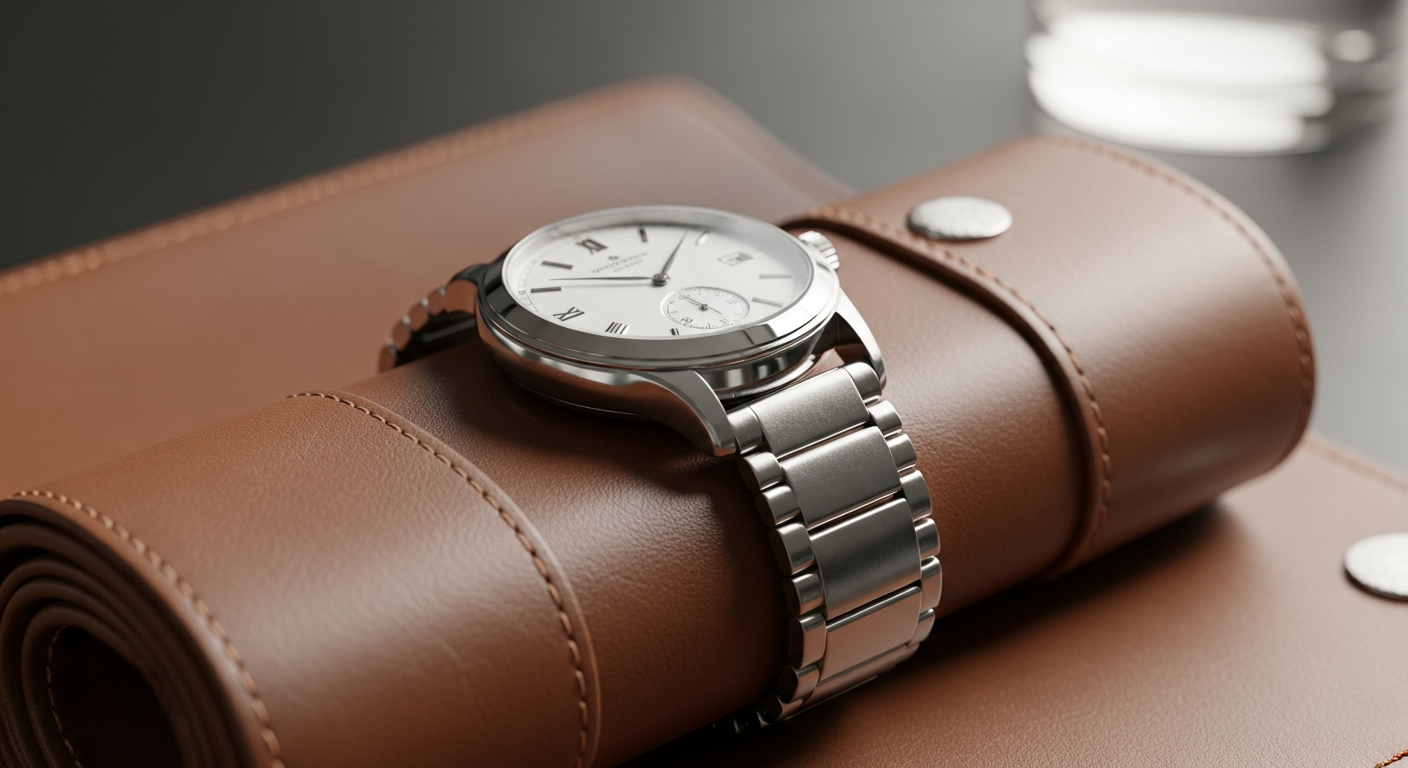
There’s a temptation to treat these two types of watches as rival philosophies: the manual as the romantic artisan, the automatic as the practical partner. But the truth is more nuanced, because what we call “connection” changes depending on what we’re trying to protect ourselves from. For some, the connection they want is the reminder that time is fragile. For others, it’s the comfort that time can be steady even when life isn’t.
Consider the act of winding a manual watch. It’s minor, almost absurdly so compared to the complexity of the machine itself. Yet it carries a weight that’s hard to explain until you’ve done it consistently. The click of the crown unscrewing, the subtle rasp as it turns, the increasing firmness that tells you the mainspring is reaching full tension—these are sensations that don’t exist in the digital world. They have texture. They have consequences. Over-wind anxiety is mostly a myth in modern movements with slipping bridle systems or robust designs, but the feeling remains: you are touching something that matters. It makes you careful. It makes you present.
And presence is scarce.
We live in a time when the measurement of time has never been more accurate, and yet our experience of time has never felt more scattered. A phone will tell you the exact second. It will adjust itself invisibly for time zones and daylight savings. It will nudge you when you’re late, when you’ve been sitting too long, when you haven’t answered a message. It doesn’t simply measure time; it manages it, and in doing so it can make time feel like an external force pressing on your ribcage. In that context, a manual watch is an act of defiance that doesn’t need to announce itself. It says: I will keep time the old way, imperfectly perhaps, but on my terms. I will engage with it. I will touch it.
But then again, there are days when you don’t want time to demand anything from you. There are mornings when the last thing you need is another obligation, even a poetic one. In those moments, an automatic watch can feel more humane. You put it on, and it’s already there with you, quietly doing its job. It doesn’t punish you for forgetting. It doesn’t turn your absence into its silence. It simply keeps up, as if saying: move through your day; I’ll be here.
The connection with an automatic is subtler but no less real. You notice it when you take it off at night and feel the weight settle, as if it has been working. You notice it when you set it on a table and hear the faint tick continue, like a small animal breathing in sleep. You notice it when you’ve been sick or sedentary and it begins to die, not out of spite but because it has been starved of your motion. It reminds you, gently, that time is intertwined with how you live.
If you want to get literal about “connection,” manual watches often win the argument because the interaction is explicit. You must wind it. You must set it. You will likely notice if it gains or loses a few seconds a day, and you will learn its personality the way you learn a friend’s habits. Some run fast when worn crown-up overnight. Some prefer to be left dial-up. The watch becomes not a tool but a companion with quirks, and you become the kind of person who knows those quirks. That knowledge, earned through attention, feels like intimacy.
Yet an automatic watch holds a different intimacy: it is intimate by default. It is intimate because it shares your movement. Every time you reach for a door handle, pick up a cup, gesture mid-conversation, the rotor arcs and returns, converting your life into stored energy. That’s not just convenience; it’s symbolism. It is time literally powered by living. You may never wind it, but you are still giving it something.
Of course, neither is pure. Even manual watches can be worn absent-mindedly; the winding can become automatic in the psychological sense, a habit you do without thinking. And automatics sometimes demand intervention—after a couple of days off the wrist, you’ll set them again, maybe give them a few crown turns to start them (many are designed to accept this) or swirl them gently to wake the rotor. The line between the two types isn’t a wall. It’s more like a spectrum of how much the watch asks you to consciously participate.
What complicates the question further is that “time” itself can mean two different things. There’s the objective time measured by astronomy and atomic clocks, indifferent to your feelings. And there’s the subjective time you experience—time that races when you’re in love, drags when you’re waiting for news, fractures when you’re multitasking, expands when you’re walking without a destination. A watch can’t change the first kind. But it can absolutely shape the second. The kind of connection you’re looking for might be less about the mechanism and more about the mood it creates.
A manual watch tends to pull you toward deliberate time. It invites small ceremonies. You wake up and wind it; you set it before a meeting; you take it off and place it somewhere safe at night. Those gestures add punctuation to the day. They make the day feel composed rather than simply endured. If you have ever craved structure without wanting your calendar to bully you, you understand why that matters.
An automatic watch tends to align with seamless time. It’s less about ceremonies and more about continuity. It’s the watch you can wear through travel, through errands, through the kind of days that don’t deserve a ritual but still deserve to be lived. It gives you one less thing to keep track of, and in a life full of things to keep track of, that relief can be its own form of connection. Sometimes feeling connected to time means not wrestling it, but letting it flow.
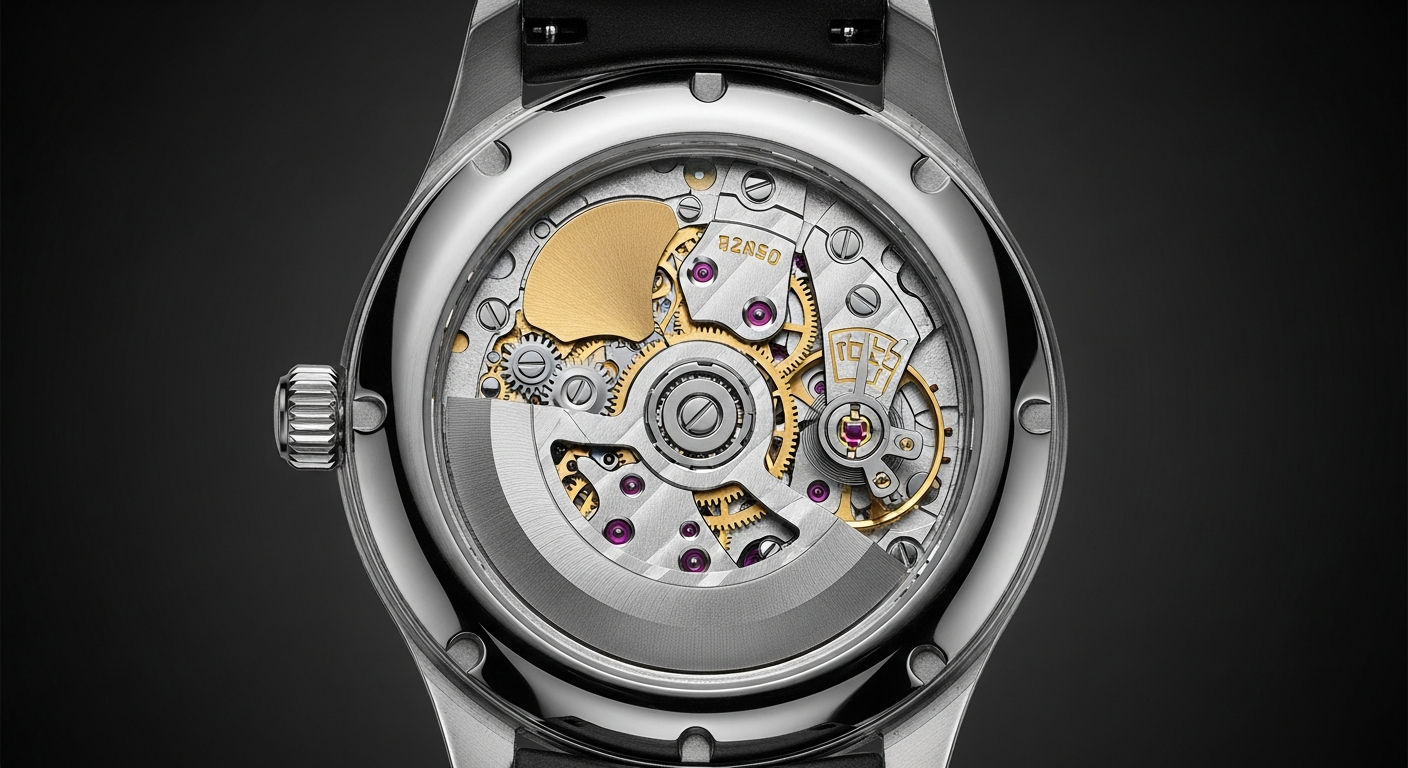
Then there’s the matter of the machines themselves, because part of what people mean when they talk about connection isn’t metaphysical at all. It’s mechanical admiration. A manual movement often has a certain beauty that automatics partially hide: without a rotor covering the view, the architecture is more exposed. Bridges, gears, the ratchet wheel, the click, the balance—if the caseback is transparent, a manual watch can feel like watching a tiny city at work. This visibility reinforces the sense of intimacy. You wind it, you watch it respond.
Automatics can be mesmerizing in a different way. The rotor sweeping, sometimes decorated, sometimes skeletonized, sometimes spinning freely when you flick your wrist—it’s kinetic theater. You don’t just see the mechanism; you see your influence on it. You move, it moves. You stop, it calms. For many wearers, that’s the hook: not the still-life perfection of a manual movement, but the dance.
Practicality, too, has a way of sneaking into the philosophy. Manual watches are often thinner, because they don’t need the extra space for a rotor and winding module. Thinness changes everything about how a watch feels. It slides under a cuff. It disappears on the wrist. It becomes less of an object and more of a presence. That physical subtlety can amplify the sense of connection; it feels like time is resting directly against your skin rather than strapped on top of you.
Automatics, being slightly thicker on average, can feel sturdier, more substantial, like a small engine. That can also create a connection, especially for those who like to feel the weight of what they’re wearing. There’s comfort in heft. There’s reassurance in the sense that something solid is accompanying you.
And yet, it’s not as if one is categorically more reliable or accurate for daily life. Both can be excellent. Both can be temperamental if neglected. Both will eventually need service if you want them to last decades. In truth, the best watch in either category is the one made well, cared for well, and chosen with honesty about who you are.
That honesty can be surprisingly difficult. People often buy a manual watch imagining they will become more mindful, more ritualistic, more anchored. They picture themselves winding it at the same time each morning, perhaps with coffee, perhaps with sunlight on the kitchen counter, as if they are starring in a calmer version of their own life. Sometimes that fantasy becomes reality. Sometimes it doesn’t. Sometimes the watch stops at inconvenient moments and you realize your life doesn’t have the patience for daily maintenance right now. That isn’t failure; it’s information.
People also buy automatics assuming they will be “set and forget,” only to discover that their routines don’t provide enough movement, or that they rotate through watches and leave each one sitting too long, or that they’re annoyed by having to reset the date after a weekend off. Again, not failure—just feedback. Connection is not what the watch promises. It’s what your life allows.
I think about this whenever someone asks which one truly connects you to time, because the word “truly” implies there is a correct answer, as if connection were a measurable property like water resistance. But connection is emotional. It’s personal. It’s contextual. A manual watch might connect you to time through agency: you make it run. An automatic might connect you through embodiment: you keep it alive by living. They are two different metaphors, and the better one depends on what you need time to be.
If you’re the sort of person who wants to feel the day beginning with intention, who craves a small act that separates sleep from waking, then a manual watch can become a daily handshake with time. It provides a moment of quiet control. It says: before I let the world have me, I will touch something simple and precise and human-made, and I will set my own starting point. For many, that is the deepest connection a watch can offer.
If you’re the sort of person who wants time to feel like a companion rather than a taskmaster, who wants to move through the day without adding another responsibility, then an automatic might be the more honest choice. Its connection is less about commanding time and more about joining it. It says: I am in motion, and time is in motion with me. That, too, can be profound.
There’s also a quieter third answer that watch enthusiasts sometimes resist because it sounds like a compromise, but in practice it’s often the most truthful: the watch that connects you to time is the one you actually wear. The one that becomes part of your life rather than a performance of it. A manual watch sitting in a drawer, lovingly admired but rarely wound, is not connecting you to anything but guilt. An automatic watch on a winder, spinning endlessly while you wear a smartwatch, is not companionship; it’s choreography.
Connection happens in the ordinary moments. When you glance down in a meeting and realize the hands have slid farther than you expected. When you check the time while waiting for someone and feel the second hand, if you have one, chopping the air into equal slices. When you notice, absent-mindedly, the watch against your wrist and remember that time is not a concept but a sequence of physical events: a balance wheel oscillating, a gear train turning, friction managed, energy spent.
That’s the strange gift mechanical watches still offer in a world that no longer needs them. They transform time from a number into a phenomenon. They make it audible, visible, tangible. Manual watches do it with explicit participation. Automatic watches do it with continuous reciprocity. Both can pull you out of abstraction and return you to something real.
So which one truly connects you to time? The answer is less a verdict than a mirror. If you want to feel time as something you tend, choose manual. If you want to feel time as something that travels with you, choose automatic. And if you can’t decide, pay attention to the moments in your day when you most need a relationship with time at all. Is it when you’re beginning? When you’re moving? When you’re trying to be present? The right mechanism is the one that meets you there, not in an argument, but in the quiet tick you only hear when the rest of life finally hushes.
In that hush, the difference becomes clear. The manual watch asks you, gently, to show up for time. The automatic watch reminds you that you already are. And perhaps the truest connection isn’t choosing one over the other, but recognizing the shared insistence behind both: time is alive around you, and if you let it, it can become something you don’t just track, but feel.