Omega in 2026: How a ‘Tool Watch’ Brand Became Luxury’s Most Credible Storyteller (Seamaster, Speedmaster, Constellation)
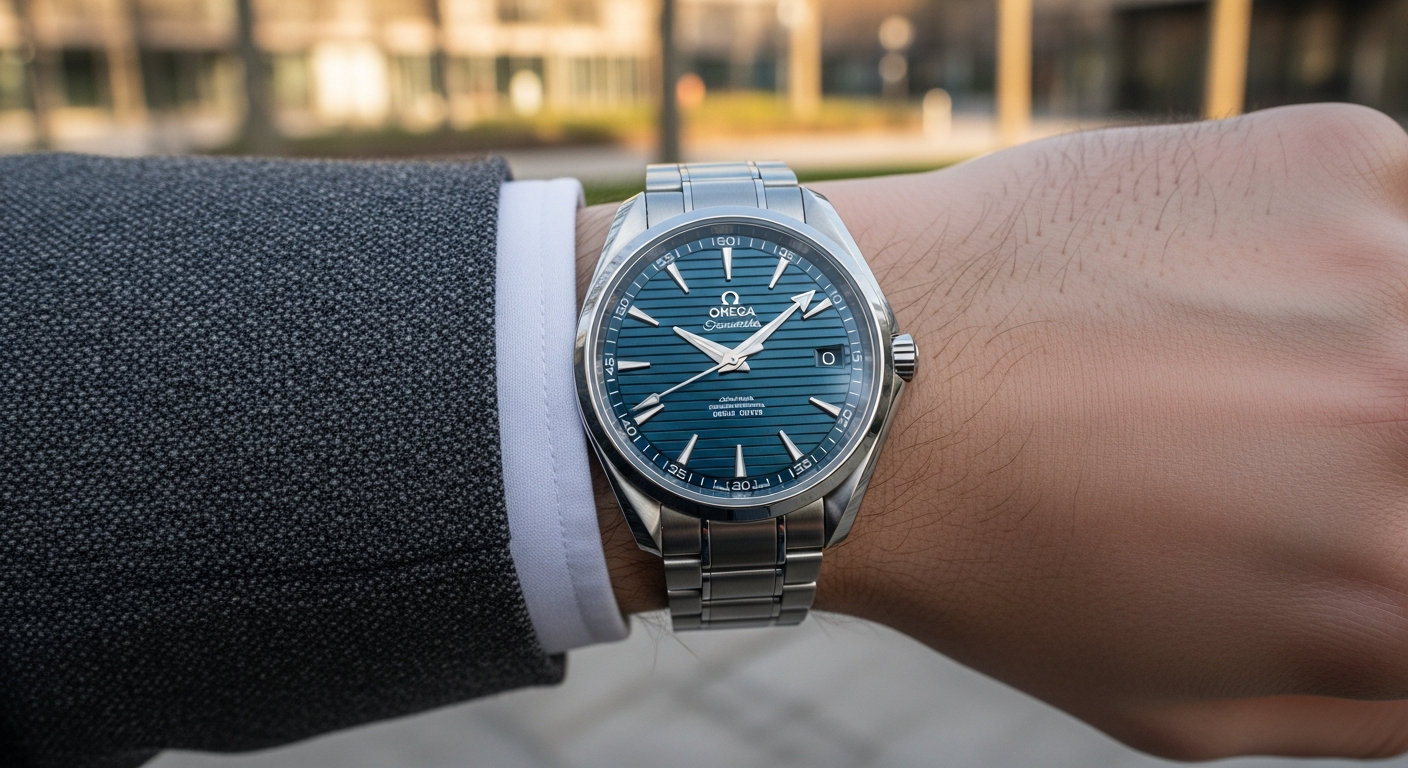
Omega’s advantage isn’t that it has history—every Swiss house does. It’s that its most famous stories are verifiable: pressure-tested in oceans, time-stamped in space, measured in labs, and repeated at industrial scale without losing the romance. In a market where “heritage” can feel like mood-board nostalgia, Omega sells something rarer: proof—and the quiet confidence that comes with it on the wrist every day, not just in a display case or auction catalog. The question isn’t whether Omega deserves its icons; it’s how it keeps making them feel contemporary without breaking the spell of credibility that built them in the first place..
Omega in 2026: credibility as a manufactured asset
Omega’s position entering 2026 looks less like a traditional luxury house defending its past and more like a systems brand refining an operating model. The model is unusually coherent: take a claim that can be tested, institutionalize the test, industrialize the output, then wrap the result in a story that already has cultural gravity. This is why Omega’s “tool watch” DNA doesn’t feel like cosplay when it’s priced as luxury. The brand isn’t asking you to believe; it’s inviting you to verify.
Most brands can do one side of that equation. Some make impeccable objects but struggle to give them meaning beyond aesthetics. Others have mythology but little that can be demonstrated in a lab, on a timing bench, or under a helium valve. Omega operates in the overlap: the engineering is legible, the certification is external, and the narratives are not purely commemorative—they’re repeatable frameworks that can absorb new materials, new movements, and new buyers without snapping.
From “tool watch” to modern luxury, without abandoning the tool
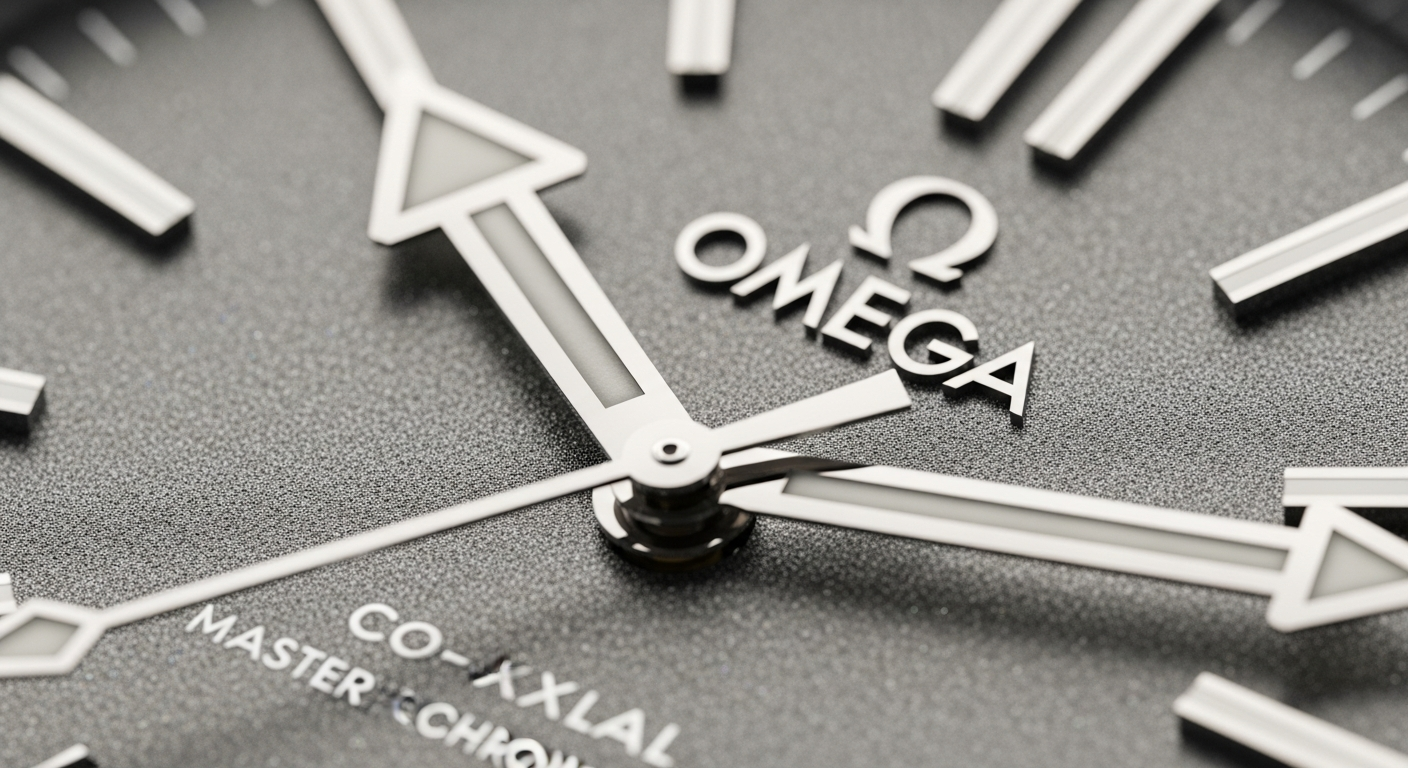
In 2026, the market is still defined by two pressures: consumers who demand legitimacy, and pricing that increasingly forces brands to justify themselves. Omega’s advantage is that it can justify itself in multiple languages. To a technically minded collector, METAS Master Chronometer is not marketing copy; it’s an anti-magnetism threshold, a precision band, and a set of performance criteria assessed under defined conditions. To a culturally minded buyer, the Speedmaster is still the watch most closely associated with human spaceflight, and the Seamaster still reads as a competent instrument even when it’s dressed up for the boardroom.
The quiet trick is that Omega hasn’t “gone luxury” by abandoning function. It has gone luxury by making function expensive looking—ceramic, Liquidmetal, Sedna and Moonshine gold, sapphire, high-tolerance finishing—while keeping the functional core credible enough that the materials don’t feel like veneer. That matters because collectors are increasingly allergic to watches that behave like jewelry but want to be praised as equipment.
METAS, Co-Axial, and the industrialization of trust
Omega’s modern credibility rests on a few pillars that are not romantic in themselves, and that’s precisely why they work. The Co-Axial escapement’s long-running promise—reduced friction, improved service intervals in real-world use—became meaningful because Omega scaled it broadly. Many companies can produce a technical talking point; fewer can deploy it across families and keep tolerances consistent enough that it becomes part of brand identity rather than a niche complication.
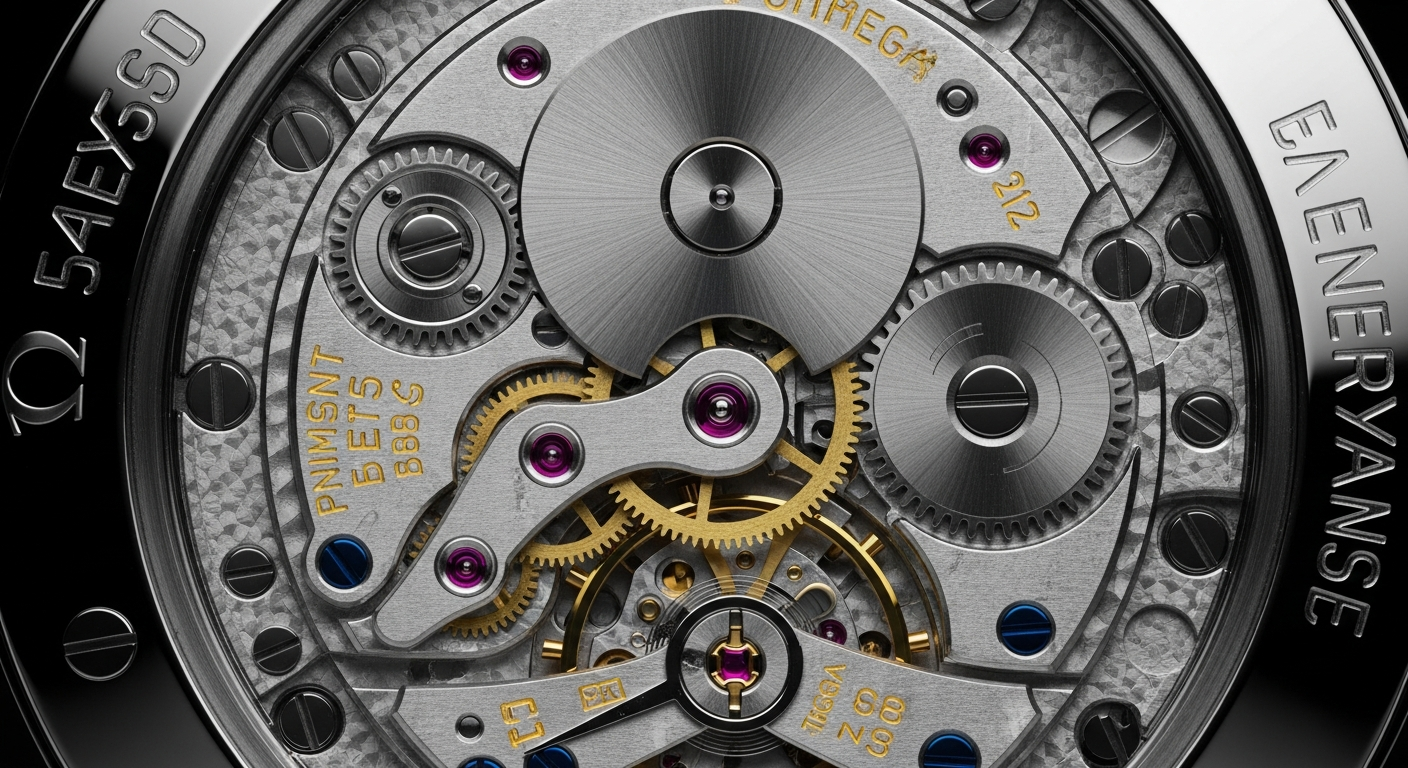
METAS Master Chronometer pushes that further. It is not the only certification that matters, but it is one of the few that consumers can understand in practical terms: resistant to strong magnetic fields, accurate in multiple positions, tested as a complete watch, not just as a movement. In a period where “in-house” has become an overused proxy for quality, Omega’s strategy is sharper: show the measurements, commit to them at scale, and make the guarantee a baseline expectation rather than a flagship novelty.
None of this is accidental. Omega is part of an industrial group with the capacity to design, test, and manufacture at volumes that independent haute horlogerie cannot match. The difference in 2026 is that Omega uses that scale not merely for distribution, but for standardization. Scale becomes a credibility amplifier: the more watches that meet the spec, the less the spec looks like selective sampling.
Seamaster in 2026: the dive watch as a platform, not a single icon
The Seamaster line is Omega’s most flexible credibility engine because it ranges from plausibly professional to overtly luxurious without switching genres. The core idea—water resistance as a measurable promise—has a clarity that translates well into modern buying behavior. The question for Omega is not whether it can make a dive watch; it’s how it keeps the category feeling current when every competitor has a ceramic-bezel, bracelet-forward “sports luxury” diver.
Omega’s answer has been platform thinking: keep a recognizable design language, but iterate with materials science and movement credibility rather than constant aesthetic reinvention. Ceramic cases and bezels, enamel dials, titanium grades, proprietary gold alloys, and the continued emphasis on anti-magnetism and robust chronometry sustain the sense that the Seamaster isn’t simply a retro silhouette. The visual codes—wave dials, helium valves, broad hands—risk becoming self-referential, but they also act as brand anchors. In the diver segment, recognizability is part of the moat.
There is also a strategic advantage in how Omega positions narrative. The Seamaster has authentic maritime associations, but it doesn’t overplay a single expedition myth. It has Bond, it has commercial dive cues, it has technical Seamaster sub-families that can plausibly be argued as “real” tools. That diversity prevents storyline fatigue. It’s also how Omega avoids the trap of needing to constantly reference a single historical model year. The Seamaster sells continuity, not reenactment.
Speedmaster in 2026: time-stamped mythology with a living technical backbone
The Speedmaster remains Omega’s clearest example of verifiable storytelling. The lunar association is not merely famous; it is unusually well documented. That matters because the watch market has a credibility problem: too many brands rely on loosely sourced anecdotes and photo-friendly “back to our roots” releases. Omega’s space narrative is a hard asset—time-stamped, photographed, archived, and culturally embedded.
But heritage alone doesn’t keep the Speedmaster persuasive at contemporary prices. Omega’s challenge, and its discipline, is to modernize without rewriting the script. That’s why movement strategy matters. The brand’s modern chronograph calibers, with Co-Axial architecture and METAS-level performance ambitions, are not just spec-sheet upgrades; they are the mechanism by which Omega claims the Speedmaster is still a serious chronograph and not a museum piece.
Design decisions around the Speedmaster are therefore strategic, not merely aesthetic. The closer Omega stays to the core proportions and legibility that made the watch iconic, the more freedom it has to innovate underneath: improved anti-magnetism, better tolerances, higher consistency, and a product experience that feels engineered rather than merely assembled. The Speedmaster buyer in 2026 often wants both: the myth and the modernity. Omega is one of the few brands that can offer both without obviously contradicting itself.
Constellation: Omega’s quiet weapon in the “daily luxury” category
If the Seamaster and Speedmaster are Omega’s loud proofs, Constellation is its quiet strategy. In a market that overindexes on steel sports scarcity narratives, Constellation functions as an alternative: a watch with a historically established identity, a distinctive case language, and the ability to absorb precious metals, diamond settings, and refined dials without pretending to be an instrument.
That matters for the brand’s portfolio health. Omega cannot rely solely on tool-watch mythology if it wants to maintain breadth across genders, tastes, and wrist cultures. Constellation provides a route into Omega ownership that is not contingent on being part of the dive-watch or chrono-watch discourse. Importantly, it does so without breaking Omega’s core promise of measurable quality. A Constellation on the wrist can still be a technically modern watch, not simply a decorative object.
From a collector-level perspective, Constellation is also a reminder that Omega’s legitimacy isn’t one-dimensional. The brand is often discussed through NASA and naval lenses, but its long-term credibility also comes from chronometric aspirations and serial production excellence. Constellation is where Omega can express “luxury” most directly—finishing, materials, bracelet integration—while the movement architecture keeps it from drifting into pure fashion.
Omega’s cultural flywheel: Bond, Olympics, and the ethics of sponsorship
Brand partnerships are easy to dismiss, and often they should be. Too many sponsorships feel like rented relevance. Omega’s approach is more durable because its partnerships reinforce the same central claim: timing and performance you can measure. The Olympics align with timekeeping authority; Bond aligns with the Seamaster’s competent masculinity and globe-trotting modernity; space aligns with the Speedmaster’s singular narrative capital.
The strategic point is not celebrity. It is repetition. Omega repeats the same themes across decades, which is what turns marketing into cultural memory. Repetition is not inherently creative, but it is effective when the underlying product doesn’t contradict the message. Omega’s watches can plausibly survive the use-cases they suggest. That plausibility is the line between storytelling and theater.
In 2026, as consumers scrutinize authenticity, Omega benefits from the fact that its partnerships are not trying to invent a new identity. They are amplifying an existing one. The brand doesn’t need a sudden pivot to appear relevant. Its relevance is institutional: it shows up where measurement matters.
Price tiers, scarcity, and the disciplined avoidance of desperation
Omega’s pricing strategy sits in a difficult middle: premium enough to be judged against Rolex and high-end competitors, accessible enough to be compared to value-driven Swiss tool watches. The risk is dilution—too many references, too much availability, too little heat. Yet Omega has historically managed a different kind of desirability: not scarcity, but confidence.
In 2026, the collector market is fatigued by artificial waiting lists and speculative mania. Omega’s relative availability is increasingly a feature, not a flaw, provided the product feels “worth it” when you can actually buy it. This is where METAS, materials execution, and finishing consistency become strategic. Omega doesn’t need to be unobtainable if it can be undeniably competent and emotionally legible. The brand sells a reassuring proposition: you can choose your version, buy it, wear it hard, and still feel like you purchased something with cultural weight.
That said, Omega must remain careful with endless special editions. The brand’s stories are strong enough that the temptation to monetize them through constant novelty is real. The line between “celebration” and “clutter” is thin. Omega’s best releases tend to feel like refinements of a system, not new chapters written to fill a calendar.
What Omega needs to protect in 2026: coherence
The central strategic asset for Omega is coherence between proof and poetry. The brand’s claims remain credible because they are anchored in verifiable performance and repeatable production, and its cultural meaning remains credible because it attaches to events and institutions that can be documented. If Omega ever lets those drift apart—if the engineering becomes decorative, or if the storytelling becomes untethered—it risks becoming just another heritage-heavy luxury brand.
Omega’s opportunity is to continue doing what few can: treat watchmaking like an industrial science project and a cultural object at the same time. Seamaster should keep evolving as a materials and robustness platform. Speedmaster should remain conservatively designed but technically alive, with upgrades that respect the watch’s legibility and purpose. Constellation should continue to be Omega’s daily luxury line, proof that the brand’s identity is broader than tool-watch romance.
In a sector that often confuses nostalgia with legitimacy, Omega’s most defensible advantage is that its legends don’t rely on belief. They rely on records, tests, and repeatable competence. That is why, in 2026, Omega reads less like a brand trading on yesterday and more like a manufacturer that has learned how to turn measurable performance into modern luxury—without losing the quiet certainty that made its icons matter in the first place.