Laurent Ferrier: Classical Watchmaking Reimagined

There is a particular kind of quiet that lives inside the best mechanical watches. Not silence exactly, because a watch is never truly still, but a hush that suggests intention: the pressure of a fingertip on a crown, the measured resistance of a setting mechanism, the soft certainty of a balance swinging in the dark. In a world that sells volume as value, that hush can feel almost radical. It is the sound, if you can call it that, of classical watchmaking refusing to become a costume. And if there is a modern name that has learned how to speak in that low register without slipping into nostalgia, it is Laurent Ferrier.
To understand the appeal of Ferrier’s work, you don’t begin with spectacle. You begin with temperament. Imagine a man who has spent decades not only building watches but living among the rhythms that make them meaningful: deadlines that are measured in months rather than minutes, tolerances that require humility, a lifetime of interacting with craft not as branding but as a discipline. The story most people know is the easy-to-repeat one: a respected figure of Swiss watchmaking, a veteran of Patek Philippe, someone who later stepped out on his own. But the more revealing story is subtler, about how a certain kind of experience becomes an aesthetic—how patience becomes a design language.
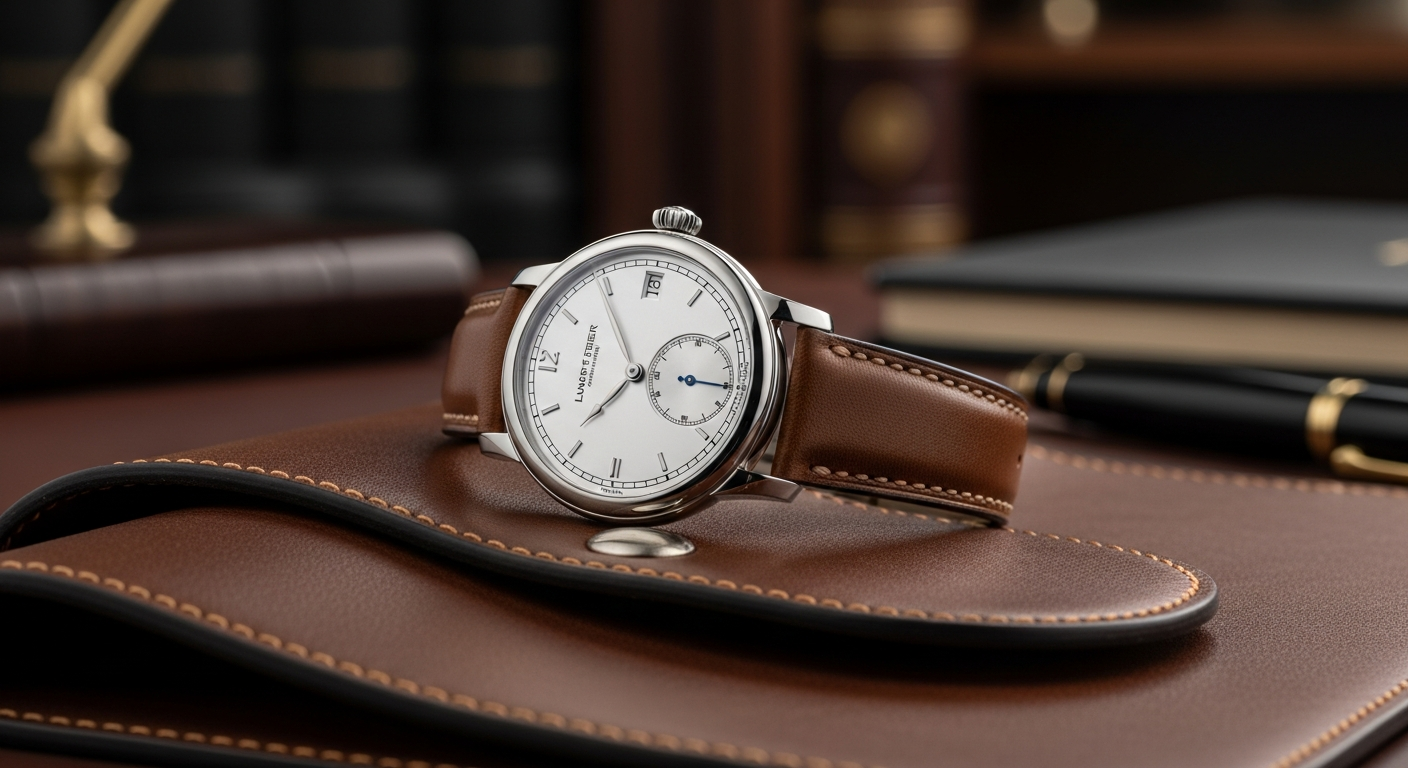
Ferrier’s watches do not ask you to admire them from across a room. They ask you to come closer. The first encounter is often disarming because the forms are so composed they can seem simple. Rounded cases that do not fight the wrist. Slim bezels that frame the dial like a well-cut matte. Lugs that feel considered rather than styled. Dials that tend toward calm: restrained typography, purposeful negative space, a preference for proportion over ornament. Yet the longer you look, the more that calm starts to feel like a deliberate moral position. The watch is saying: there is nothing here that needs to be shouted. If you want the reward, you’ll have to do what watchmaking has always demanded—pay attention.
At the heart of this “classical reimagined” idea is an insistence that elegance is not the opposite of innovation. In much of contemporary watch culture, innovation is often performed in ways that make it easy to photograph: openworked movements, aggressively modern case architecture, materials that seem designed to win arguments online. Ferrier’s innovation is quieter, closer to the way a master chef might change one step in a recipe and transform the entire dish without announcing it. The lines are traditional, but the feeling is not. The finishing is traditional, but the atmosphere is distinctly current. It’s classical music played on impeccably tuned modern instruments, in a small hall where you can hear the breath between notes.
The case shape that most people associate with the brand has a name that sounds almost too poetic for an industry that loves technical acronyms: the Galet, the pebble. It’s an apt metaphor. A pebble becomes smooth not because it started that way, but because time and friction did their work, slowly refining every edge. The Galet case seems to have undergone a similar process. There is a softness to it, a continuity from lug to flank that feels like it was designed to be touched. It sits on the wrist with the kind of naturalness that makes you forget it’s there—until the moment you need the time, and then it meets you with clarity rather than bravado.
Clarity, in Ferrier’s world, is rarely sterile. It’s human. One of the most telling details is how the brand treats the date when it chooses to include one. Many watches treat the date like an obligation: a small window punched into an otherwise coherent dial, a concession to practicality that feels, aesthetically, like a compromise. Ferrier’s approach tends to make usefulness feel native. When the date appears, it often does so with a sense of balance, either through careful placement, thoughtful scale, or a display that feels integrated rather than appended. The same can be said for small seconds, power reserve indications, or the gentle asymmetry that comes from a complication placed with taste rather than symmetry-for-symmetry’s sake.
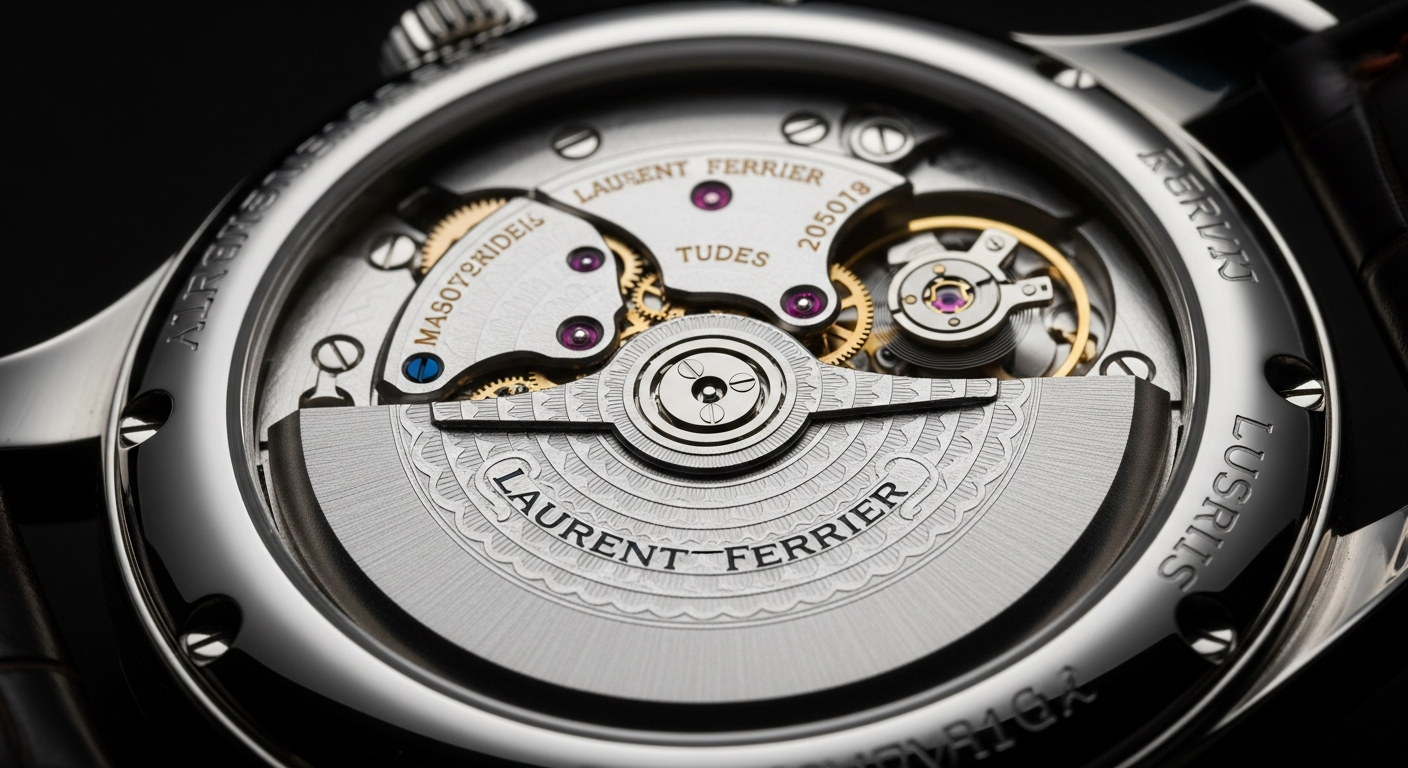
Then there is the movement, which is where the brand’s philosophy stops being an impression and becomes a fact. People talk about finishing with a kind of reverence in high-end watchmaking, and rightly so, but finishing is not a monolith. There is finishing that functions like jewelry—high shine, high contrast, a kind of theatrical dazzle. And there is finishing that functions like architecture—lines and surfaces arranged so that everything feels structurally inevitable. Ferrier sits firmly in the second category. Anglage that is crisp but not ostentatious. Broad, confident Geneva stripes. Clean interior angles where they matter, executed with a seriousness that makes you think the watch would feel incomplete without them. It is the kind of movement decoration that doesn’t exist to impress the untrained eye; it exists because the trained eye would notice if it weren’t there.
The famous detail that often enters the conversation is the natural escapement, a technically demanding concept with deep historical roots. It’s one of those components that reveals the brand’s thesis in miniature: take a classical idea, treat it with modern rigor, and integrate it without turning it into a marketing circus. In practice, it speaks to efficiency and to the long-held watchmaker’s desire to manage energy loss, to coax better performance from the same fundamental laws of mechanics. But perhaps more importantly, it signals a respect for the lineage of horology that doesn’t depend on imitation. Ferrier’s watches are not trying to look like the past; they are trying to converse with it.
This is what “reimagined” really means here. Not a reinvention for its own sake, not a rejection of the old guard, but a willingness to ask what classical watchmaking would look like if it were freed from the need to prove itself. Classical forms, when they are confident, can be surprisingly modern. They don’t chase trends because they understand the difference between novelty and freshness. Ferrier leans into that difference. The result is that his watches can feel like they belong to any era, even as they are unmistakably of this one—made for a collector who has grown tired of being sold a personality and would rather buy a point of view.
There’s also something quietly athletic in Ferrier’s story, and it matters more than it seems at first. The man is famously associated with endurance racing, including the kind of long, punishing events that require not only speed but strategy, focus, and stamina. Racing is an odd companion to the world of understated dress watches, until you realize both share a fascination with time that goes beyond measurement. Racing makes time visceral. It turns seconds into terrain, makes pacing a form of intelligence, and punishes the arrogant. The same could be said for watchmaking at the highest level. You can’t bully metal into perfection; you have to negotiate with it. You can’t rush adjustment; you can only refine it. In that sense, Ferrier’s watches carry the spirit of the long race: disciplined, composed, and deeply aware that the smallest miscalculation will eventually show itself.
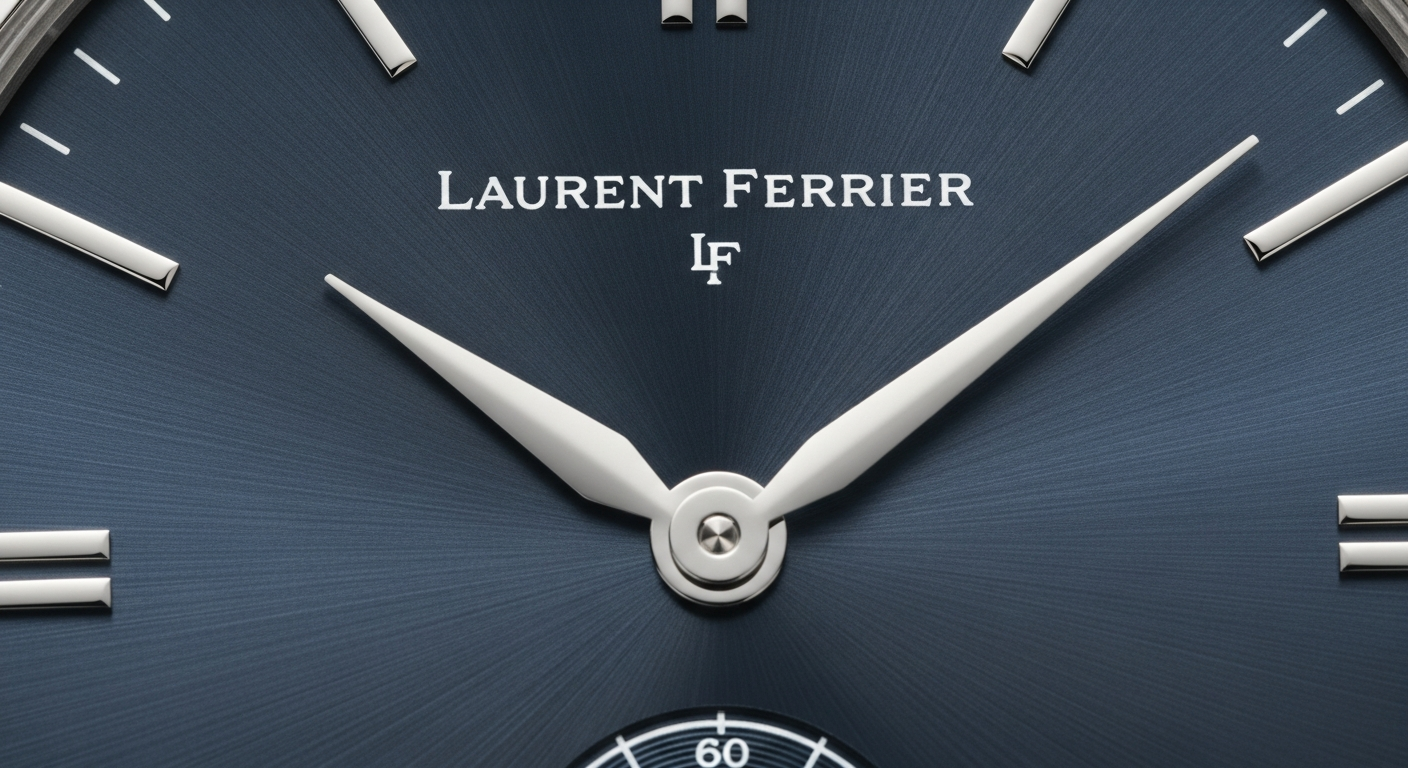
If you spend time with Ferrier’s designs, you’ll notice how often they return to the idea of legibility as luxury. Not the harsh legibility of tool watches that look like they were designed by committee, but legibility that is pleasurable. The curvature of a hand. The way light falls on a polished marker. The softness of a dial color that doesn’t fight the room. The typography, often classical in spirit, feels chosen for its ability to disappear when you don’t need it and reappear instantly when you do. This is an underrated form of refinement: making the watch effortless to use without making it boring to live with.
The brand’s best pieces tend to reward different kinds of attention at different moments. In the morning, when you’re rushing, it’s simply easy to read. In the afternoon, when you’re waiting for a meeting to begin, you notice the balance of the dial, the proportional relationships, the way the case meets the strap. At night, when you have the time to turn it over, the movement reveals itself like the backstage of a theater: not messy, not hidden, but arranged with a sense of order that feels almost ethical. The watch becomes, in this way, a companion to your attention span. It never demands all of it, but it always has more to offer if you give it.
Part of why Laurent Ferrier resonates now is that contemporary taste has begun to split along an interesting fault line. On one side are watches that want to be content: dramatic, instantly recognizable, designed to win the scroll. On the other are watches that want to be lived with: calm, intimate, designed to grow more meaningful over time. Ferrier is firmly in the second camp, and that positions the brand not as a reactionary holdout but as a kind of antidote. When everything around you is optimized for instant impact, a watch that saves its best qualities for the slow burn can feel like relief.
But the slow burn is not synonymous with understatement for its own sake. There is a difference between being quiet because you have nothing to say and being quiet because what you have to say is precise. Ferrier’s work is precise. The curves are not generic; they are tuned. The proportions are not safe; they are balanced. The finishing is not merely competent; it is expressive in its restraint. Even when the brand ventures into more contemporary aesthetic territory—different dial textures, bolder colors, sportier references—there is still that underlying insistence on coherence, the sense that every choice must answer to the whole.
What’s especially compelling is how the watches manage to feel personal without being precious. Many high-end pieces can drift into fragility, as if their value depends on being protected from the world. Ferrier’s watches, despite their refinement, tend to feel robust in their intention. They are not trying to be rugged in the way a diver is rugged, but they possess a confidence that suggests they can accompany a life rather than sit above it. They are made with the assumption that you’ll wear them, that you’ll come to know them, that the relationship will deepen instead of depreciate.
This is where the editorial heart of Ferrier’s contribution really lands: he reimagines classical watchmaking by returning it to its original purpose, which was never to be loud. Classical watchmaking, at its best, was about solving problems elegantly and making those solutions beautiful enough to live with for decades. The modern luxury market sometimes forgets this, dressing up excess as complexity and noise as relevance. Ferrier’s watches remind you that complexity can be internal, that relevance can be a matter of integrity, and that beauty can be a function of correctness.
There’s a moment, common among collectors, when the chase begins to feel less satisfying than it used to. The novelty wears thin. The wrist becomes crowded with trophies that don’t quite translate into companionship. At that moment, some people turn toward complications, as if additional mechanisms might fill the gap. Others turn toward rarity, as if scarcity might manufacture meaning. Ferrier offers a different answer: turn toward refinement. Not refinement as a synonym for expense, but refinement as a practice of removing what isn’t necessary and perfecting what remains. It’s a way of thinking that feels almost subversive in a market that equates more with better.
And yet, the watches are not austere. They have warmth. The warmth is in the way the case hugs the wrist, in the gentle curvature of the crystal, in the subtlety of the dial finishing, in the tactility of the crown. It’s in the sense that someone made decisions with the wearer in mind rather than the camera. The brand’s best work feels like it was designed to be discovered in private, in the half-light of a desk lamp, in the pause between conversations, in the small pockets of time where you’re alone with your thoughts and the steady insistence of seconds.
In the end, “classical watchmaking reimagined” is not a slogan so much as a description of a particular kind of courage: the courage to be restrained when restraint is risky, to invest in finishing that few will see, to pursue mechanical ideas that require patience rather than hype, to trust that a watch can win hearts without trying to win a room. Laurent Ferrier’s watches make a case for the idea that modernity doesn’t always mean disruption. Sometimes modernity means clarity. Sometimes it means taking the oldest values of a craft—precision, proportion, humility—and presenting them in a form that feels not old-fashioned but newly relevant.
If you listen closely, you can hear that hush again: not silence, but intention. A small engine of beauty ticking steadily, unconcerned with the noise outside, content to measure time the way it always has—one thoughtful second after another.
(contains VID1, IMG1 IMG2 IMG3 IMG4)