Breguet Watches: The Quiet Power of Watchmaking’s Original Innovator (From Marie‑Antoinette to the Modern Tourbillon)

Luxury watchmaking has plenty of history, but very few origin stories that still shape the present tense. Breguet is one of the rare names that doesn’t merely reference the past—it wrote the vocabulary the rest of Swiss watchmaking still speaks. From inventions created for monarchs and navigators to design signatures that feel instantly “correct” on the wrist, the brand’s true power is its quiet authorship: Breguet doesn’t chase trends because many of the trends began as Breguet solutions to real problems of precision, readability, and elegance—then became the standard everyone else followed..
Breguet as authorship, not nostalgia
Most “heritage” narratives in Swiss watchmaking are retrospective: a golden era, a dormancy, a revival. Breguet reads differently. Its significance is less about a single period of excellence and more about invention that became infrastructure—technical and aesthetic conventions the industry still relies on to signal seriousness. When collectors talk about credibility, they often mean lineage; with Breguet, lineage is almost secondary to authorship. You are not simply buying into a story, you’re wearing a set of ideas that other brands continue to quote.
This is why Breguet can feel quietly dominant without needing to be loud. The codes are familiar because they were adopted, iterated, and normalized by the broader market. A fluted caseband here, a finely guilloché dial there, hands that look “right” in a way that’s hard to explain until you notice every imitation. In a category that frequently rewards novelty for novelty’s sake, Breguet’s strategy is closer to architecture: make the fundamentals so correct that they outlast fashion.
From the 18th century to the modern wrist: ideas that still function
Abraham-Louis Breguet’s achievements have been repeated so often they risk becoming decorative trivia—until you map them to contemporary watchmaking’s priorities. Precision, legibility, durability, serviceability: these are the unglamorous constraints that separate romantic horology from real horology. Breguet’s early work addressed those constraints directly, which is why it continues to feel modern even when the styling is unmistakably classical.
Consider the brand’s historical reach. Breguet built for courts and for navigation, for social theater and for the practical mechanics of timekeeping under motion. Those demands are not nostalgic; they are engineering briefs. And when engineering briefs are solved with elegance, they tend to become templates. That template effect is Breguet’s lasting power: not the aura of monarchy, but the conversion of problems into forms that became widely useful.
The famous “Marie-Antoinette” pocket watch sits at the intersection of myth and mechanics, but the more revealing point is what it represents: watchmaking treated as a system, where complication and clarity must coexist. The myth brings attention; the underlying discipline is what matters to collectors. Breguet’s historical output is full of that discipline—solutions that were meant to be used, then refined into an aesthetic language that remains legible today.
Design codes that became the industry’s default language
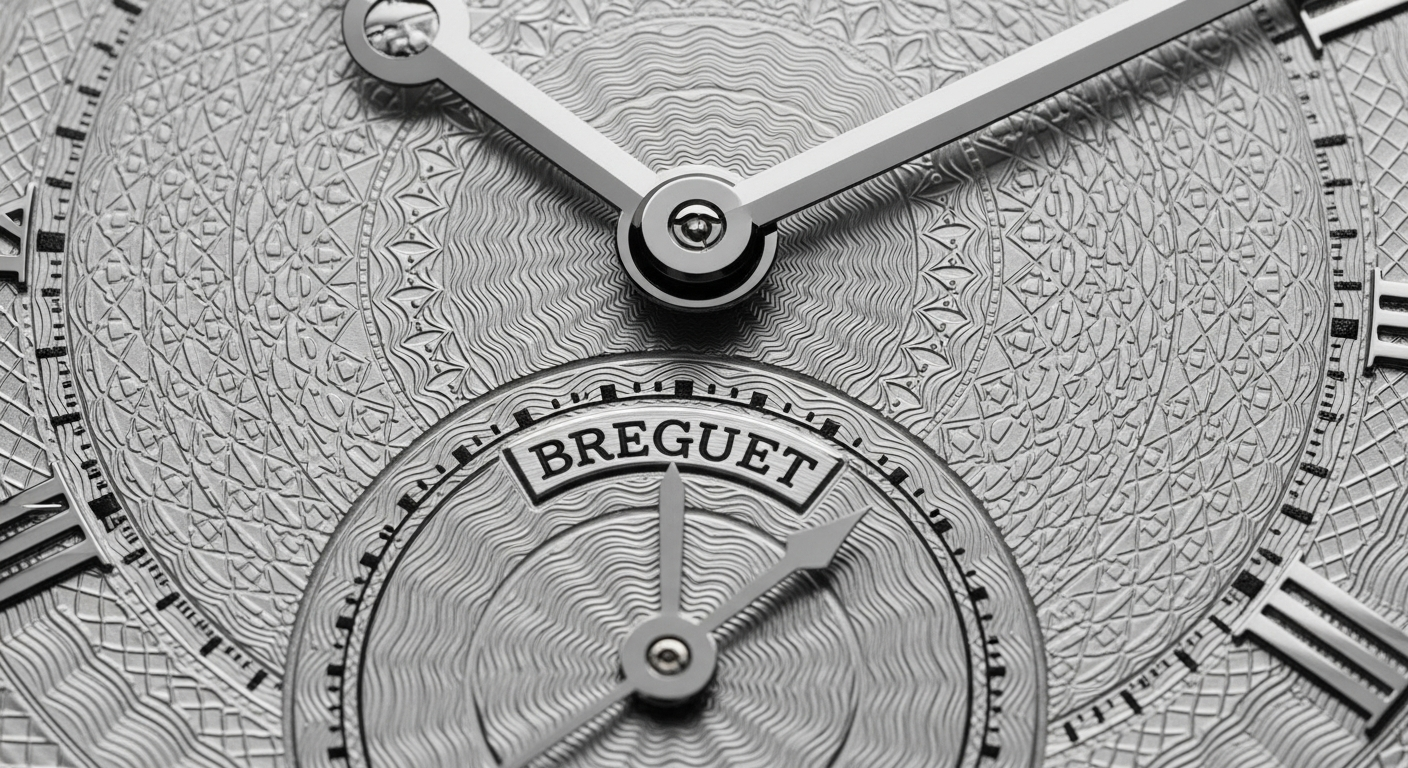
Breguet’s most copied elements are not superficial flourishes. They are usability features elevated to style, which is precisely why they endure. Take the hands. “Breguet hands” are not loved because they are ornate; they are loved because they read cleanly. The hollowed tips create definition against complex dials, and their silhouette maintains elegance without sacrificing contrast. Many brands borrow the look; few match the balance.
Then the dials: guilloché, often engine-turned with patterns that do more than catch the light. They create zones of information. Texture becomes hierarchy. A well-executed Breguet dial can separate time, seconds, date, or power reserve with minimal printed clutter. This is the opposite of decorative maximalism; it is functional ornament, where beauty emerges from the disciplined organization of legibility.
The coin-edge caseband is another example of authorship hiding in plain sight. Fluting adds grip and visual character, but it also provides a structural rhythm that frames the watch without needing bulk. It makes the case feel finished, considered, and architectural. Once you notice how many “dress” watches rely on polished emptiness, Breguet’s approach reads as more deliberate—less a shiny object, more an instrument made with taste.
Even the typography, the applied or printed numerals, the discreet signatures, the off-center subdials: these are not random vintage cues. They are a coherent system. The industry borrows them because they signal refinement immediately, but they originated as a consistent language built around clarity and proportion.
The tourbillon: invention as intellectual property
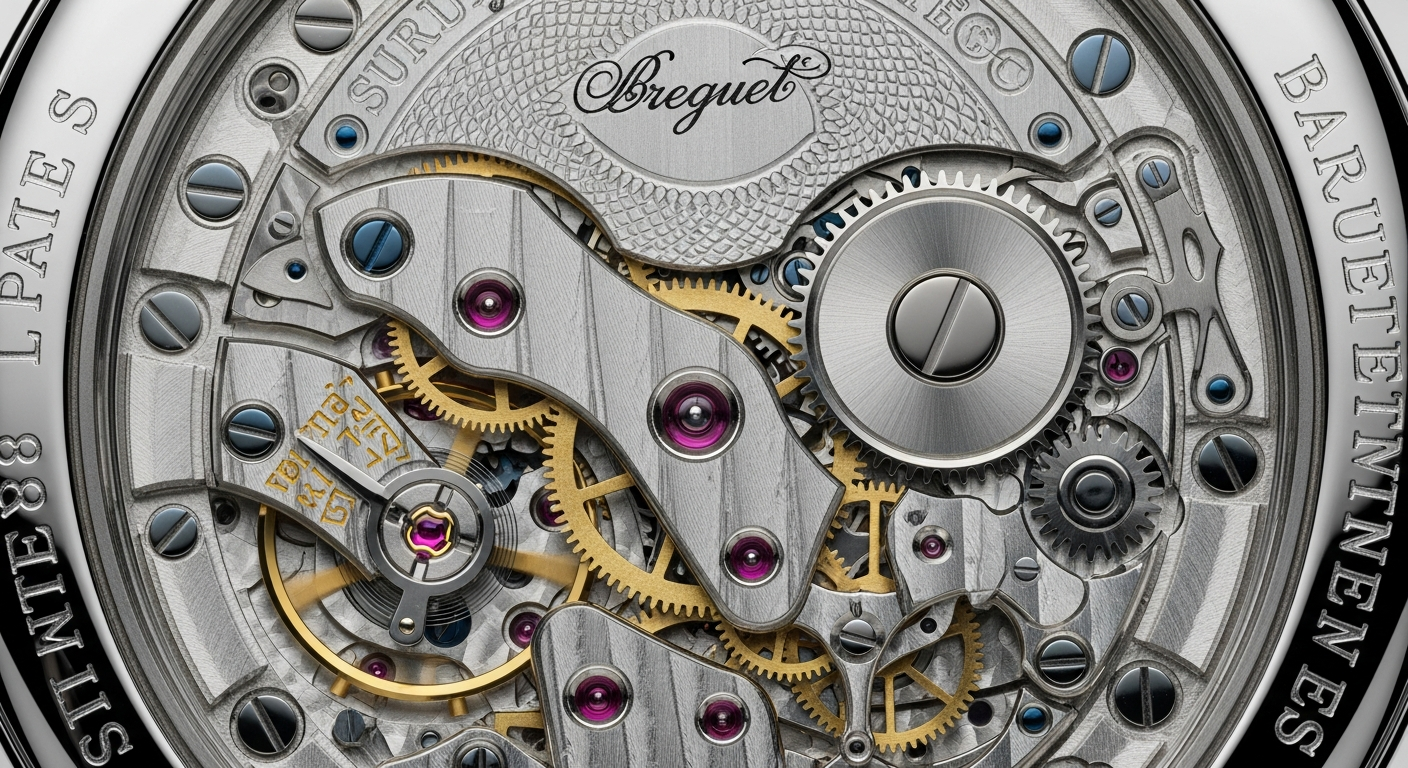
If you want a single invention that explains Breguet’s enduring claim to authorship, it is the tourbillon. Often misunderstood as a generic “high complication,” the tourbillon was originally a precision strategy—an attempt to average positional errors in a pocket watch carried upright. Modern wristwatches live in far more varied positions, and the chronometric value is debated. But that’s not the point. The point is that Breguet didn’t merely popularize the tourbillon; it defined it, named it, and established its mechanical poetry as a legitimate answer to a technical problem.
In contemporary watchmaking, the tourbillon has become a stage for finishing and mechanical theater. Brands use it to demonstrate competence, or to justify price. Breguet’s tourbillons feel different when you understand the origin: they are not trophies bolted onto a movement, they are part of a lineage where complication is rooted in purpose. That background doesn’t make every modern example “better,” but it makes the proposition more coherent. You’re not buying into a trend; you’re buying into the source code.
Crucially, this is where Breguet’s positioning diverges from typical heritage marketing. A heritage brand says, “We once did something important.” Breguet can credibly say, “What you think is important was, in part, defined here.” That distinction lands with collectors who care about substance, not just the presence of a spinning cage.
Movement architecture: precision-centric, not decorative-first
Breguet’s modern reputation sometimes gets reduced to dial work and classical styling, but the more strategic lens is its movement philosophy. At its best, Breguet builds calibers that feel engineered for chronometry and longevity, then finished to a level that supports the brand’s status without overwhelming the purpose. The finishing is real, but rarely tries to steal the narrative from the mechanics.
Look at how Breguet tends to organize its displays. Many models prefer off-center indications, power reserve arcs, and clean subdial separation. That isn’t just a signature look; it’s a manifestation of movement layouts that prioritize clear information architecture. When executed well, the watch reads instantly, even when it contains multiple complications. That is a subtle form of luxury: not the impression of complexity, but the management of complexity.
In an era where sports-watch dominance often pushes brands toward thicker, louder cases and more aggressive dial furniture, Breguet’s restraint becomes strategic. It offers an alternative definition of high-end: thin where it should be thin, detailed where detail serves the whole, and mechanically confident without needing oversized cues.
Collections as a portfolio of ideas
Breguet’s collections can be read as a portfolio of the brand’s core intellectual property, each emphasizing a different dimension of its authorship. The Classique line is the purest expression: guilloché, slim profiles, traditional proportions, and dials that treat information as design. These watches can look conservative in photos, but in hand they often reveal the difference between “simple” and “resolved.” The surfaces, the typography, the balance of negative space—this is where Breguet quietly outclasses many competitors that rely on higher contrast or louder branding to feel special.
Marine is a case study in translating Breguet language into a more contemporary, sport-leaning context without abandoning the brand’s fundamentals. It’s easy to dismiss the category as crowded, but Breguet’s advantage is that it doesn’t need to cosplay as a tool watch to be legitimate. It can build a robust modern piece while still carrying the brand’s emphasis on refined legibility and nuanced finishing. The best Marine references feel like what happens when a dress-watch brain designs a sports watch: less brute force, more considered detail.
Tradition is arguably the most explicit statement of authorship. By exposing movement architecture on the dial side, it turns technical lineage into visual structure. This isn’t skeletonization for spectacle; it is historical engineering language made wearable. For collectors, Tradition can be the most intellectually satisfying line because it makes the brand’s mechanical ideas visible—bridges, wheels, and geometry presented as design rather than hidden behind a dial.
Réveil du Tsar, complicated Classiques, and high complications more broadly serve a different purpose: they remind the market that Breguet’s legitimacy isn’t limited to surface codes. The complications are part of the brand’s identity as a problem-solver. Not every collector needs that tier, but its existence anchors the entire range in capability rather than styling.
Why Breguet feels “quiet” in today’s luxury economy
Breguet’s relative understatement is not an accident, and it is not merely a symptom of conservative design. In today’s luxury economy, attention is often captured by scarcity narratives, celebrity association, and immediately recognizable silhouettes. Breguet competes on a different axis: connoisseurship. That can be commercially risky, because it asks the buyer to care about proportion, dial craft, and historical authorship rather than hype. But it also creates a rarer kind of desirability—one less exposed to trend cycles.
There is also a strategic advantage in being widely quoted but not widely worn. When a brand’s design language has been copied across the industry, the original can appear understated simply because the market has acclimated to its inventions. The collector who recognizes the origin tends to value it more, not less. Breguet’s “quiet power” is that its signatures do not need to shout; they operate like correct grammar. The reward is a watch that doesn’t feel like a purchase made to impress strangers, but like a long-term alignment with the fundamentals of the craft.
How to evaluate a Breguet the way collectors do
If you’re approaching Breguet strategically, ignore generic checklists and focus on execution. Start with the dial: the crispness of guilloché, the alignment of subdials, the restraint of printing, the way light moves across textures. Then move to proportion: how the bezel, caseband, and lugs resolve into a coherent profile. Breguet’s best pieces feel thin and intentional, not delicate.
Next, inspect the hands and numerals in real conditions. Many watches photograph well and read poorly. Breguet tends to do the opposite: the legibility improves on wrist because the hands and textures were engineered, not merely styled. Finally, consider the movement not as a bragging list of features, but as architecture. Is the layout purposeful? Does the complication feel integrated? Does the finishing support the mechanics rather than compete with it?
The last evaluation is more personal: do you want your luxury to be recognized instantly, or understood gradually? Breguet rewards the latter. If you value authorship—being close to the source of modern horological language—then Breguet’s proposition becomes unusually clean.
The modern case for Breguet: provenance you can use
Breguet is often introduced as history, but it is better understood as living intellectual property. Its value is not confined to a museum narrative; it sits on the wrist in the form of design solutions that still work and mechanical ideas that still define the category’s upper tier. That is why Breguet remains strategically distinct. It doesn’t need to invent a new identity every season, because much of the industry is still building variations on Breguet’s original sentences.
For collectors who equate luxury with innovation that lasted, Breguet is not an anachronism. It is the quiet author behind many of the rules. And in a market crowded with loud answers to short-term demand, that kind of authorship reads less like nostalgia and more like power.