IWC Portugieser and the Return of the Oversized Idea
There’s a certain kind of size that doesn’t shout. It doesn’t behave like a billboard wristwatch from the era when “bigger” was treated as a substitute for “better,” when cases grew like unchecked ambitions and dials became stages for everything a brand could possibly announce about itself. That kind of oversized was a mood. A provocation. Sometimes a punchline. But there’s another kind of size, older and more subtle, that comes from purpose: the deliberate largeness of something built to be read at a glance, to be steady, to be navigated by. The IWC Portugieser belongs to that tradition, and its quiet resurgence feels less like a trend returning and more like a memory reasserting itself.
I think about the Portugieser the way I think about a well-lit room. It’s not “minimal” in the modern sense, not a blank white cube; it’s simply clear. The dial is spacious in the way a calm conversation is spacious—there’s room for pauses, for meaning, for the eye to move without being harried. And in an era when the watch world has made a sport out of micro-adjustments and millimeter math, there’s something disarming about a watch that was born from a request so blunt it borders on audacious: make it big enough to hold a proper movement, and legible enough to be useful in the way marine instruments are useful.
The story is often told as a kind of horological folktale, but the bones of it still matter. In the late 1930s, Portuguese merchants—men tied to the sea by commerce and to time by schedules—asked IWC for something like a ship’s chronometer you could wear. Not a fragile dress watch with a thin movement built for polite living, but a wristwatch with the accuracy and authority of the instruments that governed departures and arrivals. IWC reached into its stock of pocket-watch calibers and did the most sensible thing possible: it put serious engineering into a wrist-bound case without apologizing for the dimensions that engineering demanded. The result looked large because it was large, not because someone had decreed that large was fashionable.
That’s the idea that keeps returning: oversized as a consequence of function, not as a declaration of ego.
If you came into watches during the height of the big-case years, you might carry a reflexive skepticism about anything north of, say, 40 millimeters. The market trained us that way. The oversized boom turned “statement” into a default setting; it sold confidence in stainless steel and ceramic and told us that being noticed was the same thing as being seen. And then, as the pendulum always does, it swung back. Collectors began to romanticize restraint. Brands rediscovered mid-century proportions. Social media filled with wristshots of compact cases described as “perfect,” as if perfection were a universal number and not a relationship between object and person. In that climate, the Portugieser’s size could look like a holdout—an anachronism stubbornly refusing to be edited down.
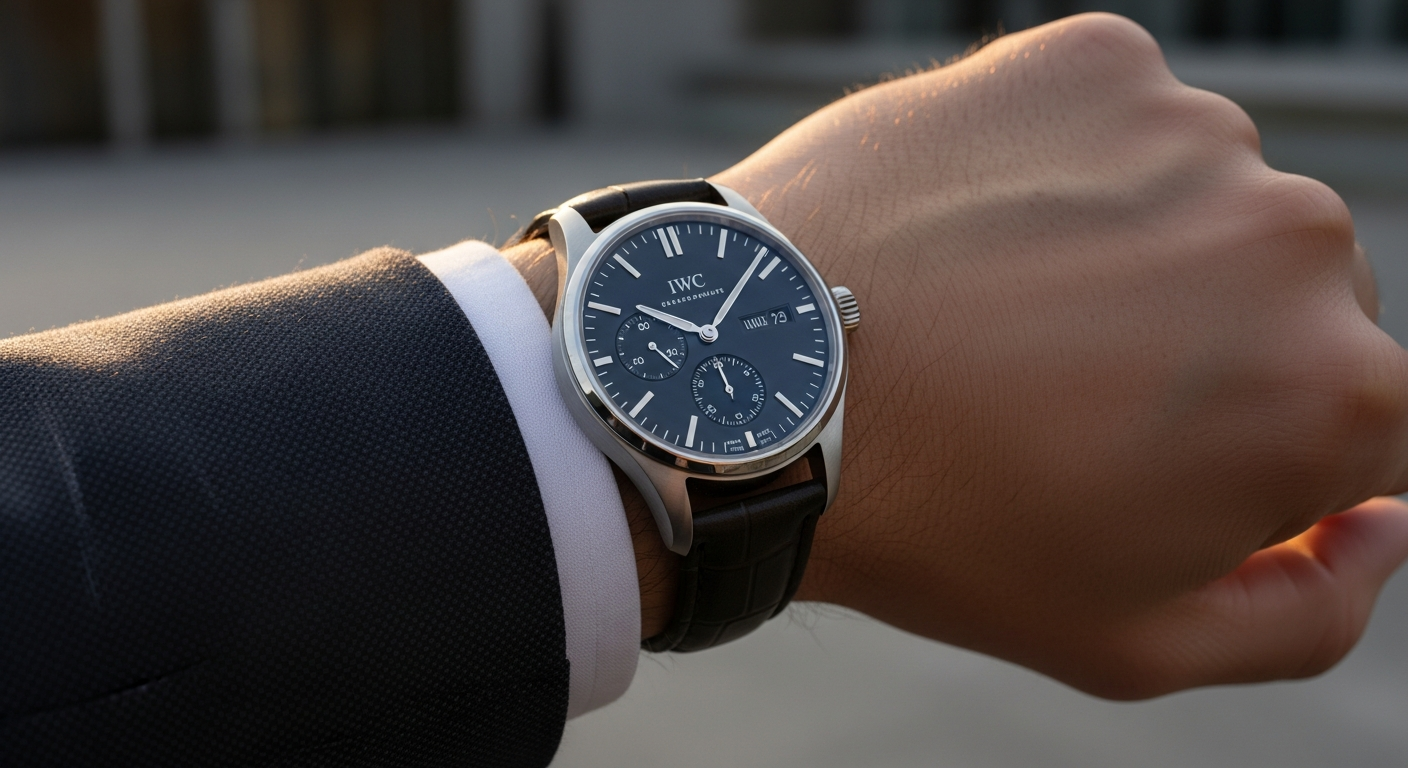
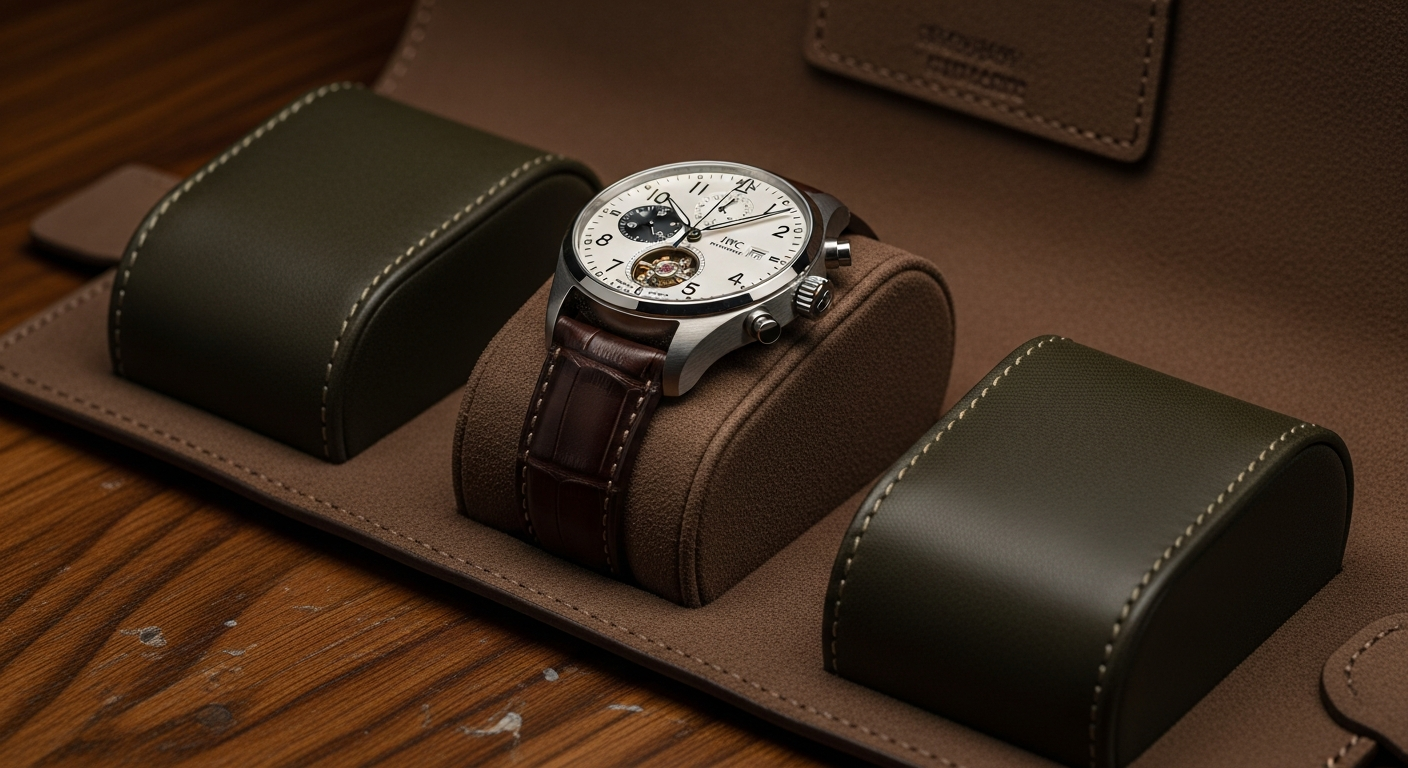
But spend time with it, in real light and real life, and the proportions begin to explain themselves in a language that isn’t trend-driven. The dial isn’t merely big; it’s expansive. Those Arabic numerals, the railway minute track, the leaf hands—each gets to breathe. The subdials don’t feel squeezed in; they feel placed. Even the negative space, the empty territory, is doing work: it makes the watch easy to read, and it makes the complications—when they’re present—feel like instruments rather than decorations.
There’s a reason the Portugieser often reads as formal even when the case is substantial. Dressiness isn’t only about diameter; it’s about visual discipline. The Portugieser has that discipline. It doesn’t clutter the dial with textures that beg for attention. It doesn’t carve the case into aggressive facets. It leans on symmetry, on clarity, on the old promise that time can be made orderly. If the watch world has spent the last decade fetishizing “tool” credibility, the Portugieser offers a different kind of tool: not the rugged thing that survives punishment, but the precise thing that helps you navigate, the way good instruments do.
I’ve always felt that the Portugieser is one of the few watches that makes you aware of what the wristwatch is—a compromise between the intimacy of something personal and the heritage of something public. Pocket-watch movements weren’t designed to live on the wrist; they were designed to live in a pocket, to be pulled out with a certain ceremony. When that scale migrates to the wrist, you get a watch that carries a faint echo of that ceremony even when you’re just checking the time while waiting for a train. You don’t so much glance at it as consult it.
And that consultative quality is exactly why the oversized idea can return without feeling like regression. The last time “big” was fashionable, big was a form of drama. Now it can be a form of comfort. Modern life is noisy. Our calendar apps buzz and our phones flash and every platform competes to become the primary clock in our day. A large, calm dial is a small rebellion: it offers information without anxiety. It’s the opposite of a notification.
The Portugieser has also benefited from something less romantic but equally powerful: the slow maturation of wristwatch taste. When you start out, you tend to buy the watch that looks like the idea of a watch. Maybe it’s a diver because that’s what adventure looks like. Maybe it’s a chronograph because that’s what capability looks like. Maybe it’s something angular and black because that’s what modernity looks like. And then, as the collection story evolves, you begin to notice that what you really want is not a costume but a companion—something that will feel right when the novelty wears off.
The Portugieser is built for that stage of the journey. It doesn’t need to be rediscovered every morning. It doesn’t beg for a second look. It simply remains coherent. That’s why the model line has endured through so many variations: the classic automatic with its balanced subdials; the chronograph, which somehow makes a complicated dial feel even more open; the hand-wound iterations that lean into that pocket-watch origin; the annual calendar and perpetual calendar versions that expand the idea of “instrument” into something almost philosophical. Even when the Portugieser becomes complicated—when it begins to count months and leap years and moon phases—it rarely becomes fussy. The space is doing the heavy lifting.
Of course, size is never only about the watch. It’s about the wearer. The same case can feel athletic on one wrist and overwhelming on another. The Portugieser asks you to be honest about that. It is not a watch that disappears. It’s a watch that asserts a certain geometry on your day. Yet that assertion doesn’t have to read as swagger. In the right context—on a strap that softens it, under a cuff that frames it—the watch can feel like a well-proportioned object rather than an overgrown one. The trick is that the Portugieser wears big in a way that’s mostly dial, not bulk. The bezel is often thin, the case relatively clean, and the visual weight stays centered and calm.
That calm is a kind of luxury we don’t talk about enough. We discuss finishing, and movements, and brand stories, and metallurgy, and scarcity, and resale. We treat calm as an aesthetic note rather than a functional quality. But calm is the thing that makes an object livable. A watch can be expensive and still exhausting. The Portugieser is rarely exhausting. It is one of the few large watches that can feel restorative.
It also doesn’t chase youthful cool, which is perhaps why it has become newly appealing. There’s a shift happening in the way people relate to taste. After a long period where every category tried to appeal to the broadest possible audience, we’re seeing confidence in specificity again. Quiet, competence-driven design—objects that are unapologetically themselves—feels less like snobbery and more like relief. The Portugieser has always been specific. It’s not trying to be a diver. It’s not pretending to be a field watch. It’s not cosplaying a pilot no matter how many aviation connections exist elsewhere in IWC’s catalog. It is, at heart, a maritime idea translated into a wearable form: an instrument-like dial, a serious movement, and a generous canvas for readability.
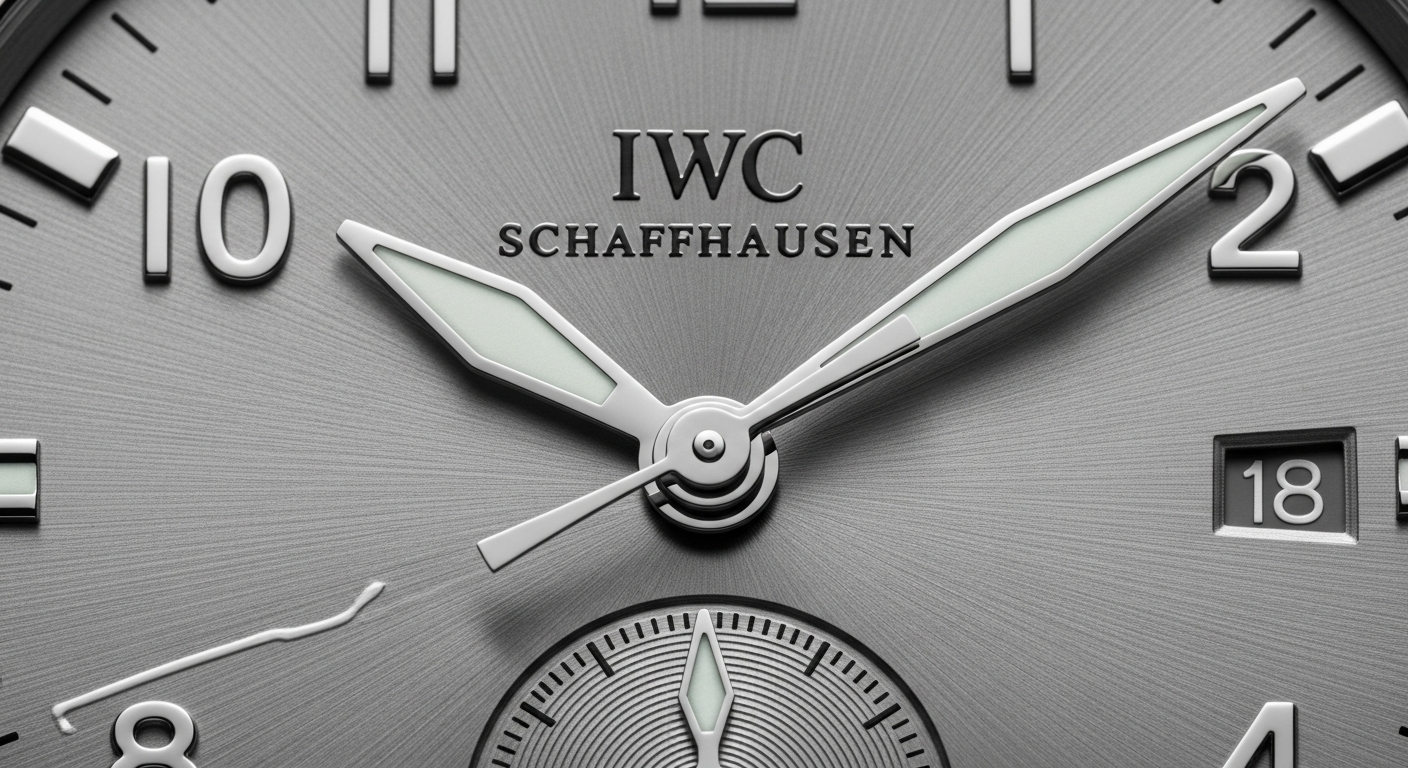
There’s also the matter of time itself. The fascination with smaller cases was partly a longing for the past, for a perceived elegance that belonged to another century. But the past isn’t only small. The past also contains those pocket-watch proportions, those grand dials meant to be read in a world with fewer screens and more sun. The Portugieser taps into that deeper past, the pre-wristwatch era when being large was the default because legibility mattered and space was not a sin. When you wear it, you’re not only referencing mid-century tailoring; you’re referencing a more elemental relationship to timekeeping.
And perhaps that’s why the oversized idea is returning in a new form across the industry. It’s not that brands are trying to reheat the old big-watch fad. Instead, they’re rediscovering scale as an expressive tool. Larger dials allow for simpler typography, more balanced layouts, and complications that don’t feel cramped. They allow for watches that are readable without squinting, which in a subtle way is an accessibility feature. And they allow for movements that can be built with a certain generosity—wider bridges, larger components, a sense that the mechanism isn’t being forced to fit a fashionable silhouette.
The Portugieser makes an editorial argument in metal: that good design is not necessarily the smallest design, and that maturity in taste can include the courage to wear something larger when the design justifies it. It reframes oversized as something you choose for yourself rather than something you wear for the room.
IWC’s own stewardship of the line has helped. The brand has kept the Portugieser’s core visual DNA intact even as it has modernized the internals and expanded the family. It’s a tricky balance. Change too much and you lose the point; change too little and you become a museum piece. The Portugieser tends to evolve the way architecture evolves: the facade remains recognizable, but the building becomes more comfortable to live in. Case finishing becomes a touch crisper, movements become more robust, complications integrate more smoothly, variants appear in different metals and dial colors without breaking the grammar.
Yet the real magic is how the watch behaves in the imagination. The Portugieser doesn’t just tell time; it conjures a certain tempo. It makes you think of maritime schedules, of long distances made predictable by the precision of instruments. It makes you think of desks and ledgers and windows with heavy light. It carries an old-world seriousness that somehow still feels modern, as if discipline and elegance have decided to collaborate instead of compete.
And then there’s the personal moment—the way a watch reveals itself not in press photos but in the quiet in-between. The way it catches a soft reflection while you’re holding a cup of coffee. The way the seconds hand moves across that open space with a kind of dignity. The way the numerals stay legible no matter what the day is doing. The way you can be dressed up or dressed down and the watch doesn’t panic. It just keeps its posture.
That posture is what separates the Portugieser from the caricature of oversized. The caricature is about domination. The Portugieser is about presence. One tries to occupy the room. The other simply belongs in it.
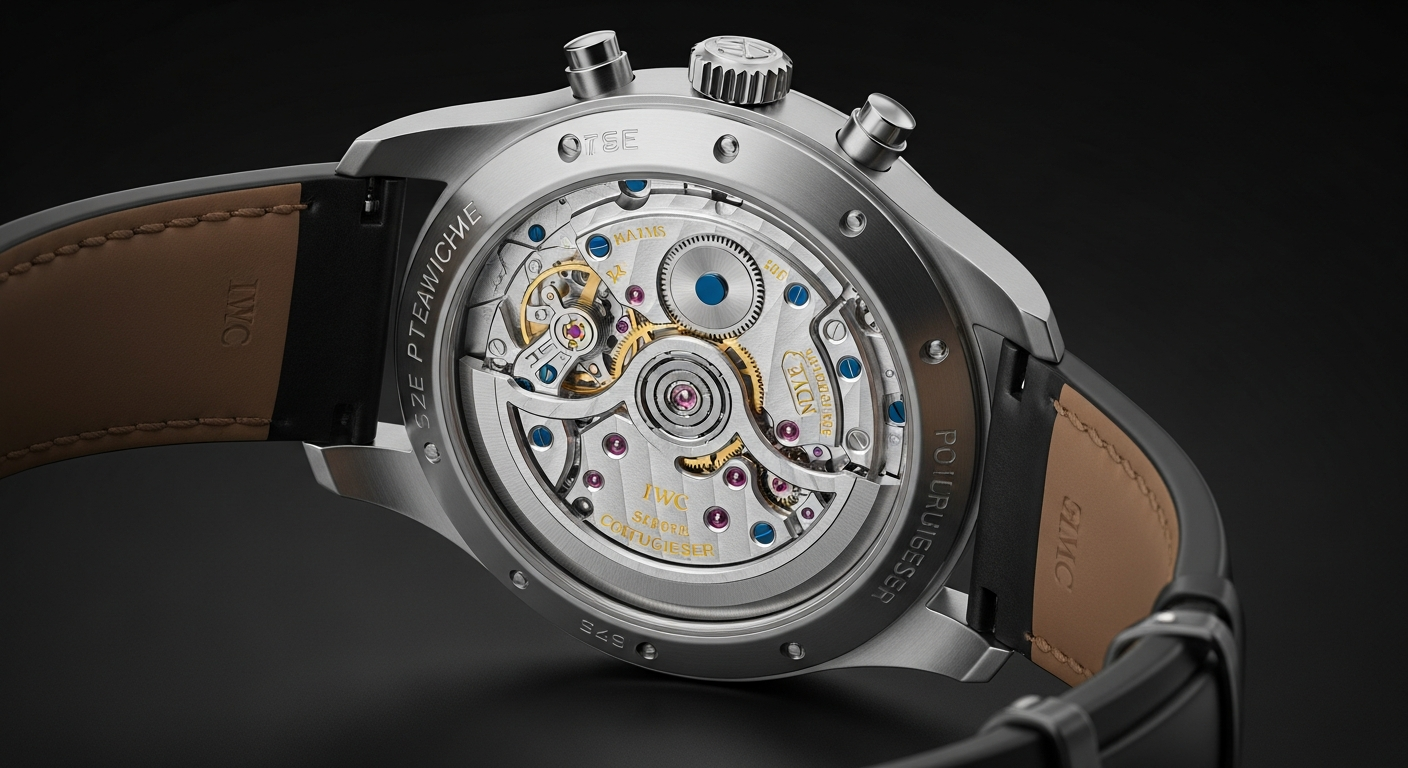
There’s a final twist to all of this: the return of the oversized idea might actually be the return of proportion in a broader sense. We’ve spent years focusing on size as a number, a spec to debate in comment sections. But proportion is experiential. It’s the relationship between dial and bezel, between case and strap, between typography and negative space, between watch and wrist, between object and life. The Portugieser does well in those relationships, which is why it can wear large without feeling like it’s trying too hard.
So when people say oversized is coming back, I don’t imagine a repeat of the loud era. I imagine something closer to the Portugieser’s ethos: big enough to be read, big enough to be calm, big enough to feel like a deliberate choice rather than an anxious one. I imagine watches that give the eye room to rest and the mind room to slow down. And I imagine wearers who are less interested in proving something and more interested in living with something.
The IWC Portugieser, in that sense, is not merely a watch in the conversation about size. It’s an argument about why size mattered before fashion got involved, and why it can matter again after fashion has exhausted itself. It’s a reminder that “oversized” can be an origin story rather than an exaggeration, and that sometimes the most modern thing you can do is return to the original reason an object looked the way it did.
You strap it on and the dial opens up like a horizon. You don’t feel larger. You feel steadier. And in a culture that often confuses volume with value, that steadiness might be the boldest statement of all.