Armin Strom Explained: The Swiss Independent Making Skeletonized, Resonance-Driven Mechanical Art
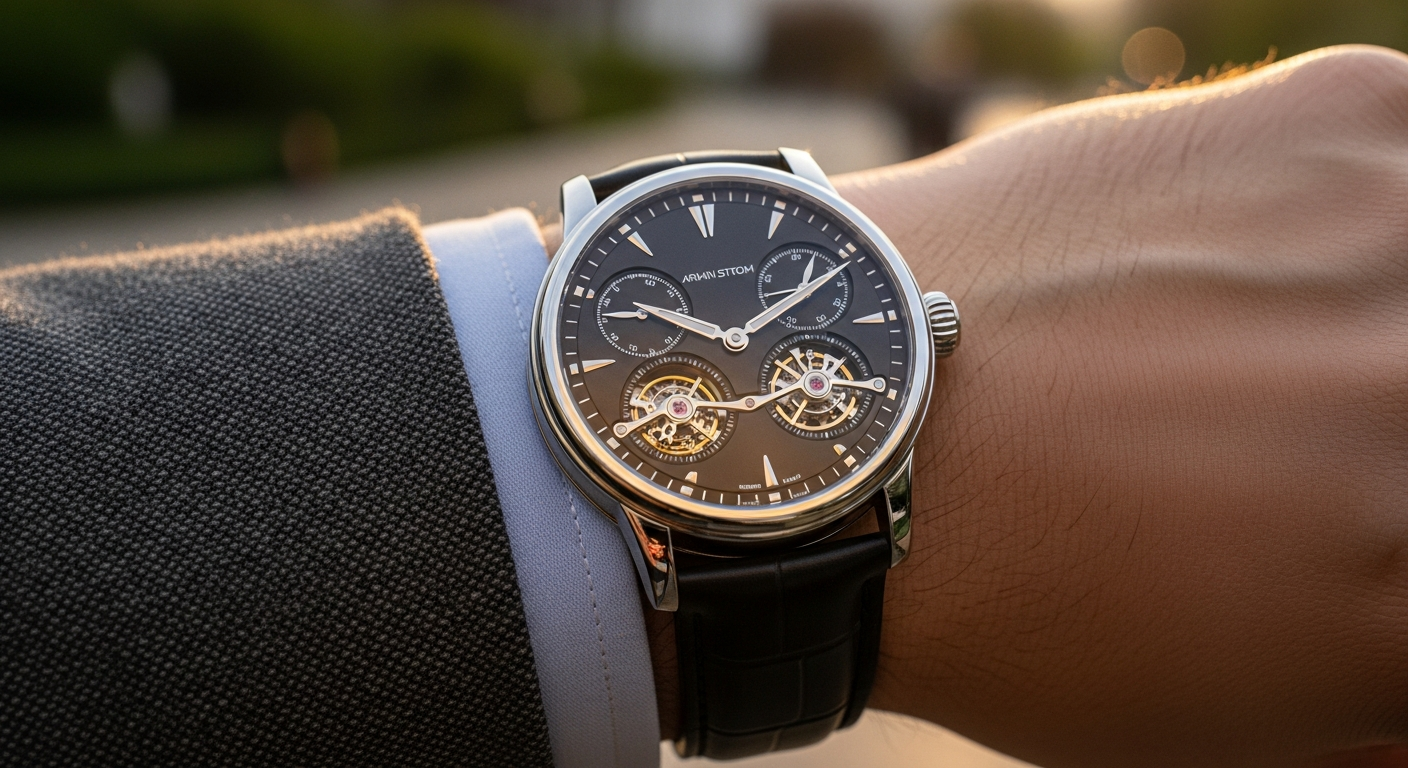
In a category where skeletonization is often a styling shortcut, Armin Strom treats transparency as a manifesto: nothing is hidden, because the mechanics are the point. From architectural bridges and hand-finished components to a rare pursuit of resonance—two balances influencing each other in pursuit of better stability—the brand has built a distinct identity that feels equal parts atelier craft and applied physics. The result is a small Swiss manufacture that invites you to read time through motion, not dials, and backs the spectacle with substance you can audit at a glance through the front of the watch itself (and through its movement specs).
Armin Strom, the independent playbook: make the mechanics legible
Most “openworked” watches fall into one of two camps: traditional movements with decorative voids, or aggressively styled dial-side cutouts that show just enough to signal complexity. Armin Strom’s approach is structurally different. The brand’s modern identity is built around movements conceived to be viewed from the front as the primary experience. The architecture does the storytelling, and the finishing has to withstand that level of exposure.
That distinction matters strategically in today’s independent market. When transparency is your baseline, you can’t hide weak decisions behind a dial, nor can you rely on a single theatrical complication to justify the watch. The watch has to remain coherent as a system: layout, proportions, bridge shapes, gear train placement, and the way power is stored and displayed. Armin Strom’s best pieces read like engineering diagrams made tactile, with bridges that feel designed rather than merely removed.
This is also why the brand resonates with a particular type of collector: those who value watchmaking as a visible discipline. Armin Strom doesn’t ask you to imagine what’s happening inside. It asks you to watch it happen—then notice that the mechanics aren’t just decorative, they’re organized with intent.
From artisan roots to manufacture-level credibility
Armin Strom began with a reputation anchored in hand-skeletonization and artisanal finishing, and that history still informs the brand’s current output. But the modern Armin Strom proposition isn’t nostalgia for traditional craft. It’s the operational decision to build a contemporary manufacture that can design, machine, decorate, assemble, and regulate movements in-house at low volume.
In the independent space, credibility is earned through repeatability as much as creativity. One-off artistry can be mesmerizing, but collectors increasingly watch for evidence that a brand can hold tolerances across a run, service its own creations, and iterate technically from one generation to the next. Armin Strom’s maturation into a manufacture has been less about scaling and more about controlling the full chain of decisions that make a skeletonized, dial-less watch feel deliberate instead of chaotic.
The result is a watchmaking identity that feels neither purely artisanal nor purely industrial. It is workshop-driven engineering: a small team building movements that look like they were designed to teach, then finished to a standard that makes the teaching enjoyable.
Skeletonization as architecture, not subtraction
If traditional skeletonization is subtraction, Armin Strom’s is architectural composition. The difference is visible in the way the brand uses bridges: not thin, fragile struts that exist because material was removed, but confident elements that define the scene. The bridges create a sense of depth and route your eye across the mechanics, often framing the escapement and balances as the emotional center of the watch.
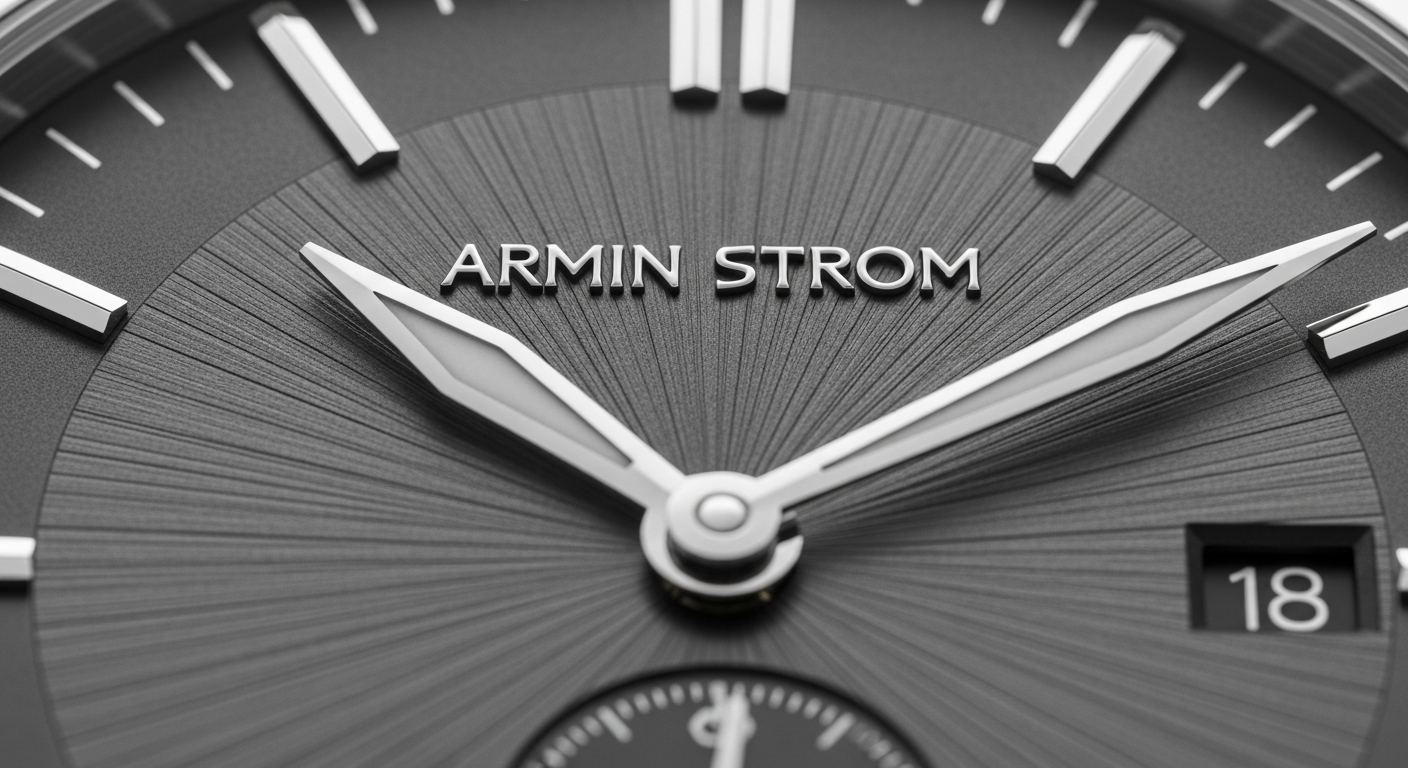
This approach also solves a common openworked problem: legibility. When brands chase transparency at any cost, the dial information becomes either an afterthought or a cluttered overlay. Armin Strom typically separates “time telling” from “mechanical reading” with disciplined placement—subdials and markers that are cleanly bounded, while the rest of the front is left to the movement. The watch becomes two experiences at once: the practical and the kinetic, without either drowning the other.
It’s a measured design stance, and it’s part of why the brand’s watches photograph so well in natural light. Shadows, bevels, and surface transitions do the heavy lifting. Finishing becomes functional because it defines edges and planes, making the mechanical story readable even at a glance.
Finishing that has to survive the front row
Skeletonization is unforgiving: it turns every surface into a potential focal point. When the movement is the dial, a sloppy interior angle, a dull bevel, or an inconsistent grain doesn’t just exist—it performs. Armin Strom’s finishing strategy prioritizes clarity: polished bevels that define bridge outlines, consistent brushing that establishes direction, and deliberate contrasts that separate components visually.
That discipline serves a strategic purpose beyond aesthetics. It signals seriousness in a segment where the term “independent” is sometimes used as a styling label. Collectors who spend time with watches under a loupe are not simply chasing decoration. They want evidence of intent: that the brand knows which areas to emphasize, where to invest handwork, and how to balance artisanal effort with mechanical reliability.
Armin Strom’s finishing tends to feel modern rather than baroque. The surfaces are often bold and architectural, the edges crisp, the visual hierarchy clear. This aligns with the brand’s broader thesis: transparency is not just to impress, but to communicate.
Resonance: the rare complication Armin Strom made a signature
Resonance is one of those concepts that can be misread as mystical marketing unless a brand is willing to show its work. Armin Strom has made it central, and importantly, visible. The idea is straightforward in principle and difficult in execution: two balances oscillate in proximity such that they influence one another, tending toward synchronized behavior that can improve rate stability under certain disturbances.
In practice, resonance is not a switch you flip. It is a system you build. It asks for carefully matched oscillators, controlled energy delivery, and a physical coupling method that encourages the balances to interact without collapsing into a loss of amplitude or a mess of competing phases. The challenge grows when you want the phenomenon to be robust in a wristwatch worn in motion, not a static experiment on a bench.
Armin Strom’s pursuit of resonance stands out because it treats the effect as engineering, not legend. The brand pairs the concept with mechanisms designed to make the two balances genuinely cooperative rather than merely co-present. And because the watches are openworked, you don’t have to take the claim on faith. You can watch the balances, observe their behavior, and understand that the brand is committing real movement real estate and real development budget to a niche, technically demanding pursuit.
As a market proposition, it’s unusually coherent. Resonance is not bolted onto an existing design language; it reinforces the brand’s central promise: timekeeping as visible physics.
The clutch and the case for control: engineering that serves accuracy, not just spectacle
Armin Strom’s technical credibility isn’t confined to resonance. One of the most telling signals of seriousness is when a brand invests in less glamorous systems that improve how a watch behaves: energy management, engagement control, and repeatability in user interaction.
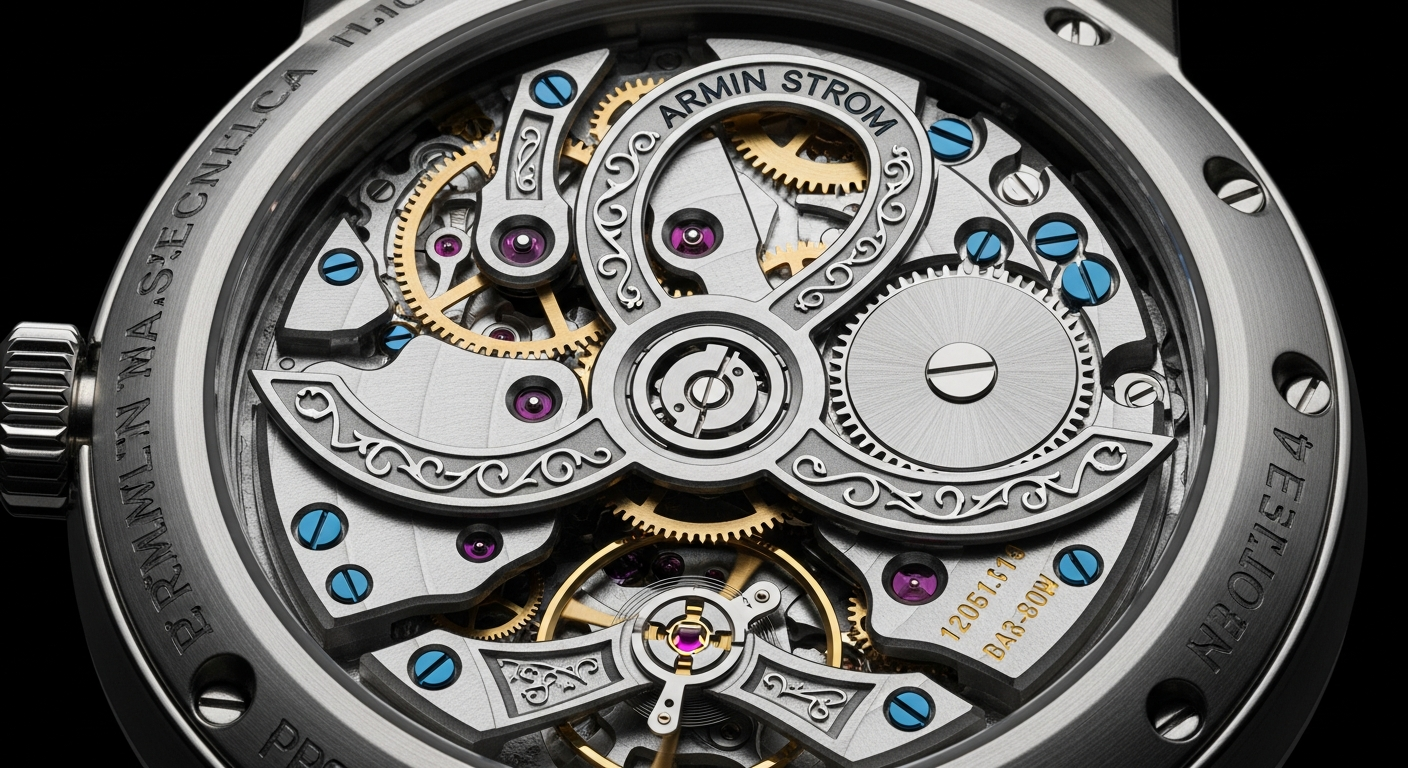
In resonance-equipped models, the clutch mechanism is a key piece of the puzzle. It enables the two balances to be set and started in a controlled way, helping the system reach the conditions under which resonance can emerge and remain stable. This is the kind of solution that doesn’t sell itself in a single photograph, but it’s exactly what separates a true technical program from an aesthetic concept.
More broadly, Armin Strom’s movements tend to present their logic openly. Power reserve indications, barrel placement, and the routing of the gear train are often arranged so you can infer how the watch is managing energy. When you see twin barrels or particular bridge layouts, it doesn’t feel like an arbitrary design flourish. It feels like a layout responding to the requirements of torque delivery, autonomy, and visual balance.
This is where Armin Strom becomes a case study in modern independent watchmaking: it uses the allure of open mechanics to invite scrutiny, then rewards that scrutiny with decisions that hold up mechanically.
Low-volume manufacturing as a feature, not a limitation
Independents frequently talk about small production as a romantic ideal. For collectors, the romance wears thin if small-scale output leads to inconsistency, poor servicing infrastructure, or parts that become problems a decade later. Armin Strom’s strategy positions low volume as a way to keep complexity manageable while maintaining a high finishing threshold and a recognizable design language.
There is also a subtler benefit: iteration without dilution. When a brand produces in smaller numbers, it can refine movements across generations without having to protect a mass-market platform. Armin Strom’s identity is not tied to one iconic, immutable model. It’s tied to a set of principles—front-facing mechanics, architectural bridges, finishing that reads clearly, and engineering that justifies the visibility. Low volume makes it easier to stay faithful to those principles while evolving the technical core.
For collectors, this tends to translate into a sense that the watches are made with attention rather than throughput. Not every independent can deliver that reality. Armin Strom’s credibility is that it tries to operationalize it: not simply by being small, but by being organized.
How to read an Armin Strom: what collectors should look for
Armin Strom watches reward a specific kind of looking. Start with the architecture. Are the bridges shaped to guide the eye, or do they feel incidental? The strongest examples have a clear visual route: a subdial that anchors time, a prominent balance or balances that anchor motion, and a gear train that reads as purposeful space rather than empty space.
Next, assess finishing as definition. On a heavily openworked watch, finishing isn’t only about luxury cues; it’s about legibility. Polished bevels should be consistent and intentional. Brushed planes should have uniform direction and clean termination. Interior angles and sharp transitions—when present—should look deliberate, not like an artifact of rushed tooling.
Then consider the engineering story. In resonance models, the presence of twin balances is obvious, but the deeper question is how the brand supports the concept. Look for evidence of system thinking: how power is delivered, how setting and synchronization are managed, and how the movement layout makes room for stability rather than mere symmetry.
Finally, evaluate the watch as an object you will live with. The best skeletonized pieces are compelling in macro photography but can turn busy on the wrist. Armin Strom’s more disciplined designs tend to hold up because they preserve negative space, use strong bridge forms, and keep the time display readable without overpowering the mechanics.
Where Armin Strom sits in the independent landscape
Armin Strom occupies a relatively rare middle ground. It speaks to collectors who want the emotional pull of artisanal watchmaking—visible hand-finishing, workshop scale, individuality—while also demanding technical legitimacy that goes beyond decoration. In other words, it is not selling “openworked” as an aesthetic category; it is selling transparency as accountability.
That makes the brand a useful reference point in a market crowded with visual noise. Plenty of watches expose a balance wheel. Far fewer build an entire brand language around front-facing mechanics and then invest in complications like resonance that are conceptually aligned with that language. Armin Strom’s strongest arguments are structural: the watches look the way they do because the movements were conceived to look that way, and the brand’s engineering choices reinforce the same thesis.
For the collector who values watches as machines worth examining, Armin Strom offers a clear proposition. You are not buying a dial with a view. You are buying a movement that tells time out loud—through architecture, through finishing, and, in its most distinctive models, through the controlled experiment of resonance performed on the wrist.