H. Moser & Cie: Minimalism with a Mechanical Punch

There’s a certain moment that happens in a quiet room when someone takes off a truly interesting watch. It isn’t the loud theater of a tourbillon spinning like a tiny carnival ride, or the obvious flex of a dial crowded with complications. It’s something subtler: a brief hesitation, a second look, the small tilt of the wrist to catch the light again. With H. Moser & Cie, that moment is the entire point. Their watches don’t shout for attention; they create a space where attention can’t help but arrive. Minimalism, in their hands, isn’t an absence. It’s a provocation.
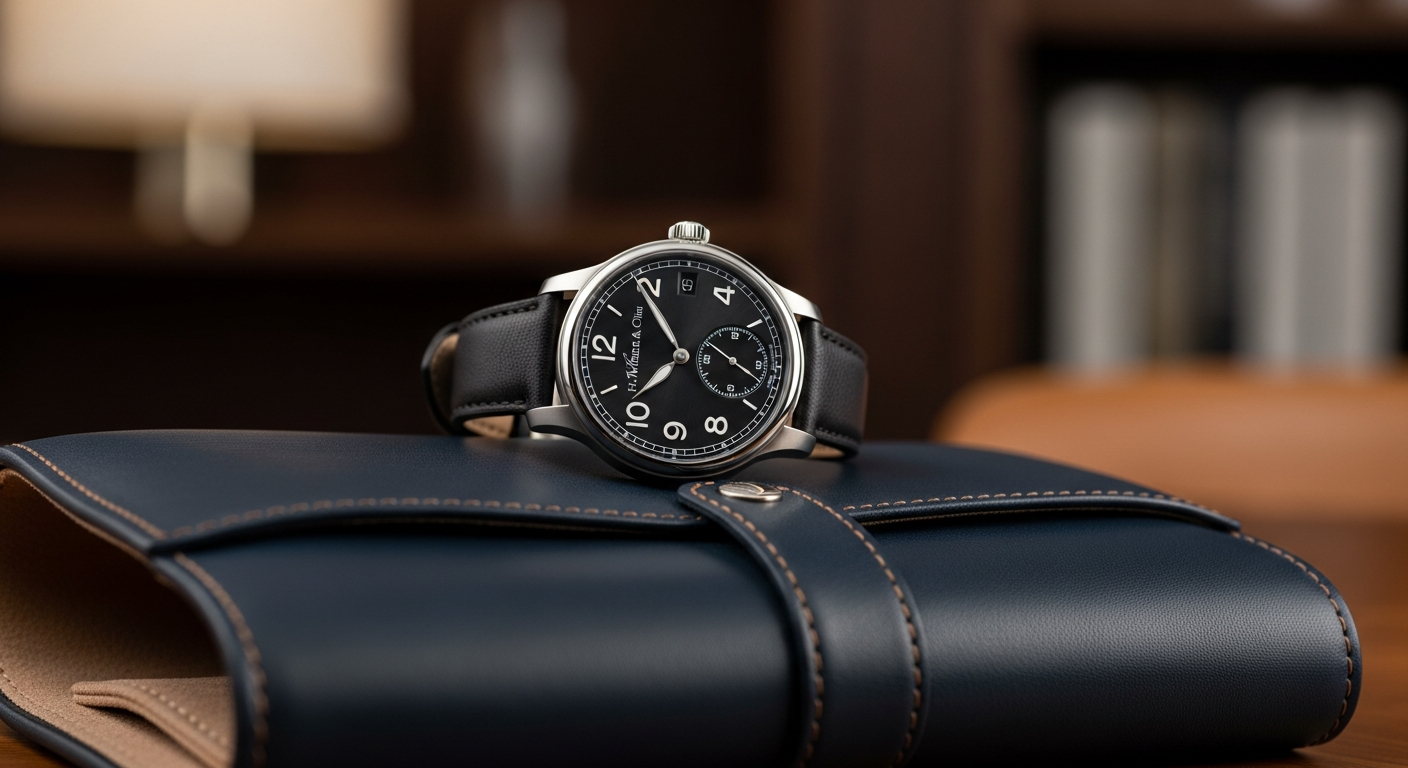
I remember the first time I saw a Moser dial up close, not in a press photo but in actual daylight where colors behave like themselves instead of marketing. It looked like a simple gradient—one of those sunburst fumé dials people talk about as if it’s a single trick. Then the watch moved, and the dial didn’t just change from light to dark; it breathed. The center held like a glow, the periphery deepened like dusk moving in. There was no clutter to distract from it. No logo screaming. Sometimes, barely any text at all. You get the impression the brand is confident enough to leave negative space on the table and still win the hand.
That’s the first punch: restraint so radical it becomes a statement.
The second punch is mechanical, and it lands after you’ve already leaned in.
The story of H. Moser & Cie is often told like a rediscovery, and in a way it is. Heinrich Moser’s name goes back to the 19th century, to an era when Swiss watchmaking still had the romance of expedition and commerce baked into it. But the modern Moser—the one that feels so surgically contemporary—found its footing in a world saturated with heritage claims. In that crowded room, Moser didn’t try to out-ornament anyone. It went in the other direction, toward the edge, where the designs could be almost austere and the engineering could carry the weight of personality.
If most luxury watches sell you the idea that more is more, Moser whispers that less can be dangerous.
There’s a particular kind of bravery in designing a simple watch that has to stand next to complicated ones. A perpetually rotating tourbillon will always have an easy party trick. A dial filled with subdials and windows will always look “busy,” and busyness reads as value to plenty of buyers. But a time-only watch with clean hands and a dial that’s essentially a field of color has to be perfect. Any proportion misstep shows immediately. Any finishing shortcut becomes obvious. Minimalism is unforgiving. It’s not the easy route—it’s the route without hiding places.
And Moser seems to enjoy that.
It’s easy to talk about minimalism as if it’s just design philosophy, but with Moser it’s also an attitude toward branding itself. They’ve played with nearly logo-less dials, with the idea that a watch can be identifiable by its shape, its color, its finishing, and its vibe rather than a printed name. It’s the kind of move that would terrify a committee. It’s also the kind of move that makes watch people grin, because it feels like a dare. Can you recognize quality without being told where to look? Can a brand be so sure of its own signature that it doesn’t need to sign in ink every time?
The answer is yes, if the signature is built into the object.
Take their typical dial execution: the fumé gradient isn’t merely a paint job but a carefully layered effect that plays with depth and light. The sunburst brushing pulls your gaze toward the center, while the darkening edge frames the hands like a vignette. You’re looking at a stage set for time itself. And because the stage is so clean, the smallest details become characters. The hands matter. The indices matter. The curvature of the sapphire, the thickness of the bezel, the way the case transitions from polished to brushed—these become plot points.
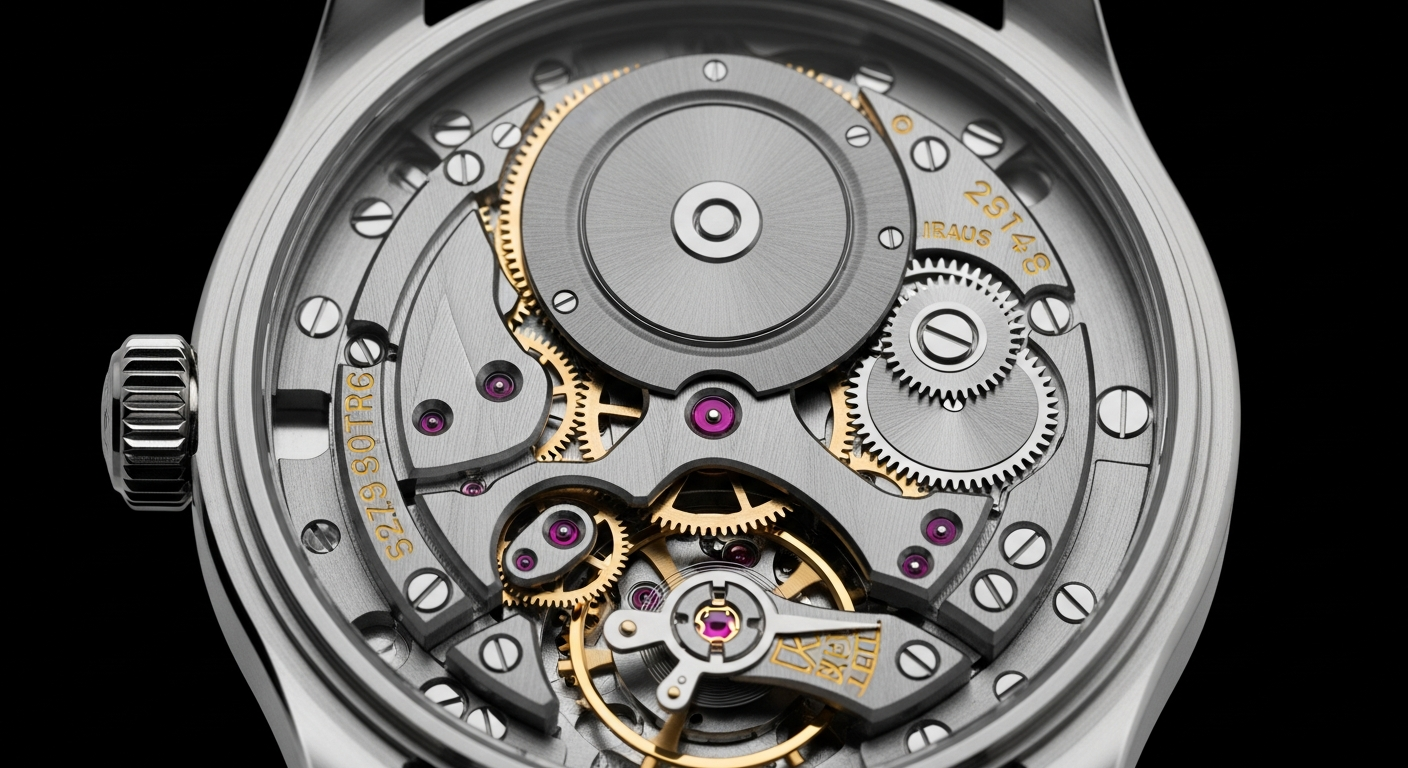
Then you turn the watch over and realize the caseback is where the brand lets itself get a little loud.
A Moser movement has a particular mood: contemporary, well-finished, and quietly engineered with the sort of features that don’t announce themselves unless you know to ask. The first time you notice their interchangeable escapement, it feels like someone has designed a sports car engine with a module that can be serviced more efficiently, not because it’s cheaper, but because it’s smarter. The balance bridge, the architecture, the stripped-back shapes—they match the design language on the front, but they’re not simplistic. They’re edited. And editing is hard.
There’s a misconception that minimalism in watches is a purely aesthetic choice, like choosing a black turtleneck instead of a patterned shirt. In Moser’s world, minimalism is a commitment that reaches all the way into the mechanics. When you build a watch that looks clean, you have to build a movement that feels intentional. The finishing can’t rely on baroque flourishes to distract from shaky fundamentals. The component choices can’t feel like an afterthought. The movement has to be the same kind of calm: purposeful, modern, and confident.
It’s that combination that creates the “mechanical punch.” You expect the watch to be elegant. You don’t necessarily expect it to be robust in its engineering decisions, or to have the kind of horological seriousness that shows up in the details you only learn to appreciate over time. Moser plays the long game. The watches don’t just charm you on first glance; they convince you slowly, as you notice how well the thing is made, how it sits on the wrist, how it behaves across weeks of wear.
That persuasion feels almost old-fashioned in a market trained to react instantly.
Of course, the modern watch world doesn’t reward quietness as easily as it claims to. We live in an era of limited editions and internet drops, where the success of a watch can hinge on how well it photographs on a phone screen, how quickly it can be understood in a thumbnail. Moser, interestingly, has managed to be both subtle and meme-capable. Their occasional satirical releases—the ones that poke at industry clichés—aren’t random jokes. They’re pressure valves. They remind you that the brand understands the absurdity of luxury, that it can participate in the culture without sacrificing its core.
And that’s part of the appeal: the watches are serious, but the brand doesn’t take itself too seriously. It’s a rare balance. Many maisons are either so reverent they turn brittle, or so trend-chasing they lose their center. Moser’s best work feels like it comes from a place of genuine design conviction, with enough mischief to keep the air moving.
There’s also the matter of size and proportion—another arena where minimalism can succeed or fail. When a watch face is clean, its diameter, thickness, and lug shape are amplified. A millimeter too thick, and the whole object can feel blunt. A lug curve that doesn’t hug the wrist, and the elegance becomes theoretical. Moser tends to understand that a minimalist watch needs to wear with ease, like a well-cut coat. Even when the case has presence, it often avoids the kind of aggressive geometry that turns a watch into armor.
You can see it in their integrated bracelet sports designs, where the goal isn’t to imitate famous silhouettes but to offer a distinctly Moser feel: smooth, architectural, and a little unconventional. The bracelets and cases flow like a single object, but with enough tension in the lines to avoid blandness. The design is calm, yet it has a pulse.
That pulse shows up in the colors, too. Moser doesn’t treat color like decoration. It treats color like identity. Their greens, blues, and smoky neutrals often feel less like “options” and more like moods the watch inhabits. A Moser in a deep fumé green can look almost formal in the shade and then suddenly playful in direct light. The dial becomes a living surface, and because there’s so little else on it, you notice every shift.
It’s a clever inversion of what many brands do. Where others add more elements to create interest, Moser removes elements until the remaining ones can’t help but become interesting.
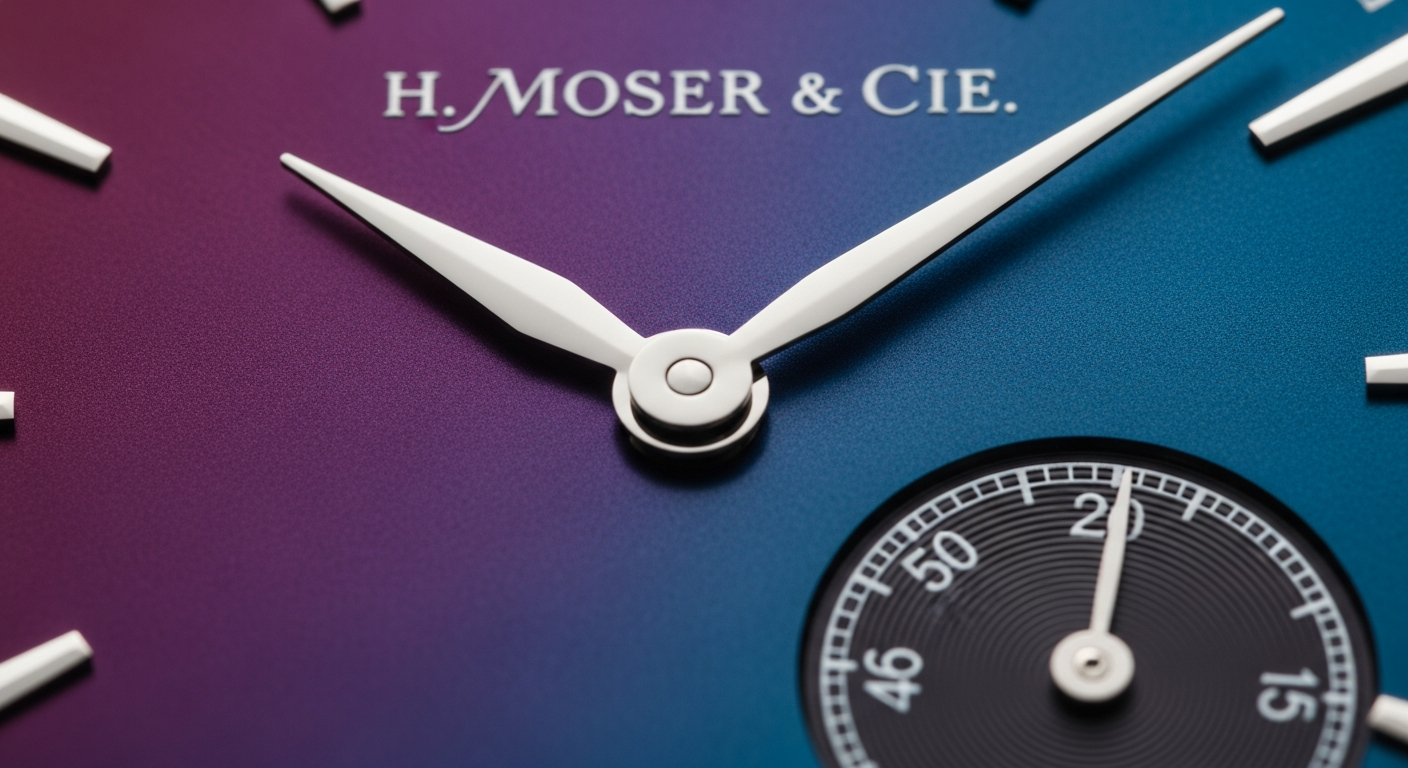
There’s a philosophical undercurrent here that goes beyond watches. Minimalism, when it’s done well, isn’t sterile. It’s focused. It’s the difference between a room that feels empty and a room that feels curated. Moser’s watches feel curated. They make you aware of what’s been left out, and why. You start to notice how often the rest of the industry fills space just because it can. Once you’ve worn something that’s been edited with discipline, clutter can start to feel like noise.
But the editorial part of this story—the part that deserves to be said out loud—is that minimalism can also be a kind of luxury gate. It assumes patience. It assumes you’re willing to spend money on something that doesn’t immediately broadcast its price or its pedigree. That’s not for everyone, and it doesn’t need to be. In fact, Moser’s appeal is partly that it lets you opt out of the obvious status game without opting out of quality.
You can wear a Moser to a dinner and have it go unnoticed by most people, which is often the point. But the person who does notice tends to be the kind of person you actually want to talk to. They’ll ask a real question. They’ll pick up on the lack of logo, the dial’s depth, the case shape that doesn’t look like a clone of anything else. The watch becomes a quiet signal—not of wealth, exactly, but of taste and intent.
And then, because this is watchmaking, the conversation inevitably turns to what’s inside.
The “mechanical punch” is not always about the most exotic complication. Sometimes it’s about how the brand approaches fundamentals: power reserve, stability, serviceability, finishing choices that emphasize architecture over ornamentation. You sense a workshop mentality rather than a marketing department’s checklist. The movement is not merely a necessary engine; it’s part of the watch’s personality. It’s the reminder that behind the calm front there’s a machine—precise, energetic, alive.
There’s a pleasing contradiction in that. The dial is serene, almost meditative. The movement is kinetic, purposeful, filled with tension and release. The watch is both an object of quiet and a miniature factory of motion. That’s the punch. You realize you’re wearing something that looks effortless but is anything but.
It’s analogous to listening to a musician who plays with restraint. The melody is simple, the tempo controlled. Then you recognize the technique under the surface—the breathing, the precision, the years of discipline that allow the performance to feel so natural. Moser’s watches feel played, not just made.
In an age when the watch world can feel like it’s repeating itself, Moser’s minimalism reads as a form of originality. Not originality through novelty, but originality through omission. That’s a harder kind. Anyone can add a new color or a new texture or a new collaboration logo. It takes more conviction to step back and say: we’ll let the material and the mechanics do the talking. We’ll trust proportion. We’ll trust finishing. We’ll trust that the right customer will feel it.
That trust is, perhaps, the most luxurious thing of all.
I think that’s why the brand inspires such loyalty among collectors who have already been through the obvious landmarks. Once you’ve owned the watches that everyone is supposed to own, you start craving pieces that feel like discoveries. Moser can feel like that discovery, even though it’s not obscure. It has the unusual ability to be recognizable to enthusiasts while still feeling personal, like you chose it rather than being assigned it by the culture.
And if you spend enough time with a Moser, you start to appreciate how the minimalism extends to wearability. These watches tend to integrate into your day instead of dominating it. They don’t demand that you dress around them. They don’t always pull focus in a room. They give you the private satisfaction of owning something deeply considered. Then, when you catch the dial in the right light, or you feel the winding action, or you notice the way the hands cut across that gradient field, you get that small hit of joy—the one that’s for you, not for the audience.
That’s the mechanical punch again, but delivered gently.
It would be easy to frame H. Moser & Cie as an antidote to excess, a protest against loud luxury. There’s truth in that, but it’s incomplete. Moser isn’t only saying no to noise. It’s saying yes to a different kind of drama: the drama of precision, the drama of proportion, the drama of a machine made beautiful without being made busy. It’s a brand that understands that silence can be an aesthetic, and that within silence the smallest sound becomes meaningful.
In the end, what makes Moser compelling is not that it’s minimalist. Plenty of watches are minimalist. What makes it compelling is that it pairs that minimalism with confidence and capability. It doesn’t ask you to choose between design and mechanics, between modernity and tradition, between humor and seriousness. It threads those needles and makes the result look inevitable.
That’s a rare trick in watchmaking: to create something that appears simple, and then to reveal, slowly, that it’s been engineered and edited to within an inch of its life. A Moser doesn’t overwhelm you. It ambushes you, politely. You look once, then again, then you start noticing everything. And by the time you feel the full weight of the craft behind the calm dial, the punch has already landed.