Laurent Ferrier: The Quiet Revolution in Independent Haute Horlogerie (And Why Collectors Can’t Ignore It)
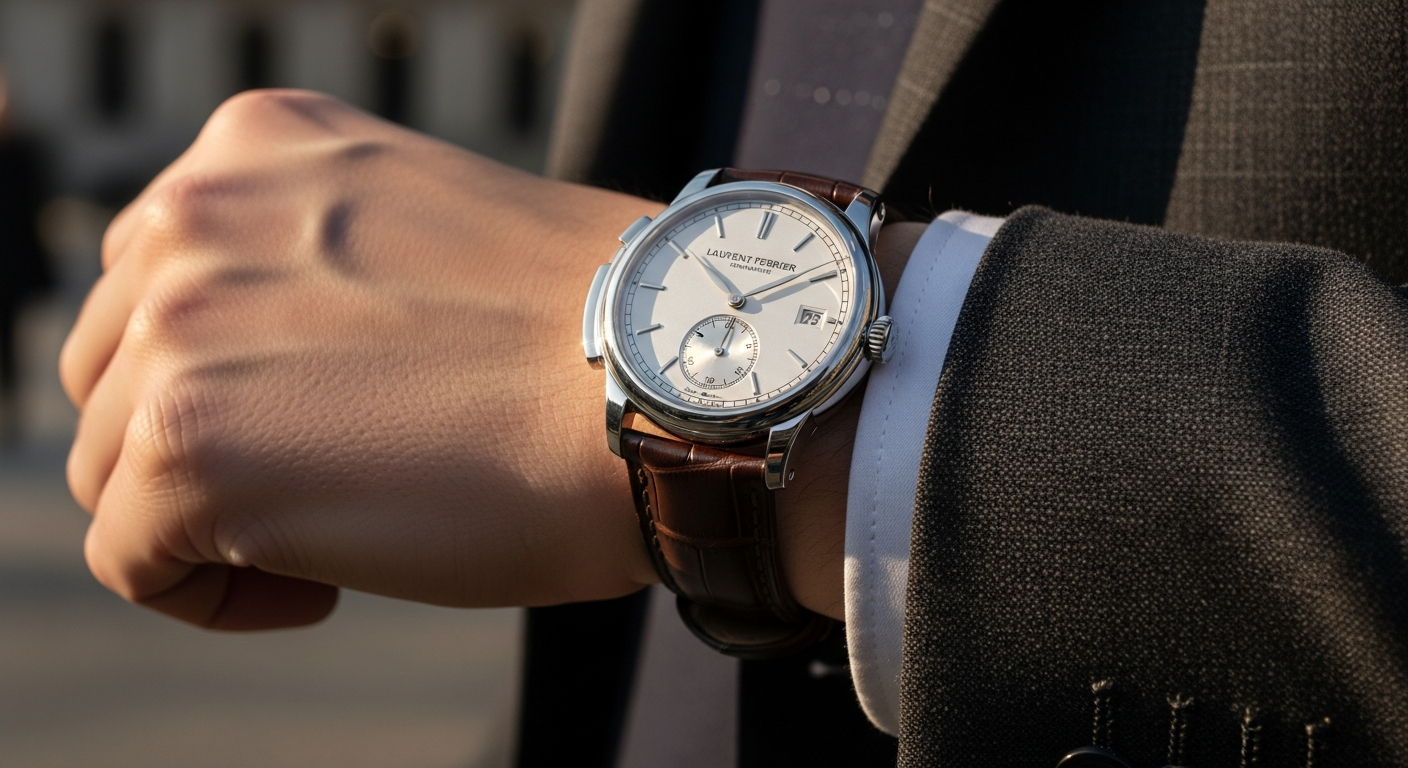
In a category dominated by spectacle—bigger cases, louder colors, louder narratives—Laurent Ferrier feels almost anachronistic. And that is precisely its power. Born from a watchmaker’s lifetime at Patek Philippe and tempered by endurance racing discipline, the brand operates like a private atelier disguised as a product line: minimalism on the dial, maximalism in the movement, and a kind of confidence that refuses to beg for attention. The question isn’t why Laurent Ferrier is good—it’s why more people aren’t talking about it yet, and what that silence signals for the next chapter of serious collecting.
The anti-spectacle thesis: quiet luxury as a technical position
“Quiet luxury” is often misused to describe anything understated and expensive. In horology, restraint is not an aesthetic mood; it can be a technical position. Laurent Ferrier’s best work argues that the highest form of modern independence is not novelty for its own sake, but the disciplined refinement of fundamentals: proportion, legibility, chronometric intent, and finishing that holds up under unforgiving magnification.
Where many contemporary independents compete in extreme architecture, aggressive case forms, or narrative-centric limited editions, Laurent Ferrier competes in the margins—the subtle dimensional decisions that separate a good watch from a coherent one, and the labor-intensive movement work that never photographs as loudly as it feels in hand. The brand’s value proposition is therefore unusually collector-centric: you are not paying for the sensation of being seen wearing it. You are paying for how it is made, and for how it behaves over time.
This is why Laurent Ferrier matters in a hype-saturated market. When attention is the scarcest commodity, watches optimized for attention become increasingly correlated. Laurent Ferrier’s approach is the opposite: it becomes more differentiated precisely because it refuses the usual attention mechanisms.
From Patek discipline to independent clarity
Laurent Ferrier is not “ex-Patek” as a marketing adjective; the brand’s DNA is built on the century-old idea that aesthetic calm is earned, not designed. Ferrier’s career in Geneva instilled a particular hierarchy of values: first, reliability and precision; second, serviceability and longevity; third, finishing to a standard that is inseparable from function; and only then, stylistic expression.
The racing influence is sometimes treated as a colorful origin story, but it has technical implications. Endurance racing rewards systems thinking: heat, friction, tolerances, and the human factor. Translate that mindset to watchmaking and the result is visible in Laurent Ferrier’s consistent preference for stable architectures, measured complications, and movements that prioritize efficient power delivery and controllable regulation rather than theatrical engineering.
In a world where independence is often synonymous with visual disruption, Laurent Ferrier offers a different definition: independence as the freedom to be classical without being derivative, and to be modern without being loud.
Dial restraint that is engineered, not minimalistic
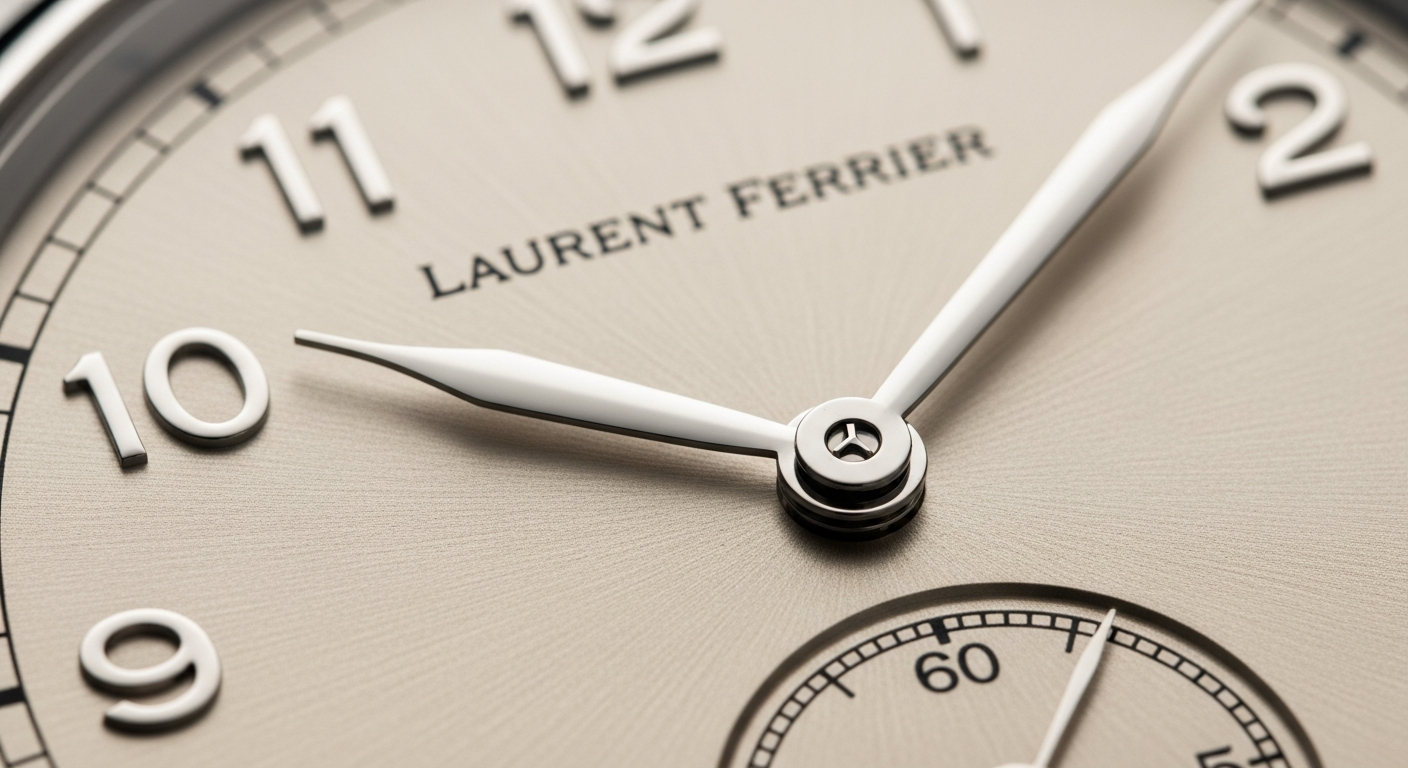
The most misunderstood part of Laurent Ferrier’s appeal is the dial. To the untrained eye, a Laurent Ferrier dial can seem almost too polite: clean typography, calm indices, modest apertures, and gentle colors. Collectors who spend time with the watches tend to realize that the apparent simplicity is hard-won. The proportions are unusually coherent: hands with the right mass, a minute track that reads naturally, and a balance between negative space and information that avoids “designing for Instagram.”
Take the brand’s preference for soft case curves and classical roundness: it does not aim to look vintage, but to sit on the wrist with the neutrality of a well-designed instrument. The best Laurent Ferrier pieces have an ergonomics-first quality that becomes clear after a full day of wear. That matters in the quiet-luxury discussion because understatement that is uncomfortable is just styling. Understatement that wears effortlessly is a product philosophy.
There is also restraint in complication choice. Many Laurent Ferrier watches are time-only or present complications with a deliberately low visual footprint. The collector signal is clear: the brand expects owners to care about how the watch is made and regulated, not just what it “does.” In that sense, dial minimalism is not a lack of ambition; it is a staging decision that pushes attention toward the movement.
Movements that make the case for modern Geneva finishing
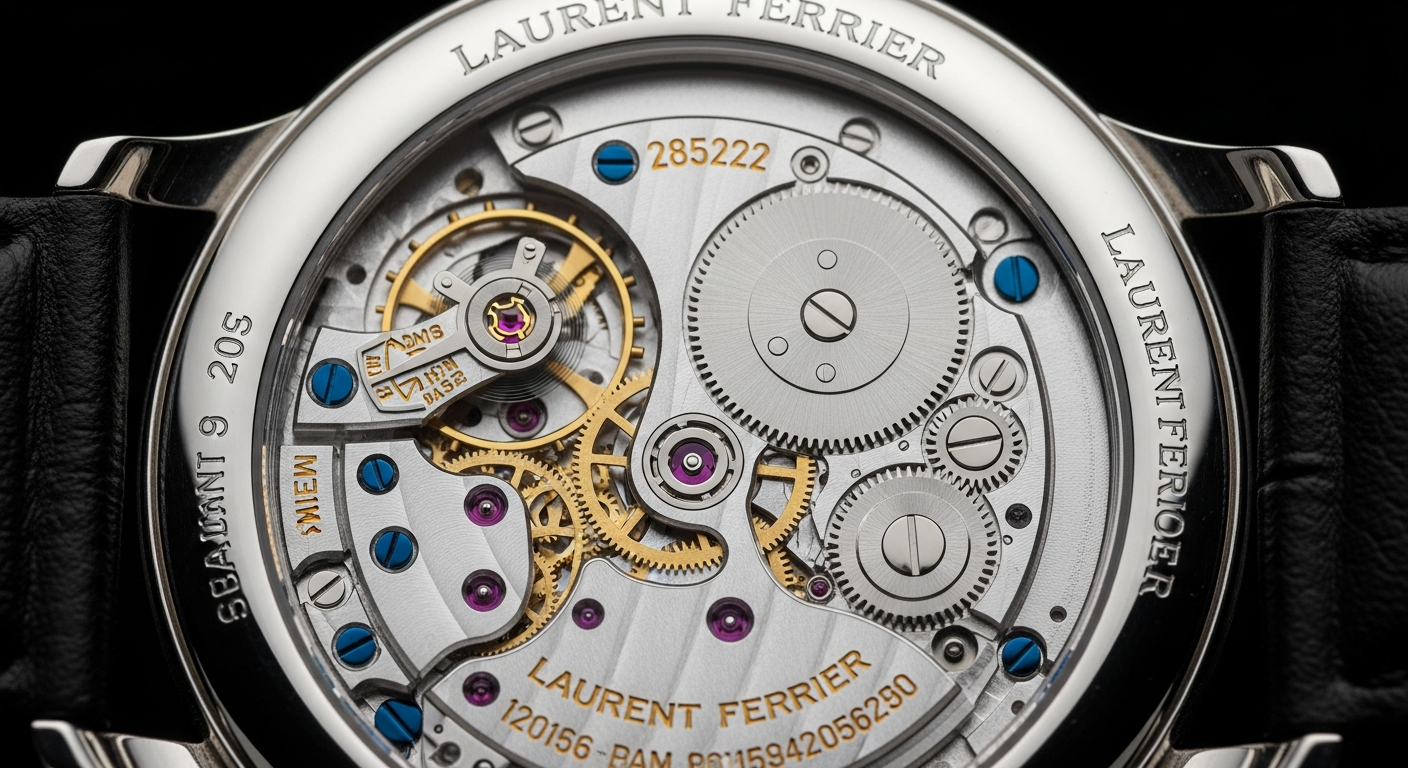
Laurent Ferrier is a brand you buy with a loupe in mind. The finishing is not merely “high-end”; it is coherent, consistent, and purposeful in a way that places it in the top tier of contemporary independent watchmaking. Anglage is not a highlight reserved for a few obvious edges; it is carried through bridges and contours with a patience that signals real bench time. Surfaces are treated with restraint: brushing and polishing are used to articulate the architecture rather than to shout about it.
There is a particularly Genevan sensibility to the finishing codes: calm striping, crisp interior angles where applicable, clean jewel sinks, and a layout that is designed to be looked at. Importantly, the finishing is not disconnected from function. The brand’s movements tend to communicate an orderly approach to power flow and component accessibility—an underappreciated luxury, because the true cost of ownership is often determined years later at service time.
In a market that increasingly treats movement finishing as a checklist item, Laurent Ferrier’s work reads as a sustained philosophy. The finishing is not performed to win a single macro shot; it is performed to satisfy the kind of collector who will look again and again, long after the novelty of purchase fades.
Racing-bred precision: chronometry as quiet credibility
Collectors often talk about finishing because it is visible. Precision is harder: it requires time, consistency, and an understanding of how a watch behaves across positions and days. Laurent Ferrier’s background makes it difficult for the brand to treat chronometry as secondary. The best examples embody a certain old-school seriousness: the movement is not merely beautiful; it is tuned to be dependable in daily use.
This is one of the reasons Laurent Ferrier aligns so neatly with the quiet-luxury thesis. Loud watches can hide behind spectacle. Quiet watches cannot. When a watch is visually restrained, every small shortcoming becomes more noticeable: hand alignment, date execution, crown feel, winding smoothness, setting precision. Laurent Ferrier generally performs well in these tactile categories, which is why owners often describe the watches less in superlatives and more in terms of “rightness.”
That “rightness” is the product of cumulative discipline: tolerances that feel controlled, mechanisms that operate with crisp predictability, and decisions that avoid unnecessary risk. In an independent landscape where innovation can sometimes mean “uncertain long-term behavior,” Laurent Ferrier’s particular kind of modernity is reassuring.
Why the brand stays under-discussed: scarcity without theater
Laurent Ferrier’s relative silence is not an accident. Many brands manufacture scarcity through constant limited editions and marketing-ready “drops.” Laurent Ferrier tends to manufacture scarcity the old-fashioned way: by making watches at a pace that reflects the reality of small-scale high finishing, and by maintaining a coherent design language rather than chasing seasonal reinvention.
This creates a paradox in the current market. Collectors are trained to associate importance with visibility: celebrity exposure, auction headlines, aggressive social strategy. Laurent Ferrier does not play that game. As a result, it can be underrepresented in the loudest collector conversations despite being overrepresented in the conversations that matter most: what experienced owners actually keep.
For serious collecting, this is a strategic signal. The brands that endure are often the ones that do not overextend themselves narratively. If a watch is compelling only because the story is constantly being refreshed, it risks aging quickly. Laurent Ferrier’s story is steady: disciplined watchmaking, classical form, and movement work that remains legible decades later. That is a stronger long-term value driver than short-lived attention.
Collecting Laurent Ferrier: what to look for, and what to ignore
Laurent Ferrier rewards collectors who enjoy nuance more than novelty. The first decision is philosophical: are you buying for visible complexity, or for invisible quality? If it is the latter, the brand’s time-only and subtly complicated pieces can be among the most satisfying because they remove distraction. The design has fewer places to hide; the movement and the interaction quality must carry the experience.
Case size and proportion matter more here than trends. Laurent Ferrier’s shapes tend to wear with a classical softness, and the difference between “fits” and “floats” on the wrist is meaningful. Dials should be evaluated with the same seriousness as movements: printing crispness, hand finishing, alignment, and how the watch reads in low light and across angles. A quiet watch should not be visually fussy; it should be effortlessly legible.
Collectors should ignore the temptation to treat the brand as a contrarian trophy. Laurent Ferrier is not an anti-hype badge; it is a watchmaker’s brand. The ownership experience is built around consistency: winding feel, setting precision, and a movement view that does not get old. If those are your priorities, the brand is unusually aligned with them. If you want a watch to announce itself, it will not.
The larger market implication: restraint as the next status symbol
When every brand is trying to be a content engine, restraint becomes a competitive advantage. A quiet watch is harder to sell quickly, but easier to respect over time. Laurent Ferrier sits at the intersection of two collector desires that are often in tension: classical Genevan beauty and independent credibility. That combination is more strategically valuable now than it was a decade ago, because collectors have become more educated, more skeptical, and more fatigued by constant novelty.
The brand’s approach also hints at a shift in what “status” means in watch collecting. Loud status is visible and immediate; quiet status is slow and cumulative, earned through knowledge and taste rather than recognition. Laurent Ferrier is not building watches for the moment. It is building watches for the collector who will still care after the market has moved on to the next narrative.
That is the quiet revolution: not a new design language, not a new complication race, but a renewed insistence that the highest luxury is discipline. Laurent Ferrier proves that an independent can be modern without being performative—and that, in 2026’s collector landscape, is precisely why it can’t be ignored.