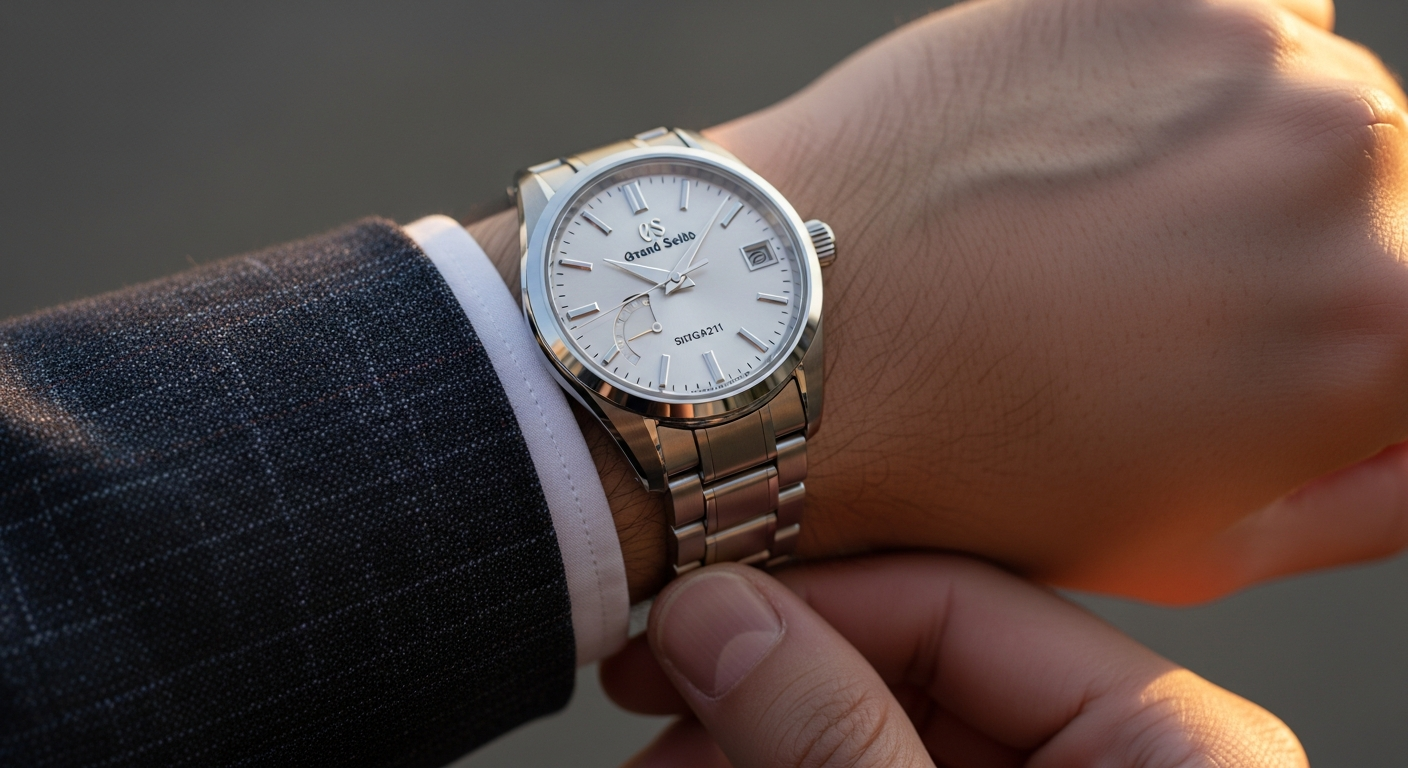
Grand Seiko Snowflake: When Precision Looks Like Poetry
There are watches that announce themselves the moment they slip from their box, preening in the light like performers who know exactly where to find the spotlight. And then there are watches that seem to exhale rather than arrive, as if they’ve been waiting quietly for you to notice the way morning light settles across a windowsill. The Grand Seiko Snowflake belongs to the second category. It doesn’t ask for attention so much as it teaches you a new way to pay it.
The first time I saw one in person, it didn’t feel like an encounter with a luxury object. It felt like stepping into a certain kind of weather. The dial wasn’t white the way paper is white; it was white the way snow is white—full of shadows you don’t realize exist until you watch them move. I remember tilting my wrist and watching the surface change character, as if the watch had a private supply of daylight tucked beneath the crystal. The indexes caught and returned the light with a crispness that didn’t look ornamental. It looked purposeful, like a blade honed for a job.
It’s easy to talk about the Snowflake as an icon now, because it has become one. It has been photographed on wrists beside cappuccinos and leather gloves, beside steering wheels and laptop keyboards, positioned carefully in the grammar of modern taste. But that’s not where it belongs, not really. The Snowflake belongs somewhere quieter: near a window on a winter afternoon, in the hush between footsteps, in the pleasant concentration of someone who cares about how things are made even when nobody is watching.
The name “Snowflake” is a nickname, affectionate and accurate, borrowed from the dial’s texture—an homage to the snow around Shinshu, where Grand Seiko’s Spring Drive watches are born. Yet even the metaphor feels slightly incomplete, because snow has a softness that suggests impermanence, while the Snowflake dial is a kind of disciplined softness, engineered to look like nature without pretending it isn’t artifice. The texture is not random. Nothing here is random. It’s an imitation of randomness shaped by intention, the way a poet chooses words to sound effortless while knowing every syllable carries weight.
When people describe Grand Seiko, they often reach first for the obvious talking points: precision, finishing, value, the famous polishing technique that makes surfaces look like they’re lit from inside. These are all true, and also somehow insufficient. The Snowflake isn’t merely impressive. It is persuasive. It makes an argument for restraint in an era of loud luxury. It suggests that excellence can be private, and that the reward for precision is not bragging rights but serenity.
The case, in titanium, is light in a way that initially confuses the brain. Our instincts expect heft from luxury, as though expense must be measurable in gravitational pull. The Snowflake refuses that old rule. It sits on the wrist with a comfort that feels almost like absence, except that absence doesn’t usually gleam. And it does gleam—subtly, sharply, with those alternating planes that Grand Seiko treats like architecture. The finishing is not the hazy, forgiving shine that smears reflections into a vague glow. It’s mirror polish so crisp you can read the world in it. The edges are so clean they feel like the boundary between statement and whisper.
There is a small moment, usually within the first day, when you notice how legible it is. Not “luxury legible,” which often means you can tell the time if you’re willing to squint past design; truly legible, as in, it respects your eyes. The hands are finely faceted, catching light at different angles like tiny, mobile sculptures. The applied markers—some broad, some narrow—stand with a kind of formal clarity, as though they were arranged by someone trained in making order out of chaos. And then there’s the blued seconds hand, gliding rather than ticking, like a skater tracing a lake.
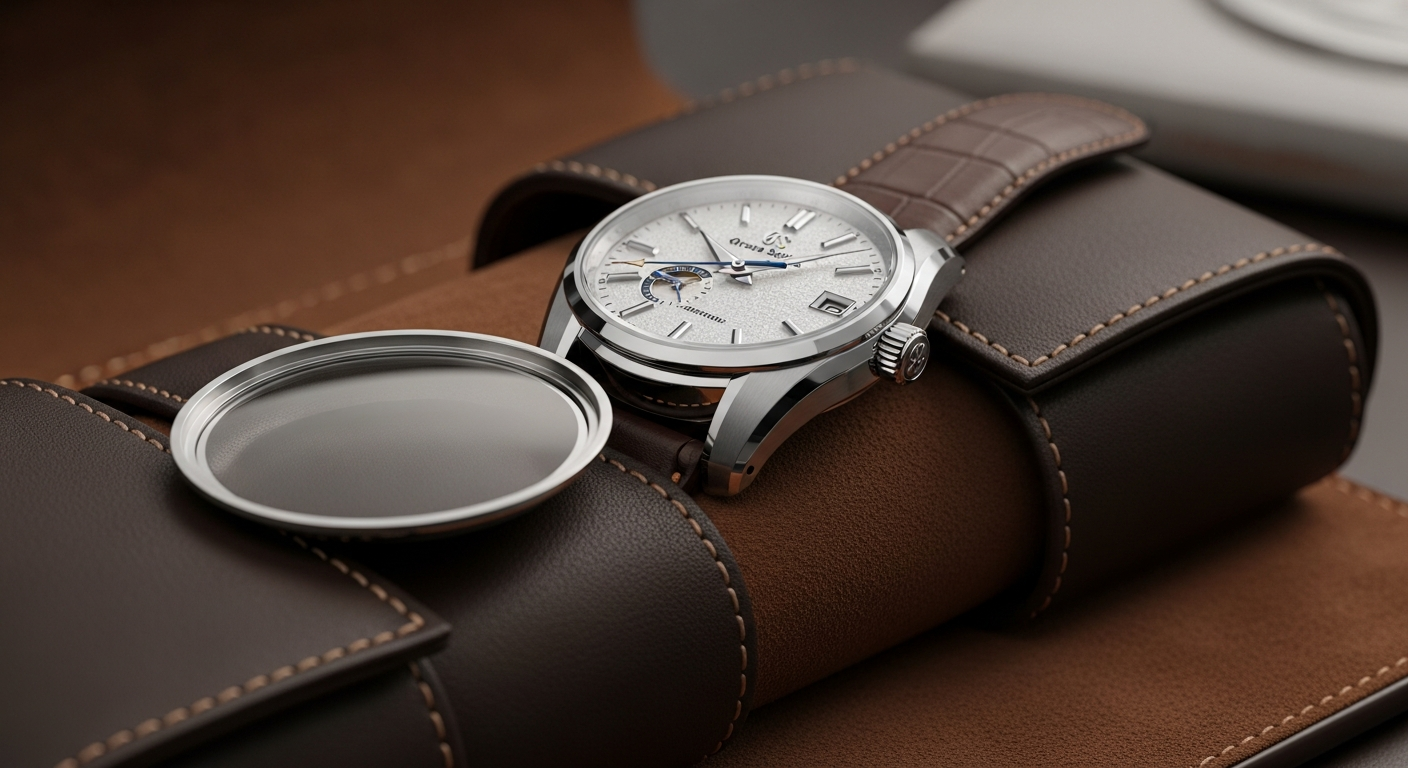
That glide is the first hint that this watch belongs to a different philosophy of timekeeping. Spring Drive is Grand Seiko’s most poetic contradiction: a movement that fuses mechanical energy with quartz regulation. It’s powered by a mainspring, wound by your motion or by the crown, like traditional mechanical watches. But instead of a heart that beats in steps, it has a regulator that smooths time into a continuous flow. The seconds hand doesn’t jump forward; it travels. Watching it can be oddly calming, as if time itself has stopped stuttering.
This is where the Snowflake earns its title. Precision, in many circles, is communicated as domination—numbers, tolerances, brag-worthy feats of engineering. In the Snowflake, precision is something you feel rather than something you count. It is the confidence that the watch will stay close to true without demanding you admire the mechanism. It turns accuracy into atmosphere. The Snowflake doesn’t so much keep time as keep you company in it.
I once wore it on a day that moved too fast, one of those days where appointments stack like plates and conversation becomes a series of quick syllables. On the train, I looked down, and the dial’s texture had become a small landscape. It reminded me of a field after a light snowfall, thin enough to show the contours beneath. The seconds hand drifted across it, unhurried. That single motion—smooth, precise, quiet—made my day feel less like a chase. The watch didn’t slow time, of course. It slowed my relationship to time. It suggested that you can move through hours without being dragged by them.
This is a strange thing for a watch to do, and I think it’s why the Snowflake resonates beyond the circle of people who know references and calibers. You don’t need to understand Spring Drive’s tri-synchro regulator to feel the difference between a ticking second hand and one that glides. You don’t need to have a loupe to sense the brightness of a polished edge. The Snowflake communicates in sensations: weightlessness, clarity, quiet confidence.
And yet, the details are there waiting for those who want to look closer. On the dial, the power reserve indicator—often a divisive feature in watch design—sits like a small gauge of readiness, a reminder that even poetry has physics. Some wish it were on the back, hidden away, but I’ve come to like its honesty. It tells you what the watch is: an instrument. Beautiful, yes, but also practical. It does not pretend that aesthetics exist apart from function. In Japanese craft tradition, ornament is often inseparable from purpose, and the Snowflake feels like an essay in that belief.
If you’ve ever held an object made with serious care, you know the particular satisfaction it brings. Not the loud pleasure of novelty, but the steady pleasure of correctness. The Snowflake has that correctness. The crown screws down with a firmness that feels like a promise. The bracelet links articulate smoothly, and the clasp closes with a clean, confident snap. Even the way the watch sits—balanced, neither top-heavy nor awkward—suggests that someone removed every unnecessary compromise until only the essential remained.
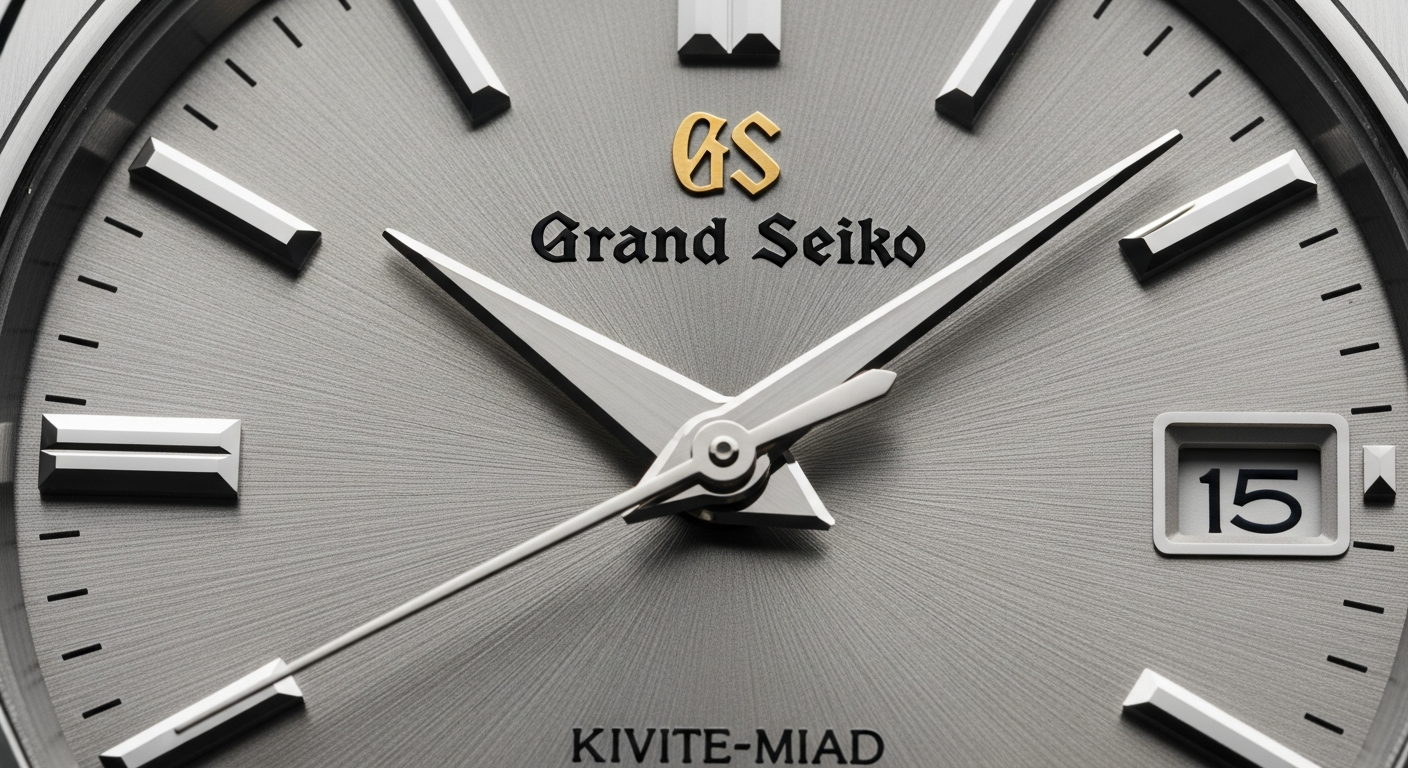
There’s a temptation, when writing about something finely made, to slip into reverence. The Snowflake invites reverence in the way a temple invites silence. But it also invites use. It has 100 meters of water resistance, a case material that shrugs off the fatigue of daily wear, and a movement designed not just to be admired but to perform, day after day, with remarkable steadiness. This is not a watch that needs to be kept in a safe to preserve its dignity. Its dignity is in its readiness.
And still, it’s hard not to talk about the finishing, because it’s where Grand Seiko most clearly reveals its character. The polishing is so exact it seems to defy the human hand, and yet it is the human hand that makes it possible. Zaratsu polishing—a process that involves pressing the case against a rotating tin plate—creates those distortion-free mirror surfaces that have become a signature. But the signature is not just shininess. It is the way the mirror planes meet brushed planes, the way light breaks at the edges, the way the case seems to change shape as you move. You don’t merely see the watch; you watch it seeing the world.
The Snowflake’s beauty is not the beauty of flourish. It is the beauty of proportion. The case is not overly thick, the dial not crowded, the indices not exaggerated. Everything looks as though it was revised and revised again until it reached a kind of inevitability. Like a poem that, once read, makes you wonder how any other words could have worked.
I think of the Snowflake as a watch for people who are tired of being sold an identity. So much luxury marketing revolves around becoming someone else: bolder, richer, more daring, more admired. The Snowflake doesn’t offer that fantasy. It offers something more mature: a relationship with craft. It doesn’t say, “Look at me.” It says, “Look closer.” It suggests that attention itself is a form of wealth, and that what you choose to notice can change the quality of your life.
There’s also something quietly radical about the Snowflake’s place in the watch world. For a long time, the canon of “serious” watchmaking was treated like a closed library, with European names embossed on the spines. Grand Seiko has rewritten that narrative not by being louder, but by being better—better at certain kinds of finishing, better at certain kinds of precision, better at translating a national aesthetic into an international object without sanding off the cultural edges. The Snowflake does not try to look Swiss. It looks like itself. That selfhood is its power.
Of course, no watch is perfect, and the Snowflake’s particular perfections might not suit everyone. Some prefer more compact proportions. Some want a date window at 6 o’clock for symmetry or no date at all for purity. Some can’t make peace with the power reserve on the dial, or they prefer the warmth of steel over titanium’s cool lightness. These preferences are real. Part of the Snowflake’s confidence is that it doesn’t bend to every taste. It has made its choices and stands by them.
But for those it fits, it becomes something more than a possession. It becomes a small ritual. You put it on in the morning, feel the lightness settle, and glance once at that textured field of white. In a world that often flattens experience into screens and notifications, the Snowflake offers depth. It offers a surface that rewards looking, and looking again.
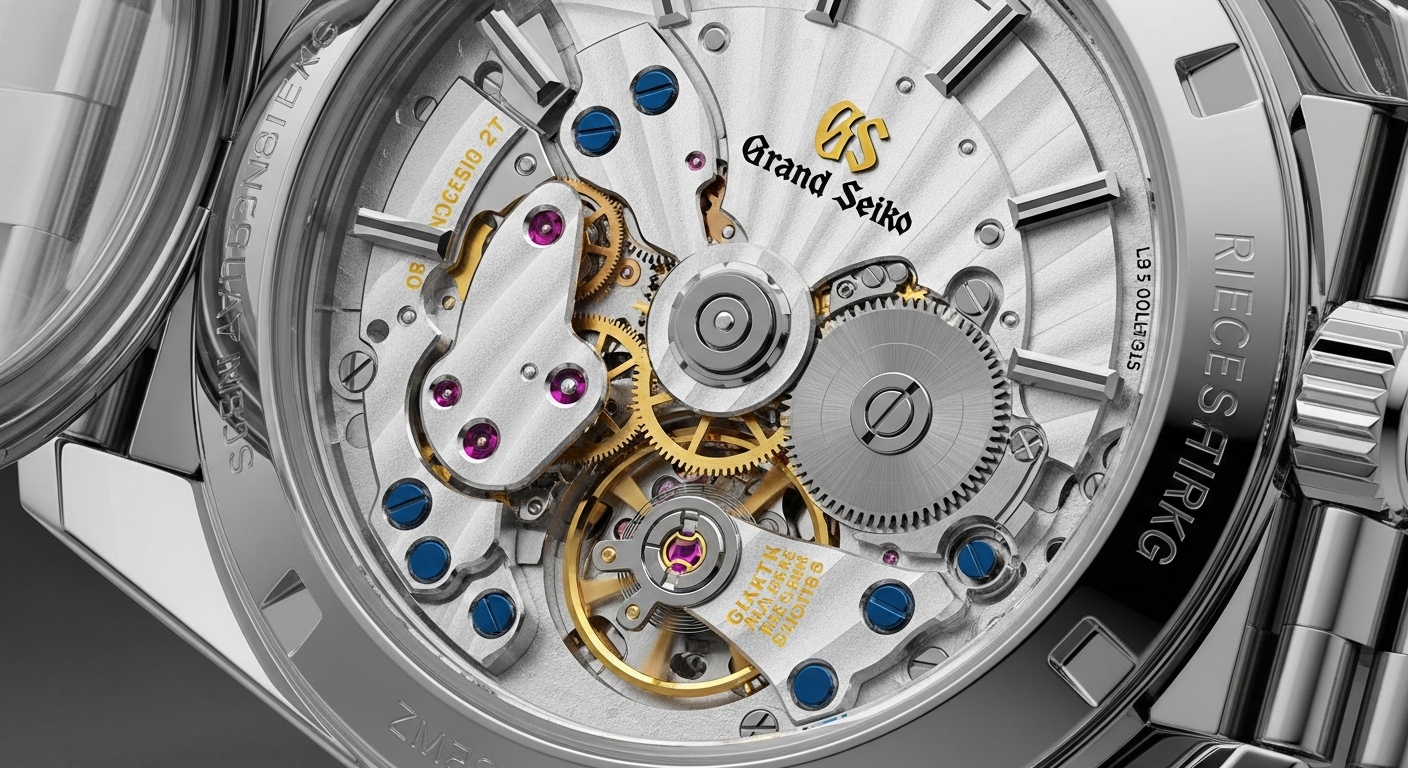
I’ve noticed that the Snowflake photographs beautifully but never completely. Cameras can capture the texture, yes, and the blued seconds hand, and the clean geometry of the case. They can capture the idea of it. But the watch’s full effect depends on motion—your wrist turning, your body shifting, light moving from one angle to another. The dial is alive in changing conditions, like snow itself, which is never the same from one minute to the next. In that sense, the Snowflake is not a static object. It is a performance staged by light.
There is a paradox at the heart of luxury watches: they are engineered to measure time, yet many of them are purchased to escape it. We buy them to mark milestones, to make moments feel permanent, to carry a sense of continuity in a life that changes quickly. The Snowflake understands this paradox and makes peace with it. Its movement is an ode to modern engineering, but its dial is an ode to nature. Its precision is scientific, but its impression is emotional. It bridges worlds that are usually kept apart.
When you live with it long enough, you stop thinking of it as a watch that represents something and start thinking of it as a watch that does something. It makes you notice light. It makes you notice time passing without jolts. It makes you notice the difference between glare and reflection, between shine and polish, between attention and obsession. It’s a watch that turns the act of checking the time into a small moment of appreciation. Not appreciation as in gratitude for what you own, but appreciation as in the practice of seeing.
And perhaps that is the real meaning of “precision looks like poetry.” Not that the Snowflake is delicate or dreamy, but that it is exact in a way that produces feeling. Poetry depends on precision, after all. The right word in the right place can change the temperature of a sentence. The right break can make silence speak. The Snowflake’s makers have done something similar with steel, titanium, sapphire, and a movement that doesn’t tick but flows. They have arranged surfaces and edges and textures so carefully that the result feels effortless. They have made a tool that behaves like a piece of quiet art.
There’s a scene I return to in my mind: late afternoon, winter light, the watch lying on a table near a glass of water. The seconds hand glides. The dial catches shadows. The case reflects the room in thin, perfect slices. No one is watching it perform, and yet it performs anyway, exactly as it was designed to. It doesn’t care about an audience. It cares about the work. There is something profoundly reassuring in that.
In the end, the Snowflake is not a proclamation. It’s a companion. It doesn’t try to outshine the day; it tries to harmonize with it. It measures time with uncommon accuracy and presents it with uncommon grace. It reminds you that the most impressive forms of mastery are often the quietest, and that sometimes the highest luxury is not excess, but refinement—the kind that turns a glance at your wrist into a brief, unexpected moment of peace.