Girard-Perregaux: Three Bridges and Timeless Innovation
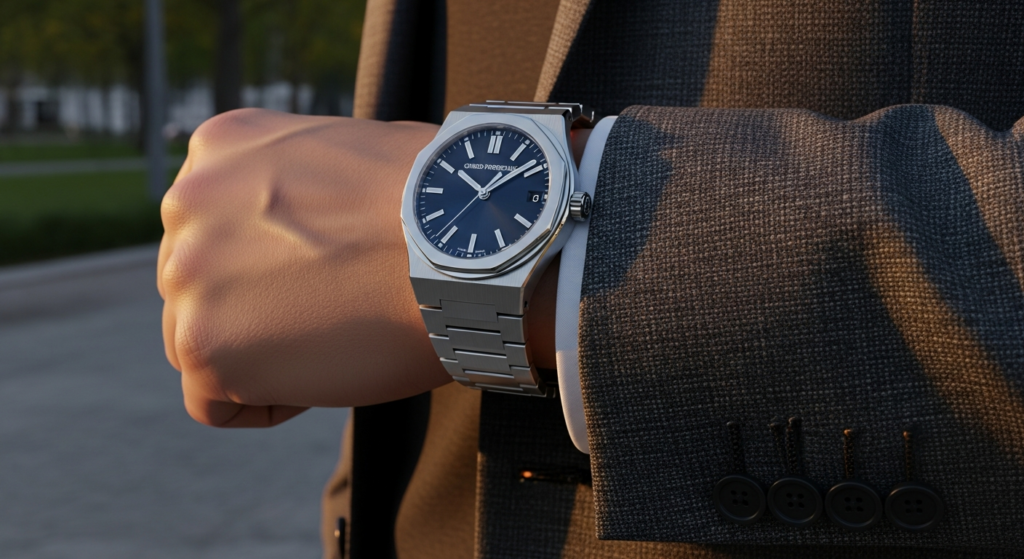
In the right light, a watch can feel less like an object and more like a small, stubborn argument against time itself. Not the seconds, which slip away with perfect indifference, but the idea that the present must always replace the past. Girard-Perregaux has spent much of its long life making that argument in metal and motion, and nowhere is it more eloquent than in the Three Bridges—an idea so visually immediate that even people who don’t know what they’re looking at can sense the audacity. Three arcing beams spanning the dial like architecture, holding the movement’s most essential organs in plain sight. It is a design that refuses to hide the mechanism, and in doing so, it turns a watch into a miniature statement about how beauty and engineering can be the same thing.
The story begins, as so many watch stories do, with an insistence on precision. Girard-Perregaux traces its roots to 1791, but the company’s character—its particular blend of romantic display and technical rigor—crystallizes in the nineteenth century, when Constant Girard, later Constant Girard-Perregaux, would start working on a concept that seems obvious only in hindsight: if the architecture of the movement is integral to its performance, why should it be treated as something to be concealed? In most traditional watches, bridges are a kind of backstage, the structural supports that secure wheels and springs, necessary and unglamorous. Girard imagined them as a stage. He also understood something deeper: that the layout of a movement is not merely a blueprint for function but a language that can be read emotionally.
That language became iconic in 1867, when Girard presented a tourbillon with three bridges aligned in an arresting straight line, a composition so balanced it looks like it was drafted with a ruler and a poet’s patience. At 12 o’clock, the barrel; in the middle, the gear train; at 6, the tourbillon. A power source, a transmission, and a regulating spectacle—arranged with the clarity of a diagram and the drama of a cathedral nave. It’s worth pausing to appreciate how radical that was, because tourbillons in that era were not meant to be flamboyant. They were born as solutions: Abraham-Louis Breguet’s invention to help pocket watches maintain steadier time by averaging positional errors. The tourbillon was a claim of mastery, but typically a discreet one. Girard-Perregaux took the claim and made it visible, almost confrontational. The function stayed serious, but the presentation turned theatrical.
If you have ever seen a Three Bridges watch in person, you’ll know that its impact isn’t only in the symmetry. It’s in the way the bridges seem to float, their curves catching light like the ribs of a fine instrument. In the classic interpretations, they are fashioned in gleaming metal—often gold—polished to a mirror sheen, and they command the eye the way a great building commands a skyline. You don’t so much read the time as you experience the mechanism. That is the essential Girard-Perregaux proposition: timekeeping as an encounter with craftsmanship, not just information.
And yet, it would be a mistake to treat the Three Bridges as merely an antique icon, a heritage motif that survives because nostalgia sells. Heritage does sell, of course—there is no point pretending otherwise in an industry that trades in memory and myth as much as steel and jewels. But the reason the Three Bridges keep returning, generation after generation, is that they are unusually flexible as a platform for innovation. The idea is structural before it is decorative. The bridges are not glued on. They are the movement’s backbone, and this means that any change—materials, finishing, energy management, escapement design—has to harmonize with that visible architecture. Constraints can kill creativity, or they can sharpen it. Girard-Perregaux has often chosen the latter.
Consider what it means to place the movement’s hierarchy on display. In a conventional layout, you can hide compromises. You can bury thickness, tuck away a wheel, soften a line. In the Three Bridges, everything is in the open, and the eye is unforgiving. The watch cannot rely on a dial to distract you. The movement must be composed. The finishes must be decisive. The proportions must work from arm’s length and from a loupe. In this way, the Three Bridges are less a style than a discipline. They demand honesty.
The modern era of Girard-Perregaux has required that kind of honesty in more than aesthetics. Swiss watchmaking in the late twentieth century and early twenty-first has lived through reinvention on a scale that earlier centuries never imagined: the quartz crisis, the renaissance of mechanical luxury, the hungry appetite for limited editions, the arms race of complications, the new worship of in-house manufacturing. In that churn, brands either become museums or laboratories. The most resilient become both. Girard-Perregaux has carried museum-worthy signatures while quietly investing in the kind of engineering that signals a laboratory mindset.
One of the clearest examples is not even the Three Bridges, but it explains the brand’s temperament. In the 1970s, Girard-Perregaux created a high-frequency quartz movement beating at 32,768 Hz, a standard that became industry-defining. That is a strange footnote for a company now best known for tourbillons and bridges, but it reveals an important truth: this is not a maison trapped in the romance of gears. It has been willing, at crucial moments, to change the rules of timekeeping itself. When you return to the Three Bridges after knowing that, you see the bridges differently. They are not a refusal of modernity. They are a framework through which modernity can be made beautiful.

In recent decades, the Three Bridges story has unfolded like a conversation between centuries. There are pieces that hew closely to the nineteenth-century template, with stately proportions and traditional finishing, as if Girard-Perregaux is reminding us that some ideas do not need “updating” so much as careful stewardship. And then there are interpretations that push the architecture into contemporary territory: skeletonized movements that erase boundaries between front and back, cases in titanium or other modern alloys, bridges rendered in new materials, shapes that feel more aerodynamic than classical. The essential line—barrel, train, tourbillon—remains, but the expression shifts, like the same melody played on different instruments.
What makes this compelling is that the Three Bridges design is, at its core, about making power visible. A mechanical watch is a story of stored energy. The mainspring is wound, energy is released, transmitted through gears, regulated by an oscillator, and translated into hands that circle an axis. In most watches, that story is hidden beneath a dial, because the industry learned long ago that people like clean faces and simple reading. Girard-Perregaux, with the Three Bridges, opts for a different kind of legibility: not just “what time is it?” but “how is time being made?” You can trace it with your eyes. You can watch the tourbillon spin, see the barrel sit like a drum at the top, understand—intuitively, even if not technically—why the bridges must be strong, why the jewels must be perfectly placed, why the entire assembly is an argument for patience.
The tourbillon itself is where that patience becomes almost philosophical. In an age when the most accurate time you will ever need is in your phone, the tourbillon has no pragmatic justification for most wearers. It is a complication of desire, a token of mastery performed for its own sake. The Three Bridges take that self-aware luxury and make it explicit. They don’t pretend the watch is merely a tool. They declare it an artifact. That can sound indulgent, but there is also something disarmingly sincere about it. In a world of hidden algorithms, there is comfort in a mechanism that does exactly what it looks like it’s doing.
And the mechanism truly does matter. Girard-Perregaux’s finishing, particularly on its higher-end movements, has long pursued the standards that separate the merely expensive from the genuinely exceptional: sharp interior angles that reveal handwork, black polishing that turns steel into liquid shadow, bevels that catch light like a finely cut gemstone, engraving that feels personal rather than industrial. Even when modern manufacturing assists in initial shaping, the best finishing is still a human act of control and restraint. In Three Bridges watches, these choices are not background details. They are on display every time the wrist turns.
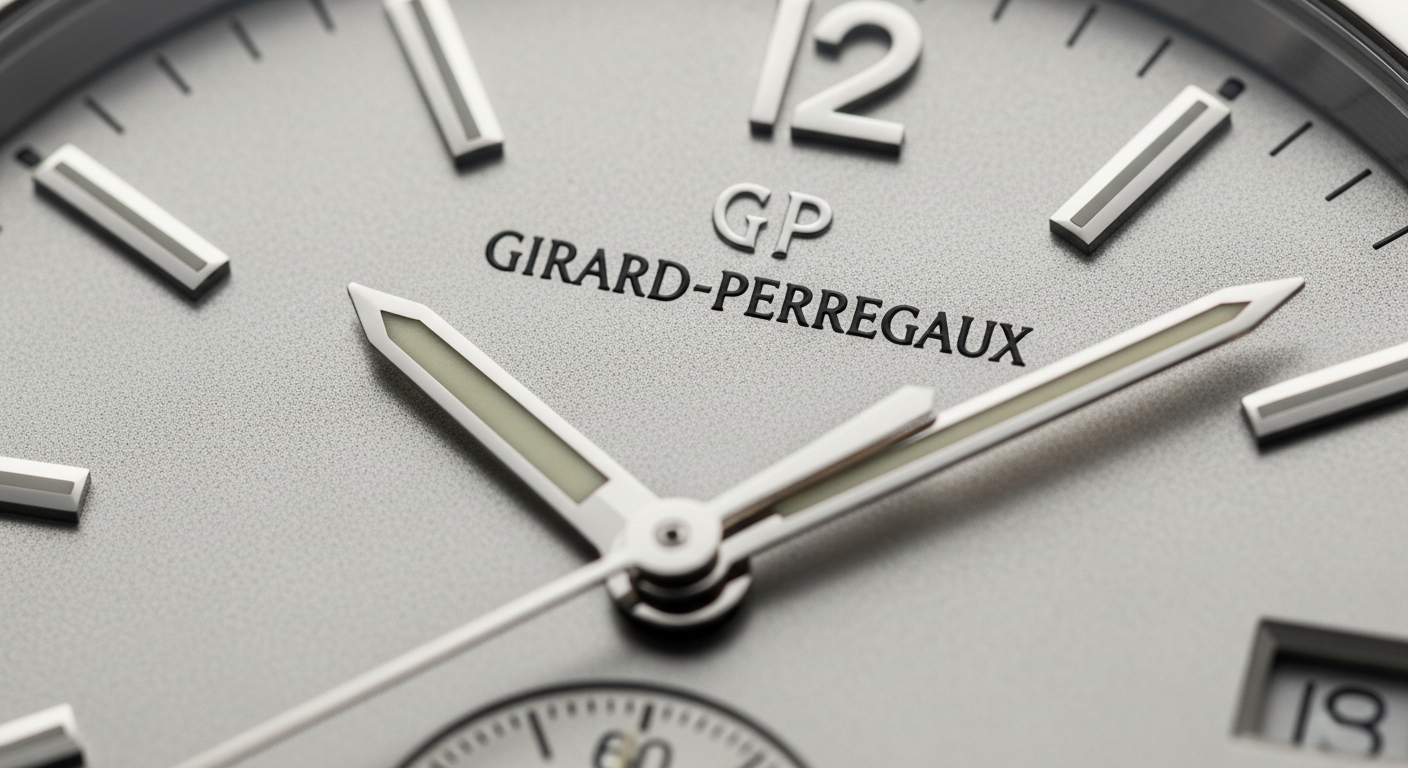
There is also an important tension in the Three Bridges that gives the design its staying power: it is both bold and orderly. Many modern skeleton watches chase transparency to the point of chaos, revealing so much that the eye doesn’t know where to rest. The Three Bridges impose structure. They create three visual “chapters” and a clear rhythm from top to bottom. This is why, even when Girard-Perregaux experiments with more contemporary cases or materials, the watch rarely feels confused. The bridges act like a spine. You can modernize the limbs, but the posture remains unmistakable.
That posture is also deeply linked to identity in a crowded field. Swiss haute horlogerie is full of brands that can build a tourbillon, finish a movement, polish a case, pronounce a heritage date. But the number of signatures that are instantly recognizable is smaller than collectors like to admit. The Three Bridges are one of those signatures. They do not require a logo to be understood. In marketing terms, that is priceless. In artistic terms, it is rarer still. Many watch designs look inevitable only after someone has dared to make them; the Three Bridges have that inevitability now. They have become part of the visual vocabulary of high watchmaking.
Yet it would be unfair to reduce them to branding. The bridges are not a mere badge; they are a recurring question the brand asks itself: how do we balance tradition and invention without one becoming a costume for the other? Tradition can become a wax seal on an empty letter. Innovation can become novelty without meaning. Girard-Perregaux’s best Three Bridges pieces avoid both traps by returning, again and again, to the basic act of making the movement itself the message. When you do that, you can’t cheat for long. The watch either has integrity or it doesn’t.
The collector’s relationship with such a watch is different, too. A simple three-hand watch can become beloved through daily utility. A chronograph can become a companion in ritual. A Three Bridges tourbillon is less likely to be a “grab-and-go” piece. It asks for attention, and it rewards it. It is a watch you put on when you want to remember that objects can be made with near-obsessive care. It is a reminder that the human hand can still compete with the machine—not in speed, not in cheapness, but in the ability to make something that carries intention in every surface.
That intention extends to the way Girard-Perregaux has navigated the contemporary appetite for storytelling. Many brands tell stories about explorers, aviators, divers, races—narratives that sit outside the watch itself. The Three Bridges story is internal. The drama is in the movement. The heroes are bridges, wheels, a spinning cage. It’s almost refreshingly literal: here is what we did, here is how we did it, here is the proof.
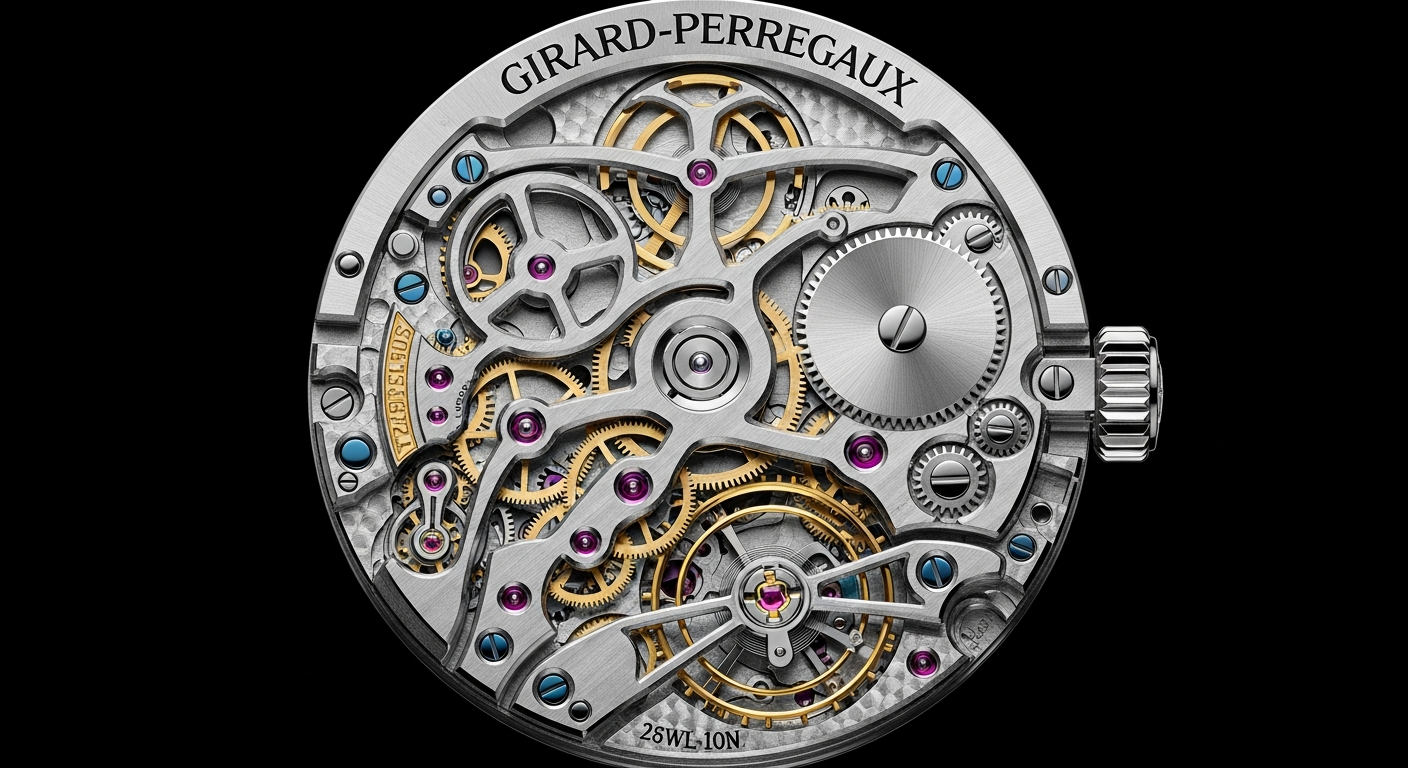
In a way, the Three Bridges are also a meditation on transparency, a value that has become fashionable in the luxury world but is hard to practice honestly. Girard-Perregaux’s transparency is not about supply chains or slogans—though those things matter—but about revealing the true heart of what you are buying. You are buying time, yes, but you are also buying decisions: the decision to align the architecture; the decision to finish what most people will never notice; the decision to keep an old idea alive not by freezing it, but by letting it adapt without losing its soul.
There is a final irony that makes the Three Bridges feel timeless rather than merely old. The design is one of the most recognizable in watchmaking, and yet it is rooted in a part of the movement most people never think about. A bridge is a support. It exists so that other things can turn, oscillate, transmit. In literature, bridges symbolize passage, connection, the ability to cross from one world to another. Girard-Perregaux’s bridges do that literally, spanning the movement, but they also do it metaphorically, connecting eras of horology in a single glance. They carry nineteenth-century ambition into twenty-first-century sensibility. They allow you to see the physics of a watch while feeling the romance of it.
That might be the real secret behind the endurance of the Three Bridges: they present innovation as continuity rather than disruption. They suggest that the next idea does not have to erase the previous one. It can be built upon it, supported by it, carried forward by structures strong enough to bear the weight of time.
If you hold one of these watches—if you tilt it and watch the bridges turn into arcs of light, if you let your gaze settle on the tourbillon’s steady rotation—you may find yourself thinking less about punctuality and more about persistence. There are easier ways to know the hour. There are cheaper ways to perform luxury. But there are few ways as convincing to say that craft still matters, that patience still produces wonders, and that even in a world obsessed with the next thing, some ideas remain inexhaustible.
Girard-Perregaux, with its Three Bridges, offers not a refusal to move forward but a promise: that progress can have a memory, that innovation can have a lineage, and that the most modern thing a watch can do is not to hide its beating heart, but to show it—confidently, beautifully—exactly as it is.