Ferdinand Berthoud Watches: The Luxury Chronometer Brand Rewriting Marine Timekeeping for the Wrist
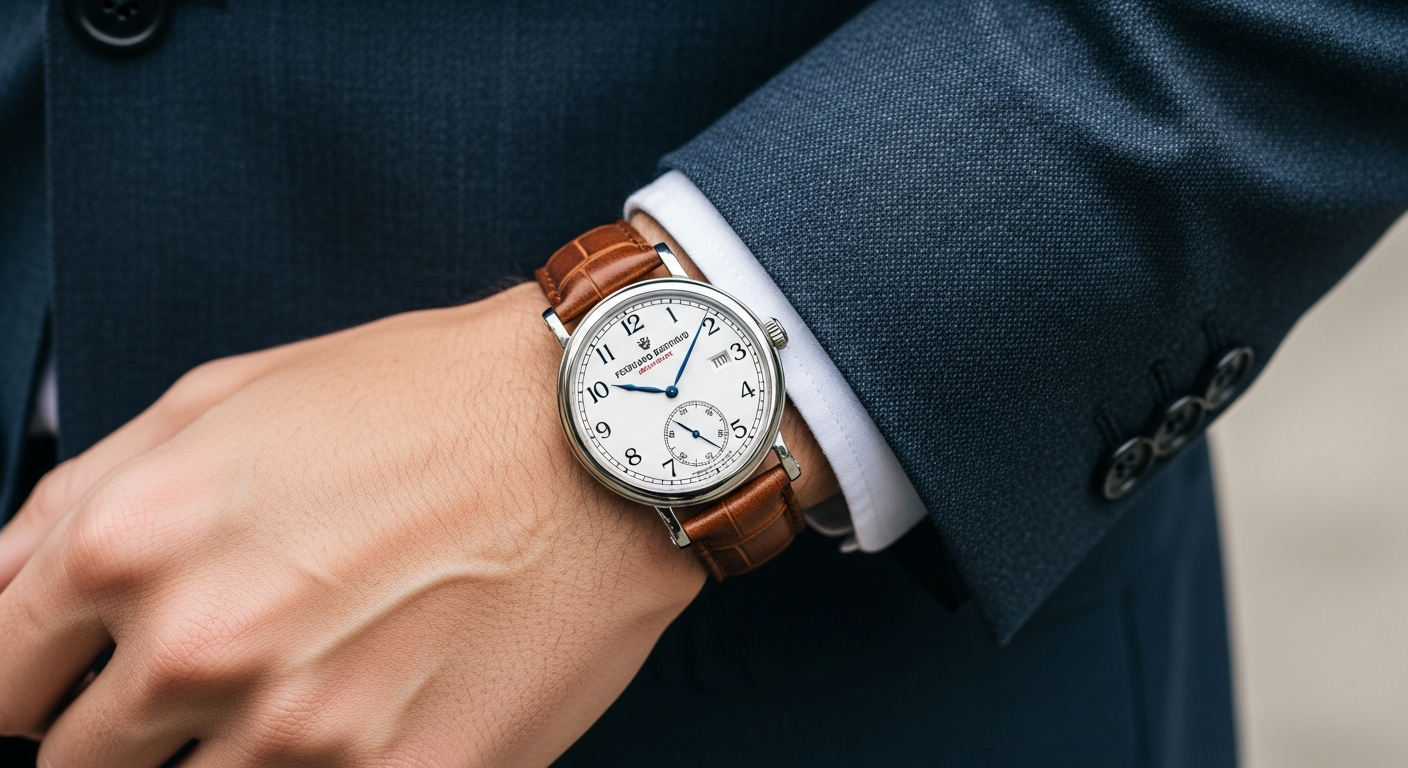
In a market crowded with “independent” watchmakers chasing novelty, Ferdinand Berthoud feels almost anachronistic—in the best way. Its watches don’t start with a dial color or a trend; they start with the problem that defined the original Ferdinand Berthoud: how to keep perfect time when the world won’t sit still. What emerges is a rare form of modern luxury—chronometer culture made tangible—where every bridge, pillar, and chain is less decoration than proof of intent: precision as heritage, engineered for the wrist, finished like a scientific instrument elevated to art. The question isn’t whether it’s beautiful; it’s whether any other contemporary brand is this serious about timekeeping as a discipline—and this unapologetic about showing the mechanism that earns it.
A chronometer house, not a mood-board brand
Ferdinand Berthoud occupies a strange and useful position in modern high horology: it is technically an “independent” in the way collectors use the word, yet it behaves like a chronometer manufacture from another century. Many contemporary maisons lead with aesthetics and wrap mechanics around them. Berthoud inverts the workflow. The movement architecture is the product; the case and display strategies are the inevitable consequence of that architecture.
This is why the brand reads differently on the wrist and in the loupe. The design language is not minimal, but it is disciplined—less about visual cleverness than functional legibility. Even the elements that could be dismissed as theatrical, like the visible chain or the pillar-driven structure, derive from an insistence on exposing the mechanisms responsible for stable rate. Berthoud’s watches are not trying to look complicated; they are trying to make the argument that complication is justified when it is in service of chronometry.
That logic also clarifies the brand’s luxury proposition. The value is not scarcity theatre or celebrity proximity. It is the cost of building wristwatch movements like marine instruments: heavy on structure, torque management, and finishing that is both decorative and diagnostic. When a bridge is black-polished or an edge is rounded for the hundredth hour, it is not merely to impress. It is to signal an engineering culture that treats surfaces as interfaces—where smoothness, fit, and stability matter because they influence long-term performance.
Legitimacy built on a specific historical problem
The original Ferdinand Berthoud was not remembered for inventing a vibe. He was remembered because navigation demanded timekeeping that could survive motion, temperature shifts, and the indignities of life at sea. Marine chronometers were instruments before they were luxuries, and their form followed a hard brief: hold a stable rate while everything around them moved. That context is more than an origin story for the modern brand; it is the governing constraint the contemporary watches keep reinterpreting.
Berthoud’s modern output is best understood as an attempt to translate marine chronometer thinking into a wearable scale without turning it into museum cosplay. The watches are not replicas of box chronometers, yet they borrow cues from that world: gimbaled references, pillar construction, power-delivery management, and displays that prioritize reading the time over hiding mechanics. The resulting objects feel almost stubbornly purposeful, as if they would rather be judged by timing results and movement logic than by how well they photograph under soft lighting.
This legitimacy matters because the independent segment is often defined by personality. Berthoud is defined by a discipline. You can disagree with the aesthetic, even find it severe, but it is hard to argue that the brand lacks a reason to exist. Its watches are answers to a stated question: how do you build a wristborne chronometer culture that is mechanically explicit, structurally overbuilt, and finished to the standard of an instrument elevated to art?
Architecture as argument: pillars, plates, and the refusal to hide
Most haute horlogerie movements look “flat” when viewed front to back; Berthoud’s do not. A recurring signature is a three-dimensional architecture organized around pillars and bridges that read like a miniature construction rather than a decorated slab. This is not a styling flourish. It echoes the structural logic of historic chronometers where rigidity, alignment, and serviceability were integral to long-term stability.
On the wrist, that structural approach creates a particular kind of presence. The cases are often substantial, not simply for drama but to accommodate a movement conceived in volume. Berthoud is willing to pay the ergonomic cost of thickness when it buys mechanical clarity: separate levels for the fusée, the chain, the gear train, the regulating organ, and the indications. The reward is that the watch becomes self-explanatory. With a little familiarity, you can trace cause-and-effect: energy storage, energy equalization, transmission, regulation, display.
Collector culture frequently treats “openworking” as either a virtue or a vice. Berthoud makes that debate feel slightly misplaced. The openness here is not about maximizing negative space. It is about acknowledging that the mechanism is the point, and that a chronometer-centric brand should not conceal the very systems that secure stable timekeeping. When the architecture is this intentional, visibility becomes a form of honesty.
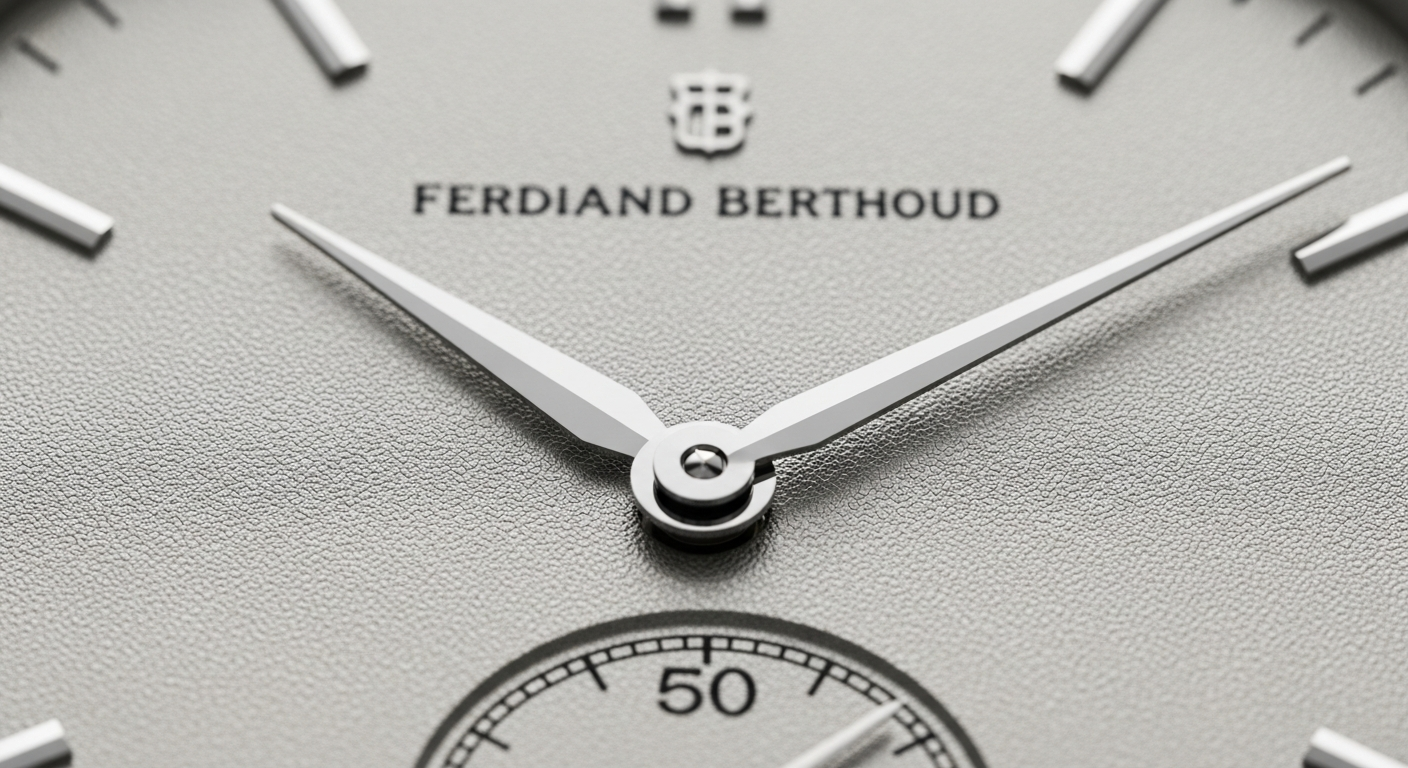
Fusée-and-chain: torque management as a luxury proposition
If Ferdinand Berthoud were reduced to one mechanical statement, it would be the fusée-and-chain. In an era where high-performance mainsprings and modern escapements can deliver excellent results without such theatrics, choosing a fusée is a declaration: the brand is committed to classic solutions to classic problems, even when they are expensive to execute and difficult to finish.
The purpose is straightforward. A mainspring does not deliver constant torque across its unwinding cycle. A fusée-and-chain system equalizes power delivery by varying the leverage as the mainspring relaxes, helping the regulating organ receive a more consistent input. This is not romanticism; it is applied physics. In practice, it is also one of the clearest ways to signal that “chronometer” is not a label but a foundational design requirement.
What makes Berthoud’s implementation feel contemporary is how openly it is treated as part of the watch’s identity. The chain is not hidden as an ideological inconvenience. It is displayed as a working element, inviting inspection of tolerances, interaction, and finishing. That is where the luxury shifts from the obvious to the serious: not the presence of a complication, but the confidence to show the complication operating, and to finish it to a standard that withstands scrutiny at any angle.
There is also a subtle collector-level point here: a fusée-and-chain tends to force a movement layout to be different. It influences case proportions, dictates depth, and imposes a certain mechanical choreography on the watch. Berthoud embraces those constraints rather than trying to disguise them. The result is coherence. The design is not a wrapper; it is a consequence.
Gimbaled cues and marine DNA without pastiche
Marine chronometers historically relied on gimbals to maintain a stable horizontal position despite the ship’s motion. On a wristwatch, a literal gimbal would be more gimmick than solution, but the idea of isolating and stabilizing sensitive components remains conceptually powerful. Berthoud’s watches often nod to this heritage through structural motifs and display choices that suggest instrument thinking: frames, visible supports, and a sense that the movement is “mounted” rather than merely housed.
This is where the brand’s restraint deserves credit. It does not need faux-nautical decoration to communicate marine lineage. The marine reference is embedded in engineering priorities: power stability, robust construction, clear indication, and an almost didactic exposure of the regulating system. The watch feels like it belongs to the lineage of precision devices, not because it imitates antique aesthetics, but because it shares the same seriousness of purpose.
That seriousness also affects how the watches wear psychologically. They are not meant to disappear. They assert that a wristwatch can still be an instrument, even if its environment is now climate control and desk work. In a market where “tool watch” has become an aesthetic category, Berthoud offers something rarer: a tool-watch mindset executed at the highest artisanal level.
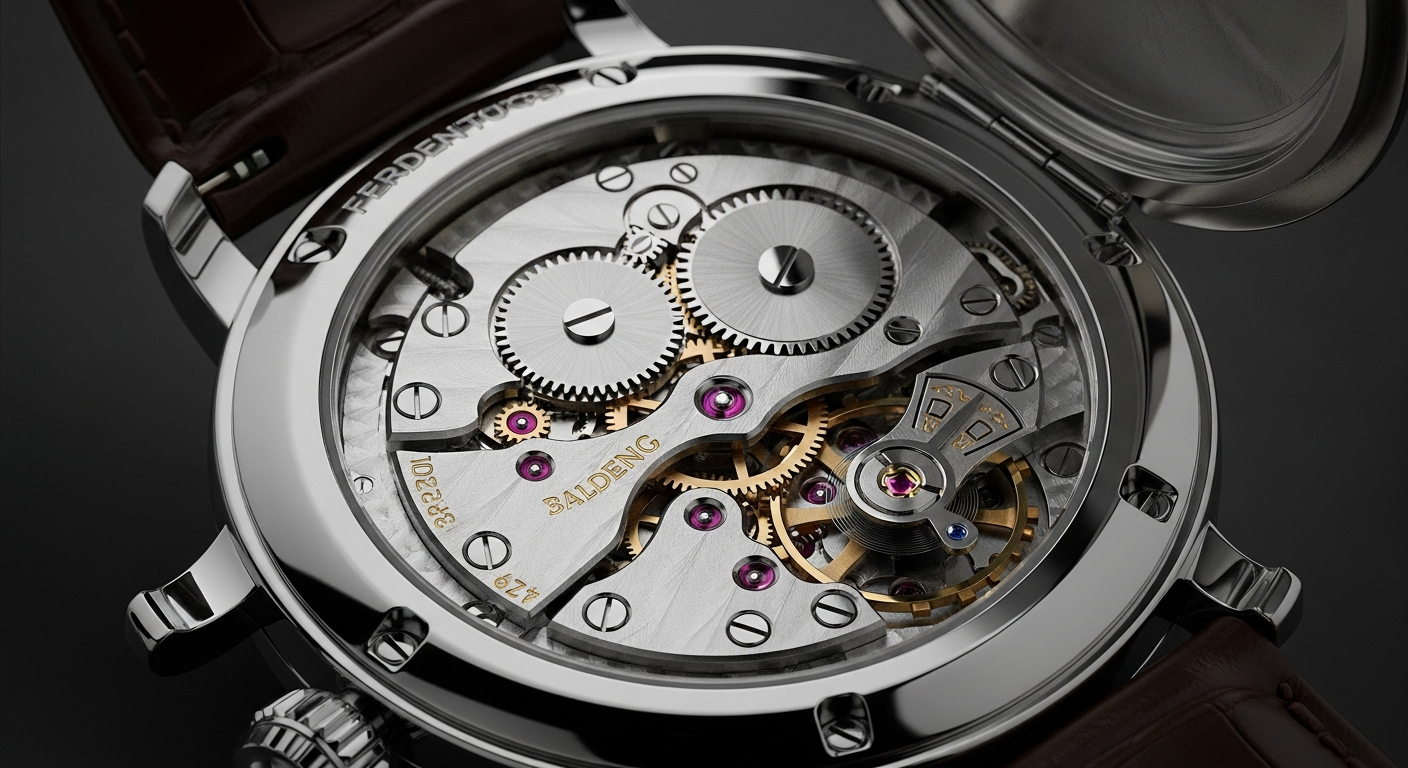
Finishing as evidence: museum-grade, but not ornamental
High finishing is often discussed as if it were purely cosmetic. At Ferdinand Berthoud it functions more like a forensic record of competence. The brand’s surfaces tend to be finished in ways that are both visually decisive and technically demanding: sharp interior angles where they matter, black polishing that reveals flatness and control, and a consistent confidence in bevels, countersinks, and graining that feels less like exuberance than discipline.
What stands out is the way finishing is deployed across parts that many brands would treat as utilitarian. The chain components, the structural elements, the interfaces between bridges and pillars—these are not simply “made nice.” They are resolved. That matters for collectability because it signals that the brand is not spending all its budget on what the customer can see first. It is spending on what the customer will still respect after the honeymoon period, when the watch is evaluated part by part, logic by logic.
This also aligns with the chronometer thesis. A scientific instrument has to be reliable and readable; it also benefits from surfaces that resist corrosion, avoid burrs, and maintain integrity during service. In a wristwatch context, artisanal finishing is not strictly necessary for performance, but it is consistent with a culture that refuses compromise. Berthoud’s strongest trick is making that refusal feel like the point rather than the perk.
Engineering-first design and the courage of a strong silhouette
Some collectors struggle with Ferdinand Berthoud cases because they do not flatter in the conventional sense. The proportions can be assertive, the geometry distinct, the presence unmistakable. Yet that silhouette is part of the strategic clarity. A chronometer house that builds three-dimensional movements with fusée systems and pillar architecture cannot pretend to be a thin-dress specialist. Attempting to do so would produce awkward compromises: cramped layouts, compromised visibility, and a sense that the watch is apologizing for what it is.
Berthoud does the opposite. It leans into a case architecture that feels like a vessel for an instrument. This is not “design for design’s sake.” It is design as packaging strategy: protect the movement, give it room to breathe, and ensure the owner can actually read the mechanism’s logic. The result is a watch that tends to look better in person than in static images, because the depth and layering—central to its identity—cannot be flattened without loss.
There is an argument to be made that this is a more honest kind of luxury. It does not chase universal appeal. It assumes an owner who wants to live with an idea, not just an object: chronometry as a discipline, made wearable.
How to evaluate a Ferdinand Berthoud as a collector
Buying a Ferdinand Berthoud is less about choosing a “model” and more about buying into a thesis. The key is to assess whether you value explicit mechanics over understated elegance. If you do, the brand becomes easier to understand—and, crucially, easier to justify at its level.
Start with architecture. Does the three-dimensional construction feel coherent, or merely busy? In strong Berthoud examples, you can visually parse the watch like a technical diagram. Then look at finishing where it is hardest: interior angles that are truly sharp, flatness in black-polished surfaces, uniformity across steel and brass components, the care taken on parts that are not marketing-driven. Finally, consider whether the fusée-and-chain presentation feels integrated into the whole, not bolted on as a proving exercise.
Also consider wearability in the strategic sense, not just comfort. This is a watch you will be asked about. It is a watch that will invite scrutiny. For some collectors, that is fatigue; for others, it is precisely the appeal. Ferdinand Berthoud is not stealth wealth. It is visible intent.
The quiet radicalism: making chronometry the aesthetic again
The most persuasive aspect of Ferdinand Berthoud is not any single complication, but the brand’s refusal to treat precision as a marketing adjective. It treats precision as a design driver. That stance is quietly radical in a luxury environment that often rewards novelty over necessity.
There are, of course, other great independents making profound work. But Berthoud’s niche is unusually specific: the modern chronometer house, resurrecting marine timekeeping values as a contemporary luxury proposition. It is watchmaking that prioritizes stable power delivery, structural integrity, and legibility—then finishes the result to a level where the instrument becomes art without losing its seriousness.
If the market is saturated with watches that seek validation through story, Ferdinand Berthoud seeks validation through mechanism. That may limit its audience. It will also ensure that the audience it does attract is there for the right reason: not because the watch is fashionable, but because it is convincingly, unapologetically about timekeeping.