Tudor’s Modern Renaissance: How Rolex’s Sister Brand Became Luxury Watchmaking’s Most Credible Value-Forward Powerhouse
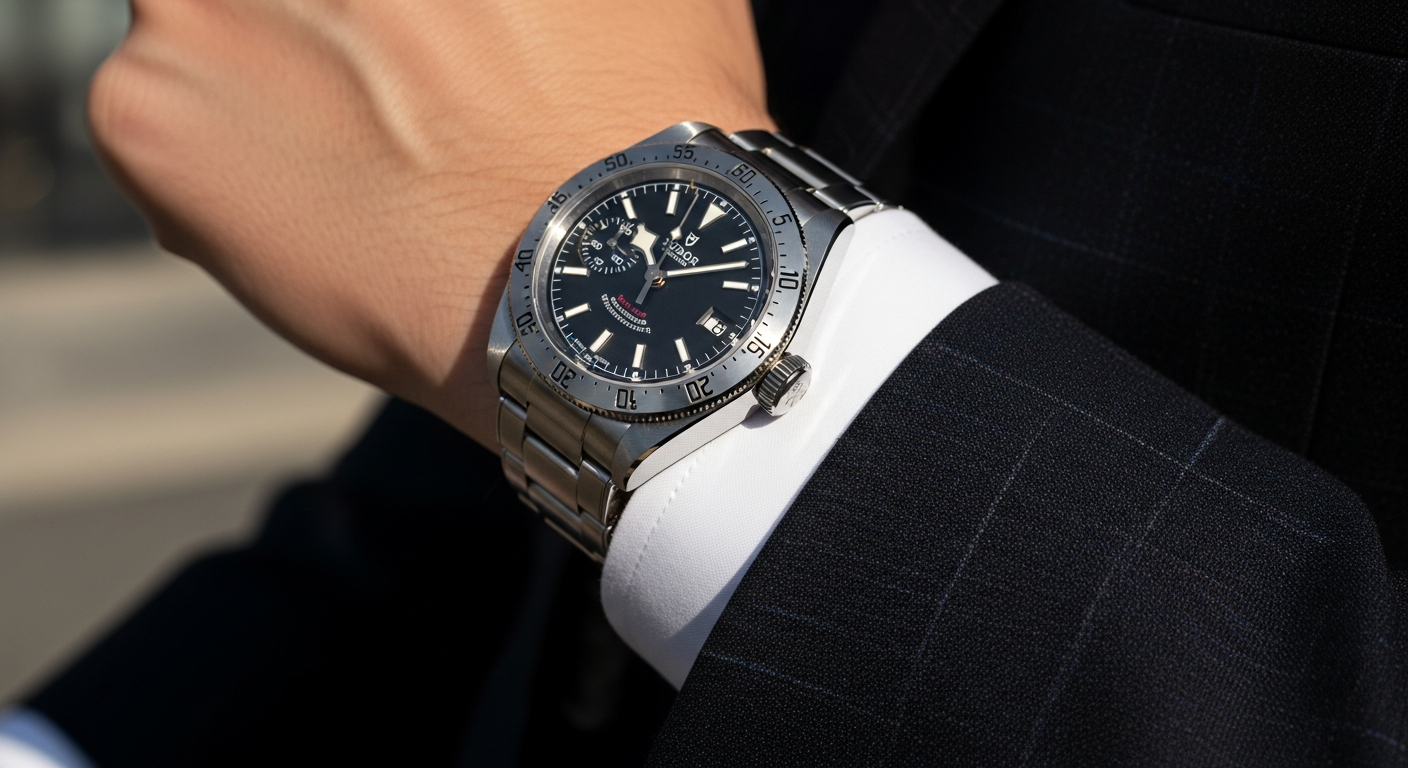
Tudor’s most interesting story isn’t that it’s “Rolex-adjacent”—it’s that it has learned to borrow the right things from its parent (rigor, reliability, industrial excellence) while refusing to inherit the baggage (preciousness, conservatism, price insulation). The result is a brand that feels simultaneously historically grounded and decisively present: watches that invite wear, not worship, and a strategy that turns authenticity into the most scalable form of modern luxury credibility in the mechanical market’s most competitive band of pricing and attention.
Over the past decade, Tudor has executed one of the cleanest modern repositionings in Swiss watchmaking. Not a reinvention built on novelty, but a recalibration: using inherited legitimacy as infrastructure, then constructing an independent point of view on top of it. In a market crowded with “heritage” claims and aspirational pricing, Tudor’s credibility is unusually tangible. The watches tend to be mechanically serious, stylistically legible, and priced in a way that doesn’t require a buyer to perform rationalizations. That combination—industrial competence plus cultural clarity—has become Tudor’s quiet advantage.
1. Strategic Repositioning: From “Little Rolex” to an Independent Luxury Thesis
For much of the late 20th century, Tudor’s identity was easy to summarize and difficult to admire: Rolex cases and bracelets, third-party movements, and a value proposition that often read as “almost.” That framing was limiting because it put Tudor into permanent comparison with an unattainable ideal on its own corporate family tree. The modern era begins when the brand stops accepting that comparison as its primary narrative and instead treats it as a background condition—useful, but not defining.
The strategic shift is not simply stronger products; it’s a redefinition of what the brand is for. Rolex’s modern prestige is built on scarcity management, conservative continuity, and the subtle social friction of access. Tudor’s modern prestige is built on availability, a willingness to iterate, and a kind of anti-fragile honesty: these are watches meant to be worn hard, serviced predictably, and bought without needing a relationship with a dealer. That difference is not accidental. It’s segmentation with intent.
What has allowed Tudor to make this pivot credibly is the nature of the inheritance it chose to keep. Manufacturing discipline matters more than marketing proximity. Case machining consistency, bracelet tolerances, dial printing precision, and quality control routines are unglamorous traits, but they are the real language of confidence for collectors who have handled enough watches to recognize the difference between “nicely designed” and “seriously made.” Tudor benefits from the group’s industrial excellence and distribution competence, but it converts that advantage into a different emotional outcome: reassurance rather than reverence.
Equally important is what Tudor refuses. It refuses the logic that a watch becomes more desirable only when it becomes more precious. It refuses the idea that conservatism is the only safeguard of long-term equity. And it largely refuses the price insulation that pushes many brands into a narrow set of customers and an even narrower set of use cases. Tudor’s pricing is not cheap; it is calibrated. In the modern luxury landscape, that calibration itself is a posture: a claim that the product can carry status without requiring theater.
This is where Tudor’s modern luxury thesis becomes clear. It is aspirational without pretense, heritage without nostalgia. The brand is comfortable referencing its historical tool-watch codes, but it doesn’t treat the past as a museum to reproduce exactly. Instead, Tudor treats history as a library: motifs to be re-edited for contemporary wrists, contemporary lifestyles, and contemporary expectations around accuracy, robustness, and serviceability. That balance is what makes the brand feel grounded and present at the same time.
2. Product as Proof: Black Bay, Pelagos, and the Engineering-to-Design Feedback Loop
If repositioning is the strategy, the Black Bay and Pelagos families are the proof. Not because they are perfect, but because they make Tudor’s intent visible across use cases: the Black Bay as a translated heritage tool watch with mass appeal, the Pelagos as a modern engineering-first instrument that still reads as unmistakably Tudor. Together, they show a brand building an ecosystem, not one-off hits.
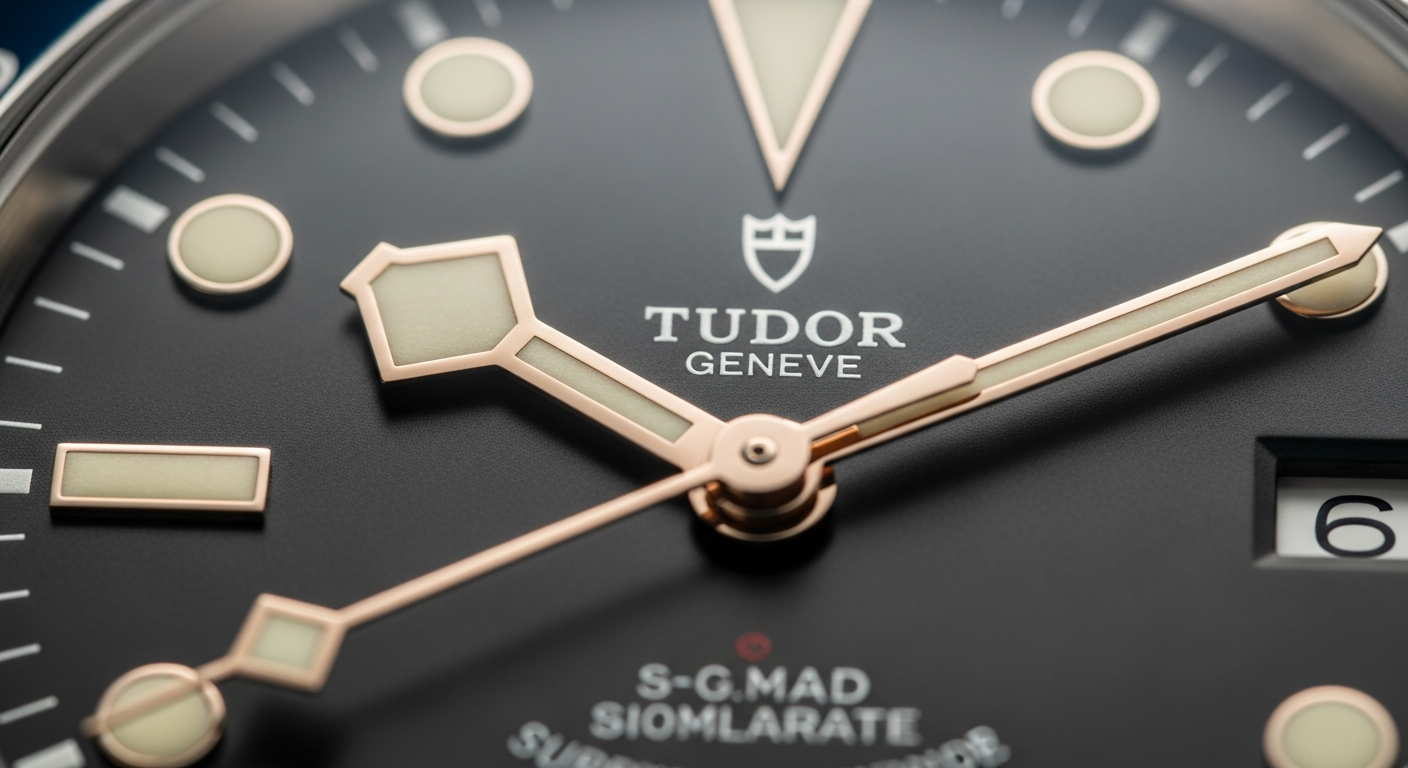
The Black Bay is often described as “heritage,” but its success is more specific: it is heritage made usable as an everyday luxury object. The snowflake hand set, the dial typography choices, the bezel palettes, the gilt and matte treatments—these are not simply retro references. They are design-era specificity, applied with enough restraint to avoid costume and enough personality to avoid blandness. Where many brands default to imitation, Tudor uses synthesis: borrowing recognizable codes, then stabilizing them with modern proportions, modern lume performance, and modern movement expectations.
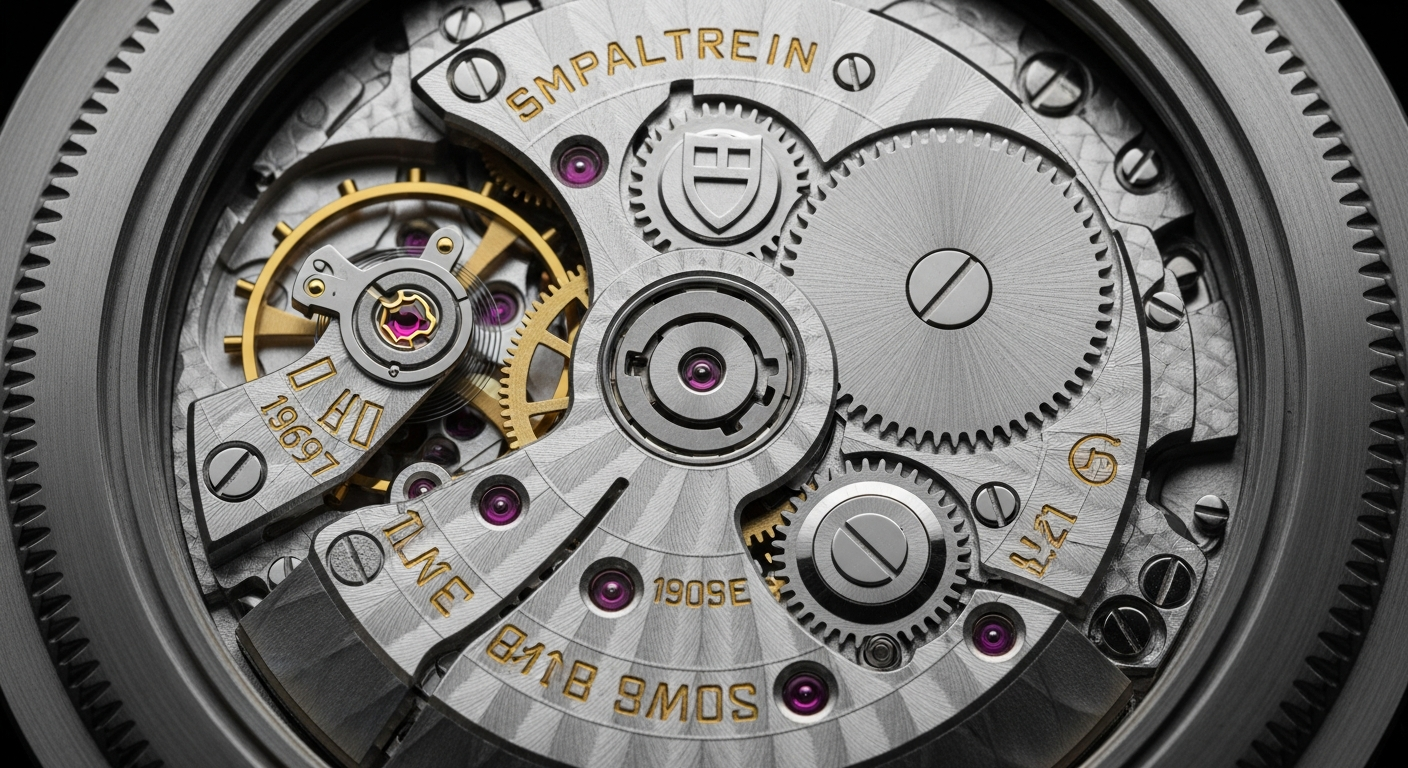
That last point is key. Tudor’s move toward manufacture calibres did more than improve spec sheets. It altered the brand’s psychological contract with the buyer. When a watch is positioned as a tool, the expectation is not only that it looks plausible but that it behaves predictably: reasonable power reserve, robust architecture, consistent regulation, and service pathways that feel industrial rather than improvised. Tudor’s calibres, including the widely deployed MT family and the chronograph movement developed with external collaboration, communicate a specific message: this brand is building long-term platforms, not short-term products.
The Pelagos tightens the argument further. It is less about romance and more about intent. Titanium construction, high legibility, purposeful bezel action, and bracelet systems designed around real wear conditions frame the Pelagos as a contemporary tool watch, not a vintage reenactment. In a market that often confuses “tool” with “dive styling,” the Pelagos has always been closer to actual equipment. Its appeal is rational—light weight, durability, practicality—yet the design maintains enough coherence to avoid the sterile feel that can plague purely utilitarian objects.
What makes Tudor unusually effective is the way engineering feedback informs design decisions, and design decisions, in turn, create constraints that push engineering. This loop is where a brand becomes modern. Consider how Tudor uses materials and finishes: brushed surfaces that tolerate wear, case forms that catch light without demanding polish, and bracelets that prioritize comfort and durability. These are not headline features, but they are the traits that keep a watch on the wrist after the initial excitement fades.
Even Tudor’s more debated releases reveal strategic discipline. When the brand experiments—with case sizes, with bolder dial colors, with more contemporary proportions—it is doing so within a recognizable grammar. That grammar is crucial for equity. A tool-watch brand cannot afford to feel arbitrary, because the core customer is buying coherence as much as hardware. Tudor’s coherence rests on a few repeatable commitments: legibility, robust cases, strong bracelets, and designs that nod to history without being trapped by it.
The result is a catalog that works like a ladder. A buyer can enter with a relatively straightforward Black Bay, move to a Pelagos for a more technical expression, or explore variations that offer just enough distinction without fracturing the family. This is not accidental; it is how brands scale without diluting. Tudor’s product architecture makes the brand feel bigger than any single model, which is how it maintains relevance even when individual references come and go.
3. Cultural Capital at Scale: Partnerships, Community, and the New Definition of Watch Status
In the current watch market, cultural capital is often mistaken for celebrity proximity. Tudor’s approach is more effective because it is more aligned with the product’s identity. The brand’s partnerships in sport—especially those that imply endurance, teamwork, and functional gear—support the underlying thesis: these watches are for doing, not just for signaling. When Tudor ties itself to narratives of performance and grit, it is not reaching for borrowed glamour; it is reinforcing what the watches already claim to be.
That said, Tudor has not rejected status. It has redefined it. For a growing segment of buyers, status is no longer only about cost or exclusivity; it is about discernment. A Tudor on the wrist can communicate that the wearer understands the market well enough to choose value without needing to choose cheapness, to choose heritage without needing to cosplay, and to choose quality without needing to chase a waitlist. This is a distinctly modern form of luxury credibility: confidence expressed through practicality.
Community dynamics amplify this. Tudor benefits from being widely discussable and widely obtainable. That availability creates a healthier kind of online and collector conversation—more wrists, more real-world impressions, more long-term ownership stories. In a time when many luxury brands inadvertently turn their products into speculative proxies, Tudor’s relative accessibility keeps the center of gravity closer to ownership rather than flipping. Watches that are bought to be worn generate different culture than watches bought to be traded.
This is also where Tudor’s “Rolex-backed” legitimacy becomes most strategically potent. The market accepts Tudor as serious because the manufacturing standards are believable, the quality control is consistent, and the brand behaves like a large, stable operator. But Tudor doesn’t ask customers to perform deference. It meets them where contemporary taste actually lives: in casual settings, in travel, in daily wear, in the desire for objects that look good under natural light and feel correct when knocked around. That cultural positioning is not anti-luxury; it is post-precious.
At the same time, Tudor has been careful not to collapse into pure utilitarianism. Modern luxury still demands refinement, and Tudor delivers it through tactile details: crisp bevels, controlled brushing, thoughtful dial textures, and bracelets that feel engineered rather than merely assembled. The brand’s watches often photograph as straightforward, but on-wrist they communicate density of execution. That gap—between understated appearance and high build quality—is part of Tudor’s appeal to collectors who have moved beyond surface-level novelty.
Looking forward, Tudor’s challenge is the one faced by any fast-growing credibility brand: maintaining restraint as scale increases. When a brand’s identity is built on authenticity, overextension is the obvious risk. Too many limited narratives, too much aesthetic noise, or too aggressive a move upmarket could weaken the central proposition. But Tudor has an advantage here: its success is not dependent on mystique. It is dependent on repeatable excellence and intelligible design. Those are scalable if the brand remains disciplined.
Tudor’s modern renaissance is ultimately a lesson in how to use inheritance without being defined by it. The brand took the right lessons from Rolex—standards, reliability, industrial seriousness—and rejected the parts that would have made it irrelevant to modern taste: preciousness as default, conservatism as identity, and price as a barrier to belonging. In doing so, Tudor has become a new archetype in contemporary mechanical watchmaking: watches with authority that don’t demand worship, and luxury that feels credible precisely because it feels wearable.