Bulgari’s Octo Finissimo: How Italy Conquered Ultra-Thin Watchmaking
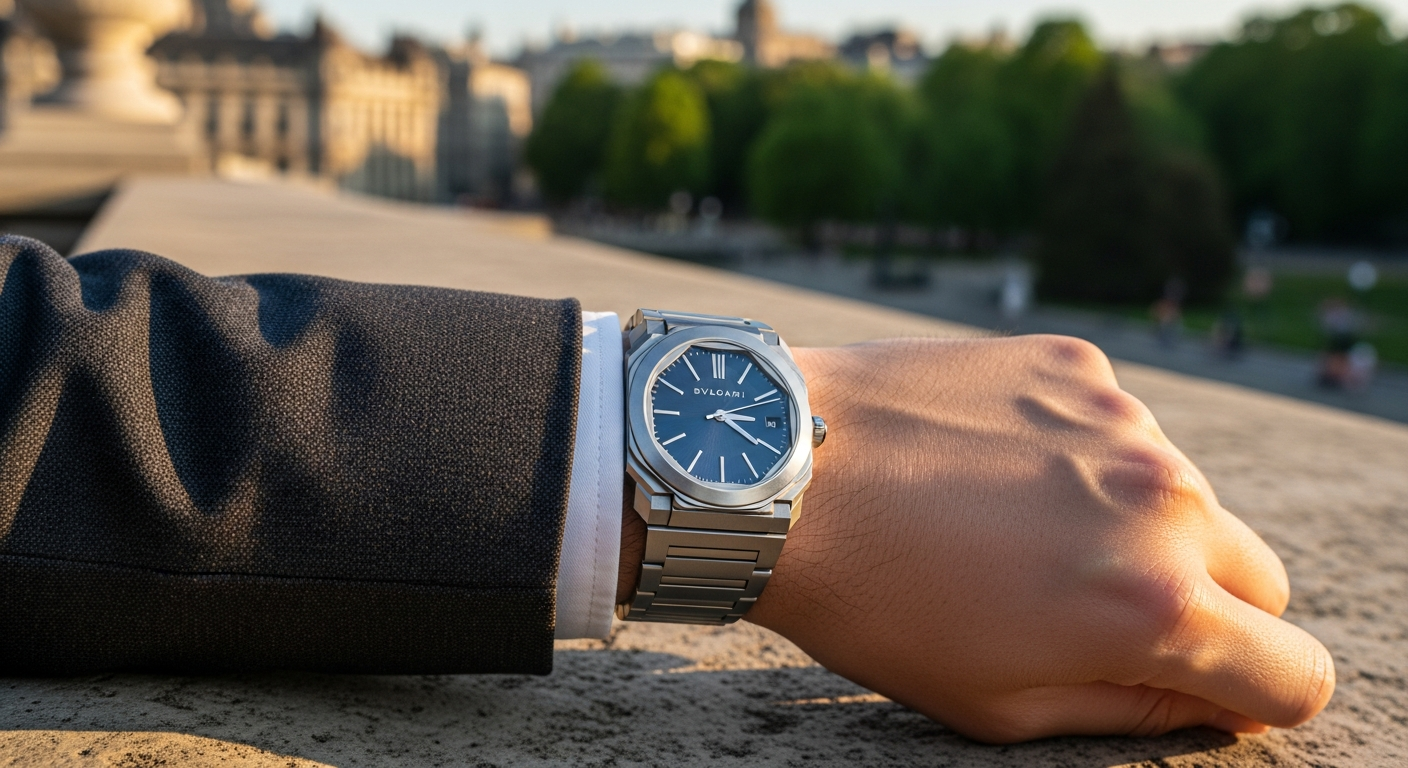
In the beginning, the Octo Finissimo didn’t look like a watch that wanted to win arguments. It looked like a watch that wanted to win time. Not with bravado, not with the thunderclap confidence that Switzerland has spent a century perfecting, but with a kind of architectural certainty: sharp planes, disciplined geometry, a case that seemed less machined than drafted. You could imagine it on the wrist of an man stepping out of an Italian palazzo at dusk, where the stone is warm and the shadows are long, and the city itself feels composed by someone who understands proportion. The Octo Finissimo’s first trick was aesthetic: making a radical object feel inevitable.
But in horology, inevitability is usually a synonym for tradition, and tradition is Switzerland’s native language. For decades, ultra-thin watchmaking belonged to the same handful of names spoken like passwords in collectors’ circles, and the notion that an Italian maison better known for jewelry and Roman glamour would not only join that club, but reorder it, would have sounded like a beautifully dressed provocation. Yet that is precisely what happened. Bulgari didn’t just enter the ultra-thin arena; it turned the arena into a stage, and then rewrote the script so thoroughly that, for a stretch of years, the world had to talk about Italian design and Swiss mechanics as if they were always meant to be one sentence.
The story begins, as so many Italian stories do, with a city that knows how to leave an impression. Bulgari is Rome: a house founded amid the texture and theater of the Eternal City, fluent in gold, gemstones, and the kind of sensual material confidence that makes even restraint feel luxurious. That heritage mattered, and not only as branding. Jewelry houses understand intimacy. A bracelet watch is not a machine you tolerate; it is an object you wear the way you wear a memory. When Bulgari approached ultra-thin, it approached it not merely as a bid for prestige but as a problem of elegance: how to bring a mechanical movement so close to the skin that the boundary between ornament and instrument begins to blur.
The Octo’s shape set the tone. The design lineage runs through Gérald Genta, the same mind whose fingerprints are on some of the most important luxury sports watches of the modern era. Bulgari acquired the Gérald Genta brand and with it a strain of design DNA that was both Swiss in its influence and unusually cosmopolitan in its attitude. The Octo case, with its complex stack of angles and circles, is a little like Rome itself: layers of history arranged into a geometry that somehow makes sense when you stand in the middle of it. The Octo Finissimo took that already distinctive architecture and refined it into something even more severe. It wasn’t trying to be round and polite. It was a building for the wrist.
What changed the conversation, though, was not just the case; it was the daring decision to make thinness the point, not a footnote. Ultra-thin has always existed as a category that connoisseurs respect and casual buyers overlook. It is hard to explain why removing material is so difficult until you hold one of these watches and feel the paradox: less watch, more achievement. Every fraction of a millimeter is an argument with physics. Make a movement thinner and tolerances become unforgiving; wheels become delicate; bridges become less forgiving to shock; power reserve becomes harder to sustain; even the act of winding can feel different because there is simply less room for the familiar architecture of gears and springs.
For Bulgari, chasing thinness wasn’t a single heroic act, it was a campaign. The Octo Finissimo arrived with a quiet audacity and then kept returning with receipts. Record after record, not as gimmicks, but as markers of a philosophy that said the limits were there to be negotiated. In a world where heritage brands often speak in the language of continuity, Bulgari spoke in the language of momentum.
The first time you encounter an Octo Finissimo in the metal, it can feel oddly disarming. You expect an ultra-thin watch to be precious, even fussy, like something that must be handled as carefully as a pressed flower. Instead, the Octo Finissimo often feels modern and purposeful, especially in titanium. Titanium changes the mood. It doesn’t gleam like gold or even like steel; it absorbs light, it softens reflections, it makes the watch seem like an industrial design object rather than a piece of formal jewelry. And because it is so light, it magnifies the sensation of thinness. The watch doesn’t just sit low; it seems to disappear, leaving behind only the outline of its geometry.
This was one of Bulgari’s quieter strokes of genius: treating material choice as part of the message. Ultra-thin pieces can risk seeming delicate or mannered, but a bead-blasted titanium Octo Finissimo feels almost utilitarian, like a tool designed by an architect who happens to have excellent taste. That aesthetic, so stripped of ornament and so confident in line and surface, made thinness feel contemporary rather than nostalgic. It wasn’t trying to compete with the great ultra-thin dress watches of the past by imitating their manners. It was building a new idea of what a dress watch could be in an era of sneakers under suits and glass-and-concrete offices replacing wood-paneled clubs.

Behind the visuals, the real conquest was organizational. Bulgari is an Italian name, but its watchmaking muscle comes from Switzerland, and Bulgari invested decisively in that reality. It built and expanded serious manufacturing capabilities, notably through its movement manufacture and case-making expertise in the Jura. This is where the story stops being a romance and becomes a strategy. Ultra-thin isn’t mastered by wishing; it’s mastered by having the right people, the right tools, and the patience to iterate. Bulgari assembled a framework that could turn bold design into repeatable engineering.
The Octo Finissimo line became a kind of laboratory you could wear. A manual-wind ultra-thin movement is already difficult. But Bulgari didn’t stop there; it went after complications that are traditionally thickness’s worst enemies. Automatic winding adds layers. Calendars add components. Tourbillons demand space and stability. Minute repeaters are essentially tiny musical instruments with constraints that fight thinness at every step. And yet, Bulgari kept finding ways to flatten the impossible.
This is where the Octo Finissimo’s aesthetic and engineering begin to feel like the same thought expressed in two languages. The case is all planes and edges; the movements are all efficiency and integration. In ultra-thin design, you cannot afford laziness. A traditional solution that adds a millimeter is not a solution. So you start rethinking everything: integrating functions, redesigning rotors, reimagining how components sit relative to each other. It’s an exercise in humility and audacity at once, because you must respect the laws of mechanics while insisting they can be persuaded.
Consider what thinness does to sound, to feel, to the sensory experience of wearing a watch. A thicker case can hide noise; an ultra-thin case can make the movement’s presence more intimate. You sometimes hear more, feel more, as if the watch is closer not just to the wrist but to your attention. The Octo Finissimo, especially in its quieter finishes, invites you to lean in. It doesn’t announce itself across the room. It rewards proximity. That is a very Italian kind of luxury, the kind that assumes taste doesn’t need to shout.
There was also bravery in making the bracelet integral to the identity. The Octo Finissimo’s bracelet is not an afterthought; it is a continuation of the case’s geometry, an architectural extension that carries the same language down to the clasp. Ultra-thin cases can look top-heavy on conventional straps, but the integrated bracelet distributes the visual weight, turning the whole watch into a single line that wraps around the wrist. It’s a design solution that also becomes a comfort solution: the watch wears flatter because the bracelet and case cooperate rather than compete.
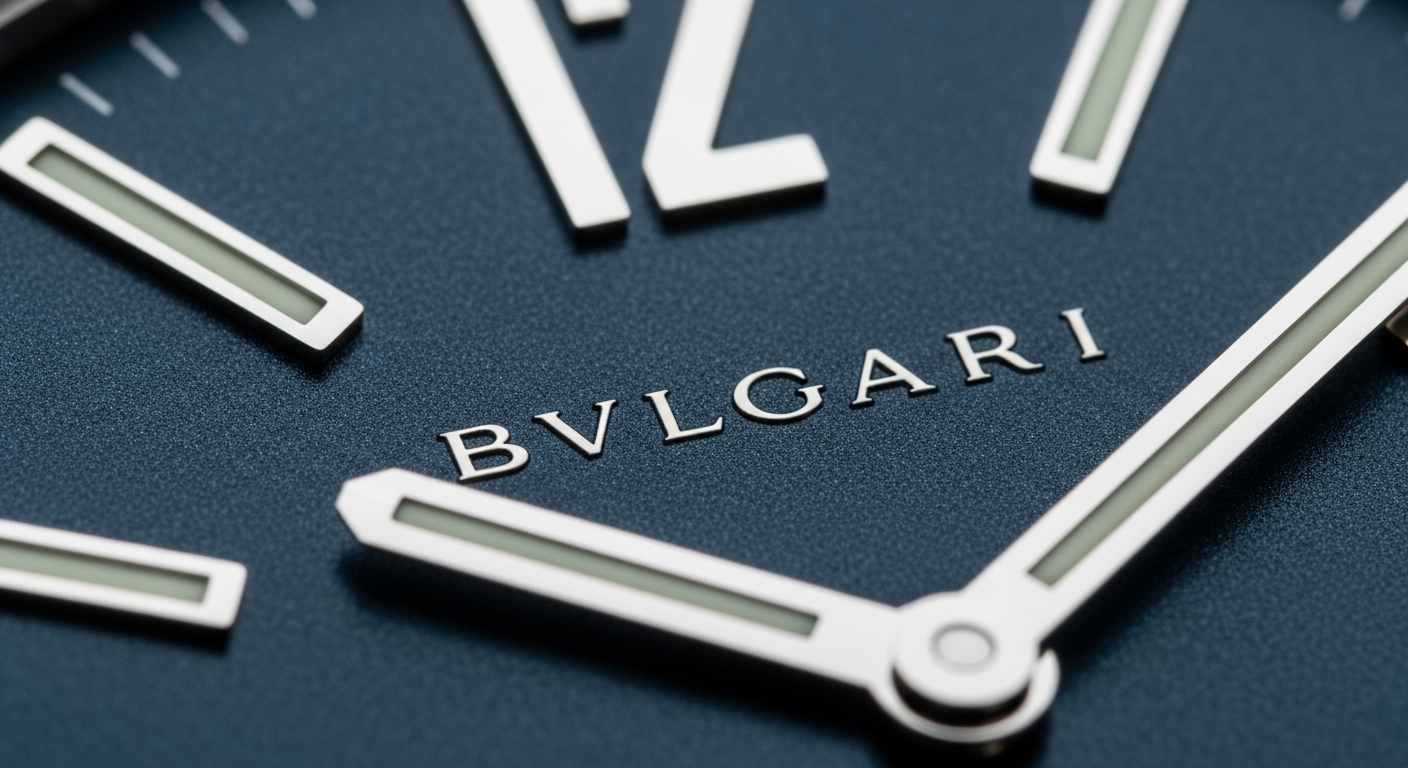
The most interesting part of Bulgari’s conquest is that it didn’t feel like a hostile takeover. It felt like a new capital city being built beside the old one, and then, slowly, the traffic began to flow. Swiss watchmaking has always had room for outsiders, but usually on Swiss terms. Bulgari changed the terms by insisting that Italian design is not merely decoration applied to a Swiss core. In the Octo Finissimo, design is the core. The mechanics had to follow the design, not the other way around. That reversal is subtle but profound. It is the difference between making a watch thin because you can, and making it thin because it is the only way the idea makes sense.
Collectors responded not only to the records but to the coherence. Records can be cynical; coherence cannot. The Octo Finissimo didn’t look like it was chasing thinness to win a press release. It looked like it was always meant to be this way, as if thickness would have been a design failure. That perception is crucial. In luxury, the most persuasive innovations are the ones that appear natural after the fact.
And then there is the cultural aspect: what it meant for Italy to “conquer” a field so emotionally Swiss. Conquest here isn’t about nationalism; it’s about narrative control. For a long time, the story of serious watchmaking had a familiar cast, and everyone else played supporting roles. Bulgari demanded a lead part. It did so with an object that didn’t borrow Swiss iconography. The Octo Finissimo is not trying to be a vintage dress watch, not trying to be a reinterpretation of a mid-century classic. It is aggressively itself. That selfhood is why it could carry the weight of technical ambition without collapsing into parody.
The Octo Finissimo also arrived at a moment when collectors were ready for a different kind of prestige. The 2010s and early 2020s saw the luxury sports watch become a cultural shorthand, sometimes to the point of exhaustion. Familiar shapes commanded impossible waiting lists. In that environment, the Octo Finissimo offered an alternative that still felt elite but not predictable. It was modern, architectural, and, importantly, available often enough that desire could be satisfied rather than perpetually deferred. It became a connoisseur’s answer to hype: a watch you could choose because you loved it, not because the market told you to.
Thinness, too, became newly relevant. As watches grew in diameter and thickness over the years, a truly thin watch started to feel rebellious. It whispered against the trend. It offered a different relationship with the wrist: less presence, more integration. Wearers who spend their days at keyboards or under cuffs understand this immediately. Comfort is not a trivial feature; it is a form of luxury that reveals itself slowly, hour by hour. The Octo Finissimo, by sitting close and wearing light, turns everyday life into its showroom.
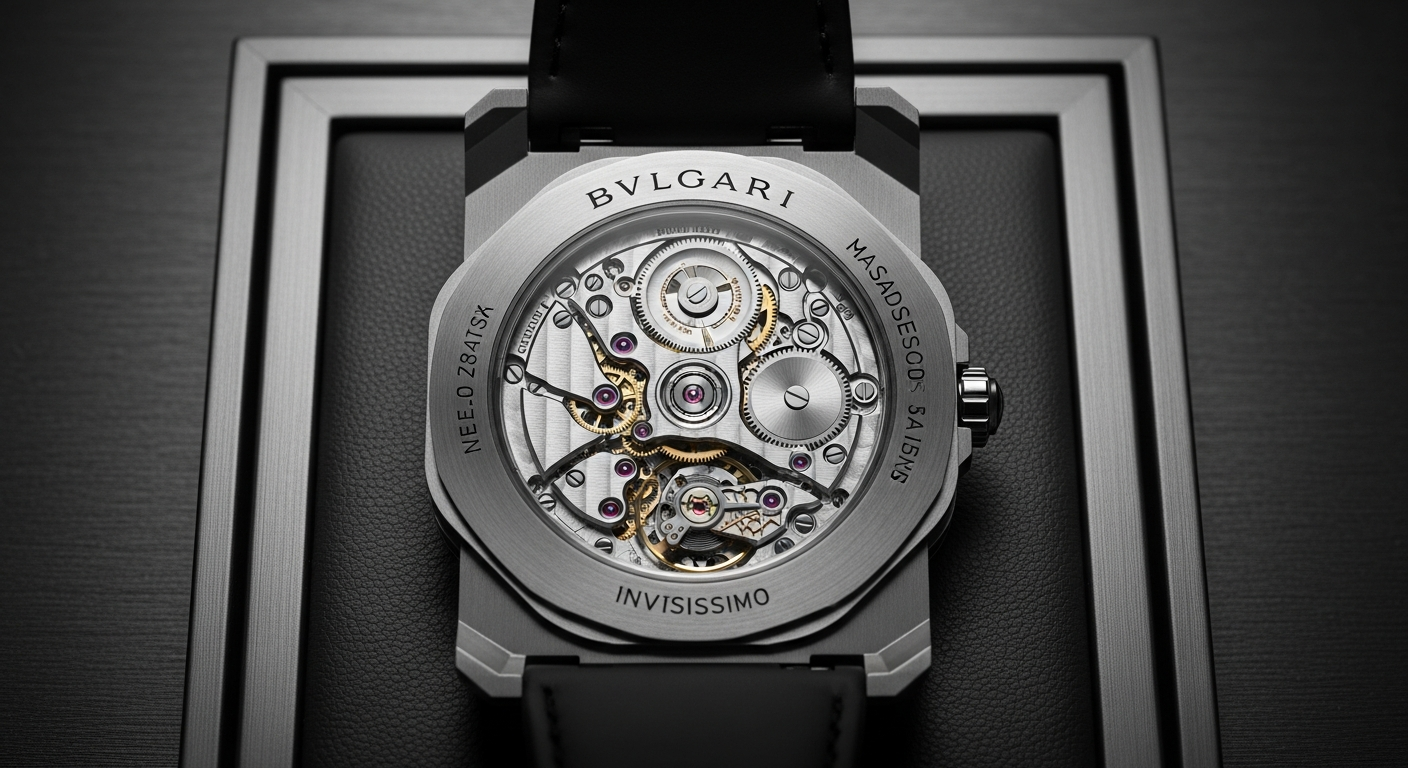
Yet the Octo Finissimo’s accomplishment isn’t only in proving that Bulgari could do what the old guard could do. It is in proving that the old guard didn’t have exclusive rights to the future. The piece feels like a bridge between disciplines: jewelry’s intimacy, architecture’s command of line, industrial design’s obsession with surface, and high horology’s devotion to the invisible. If Swiss watchmaking is often described as a cathedral of craft, the Octo Finissimo feels like a modern museum built beside it: clean, angular, and full of objects that make you rethink what belongs in the collection.
It’s worth remembering that ultra-thin watchmaking is, at its heart, the craft of subtraction. Subtraction is harder than addition because you cannot hide your mistakes behind extra material. You cannot cover an awkward proportion with thickness. You cannot rely on mass to convey value. Everything must be precise: not only the movement’s architecture but the case’s edges, the bracelet’s articulation, the dial’s restraint. In the Octo Finissimo, subtraction becomes a kind of purity. The watch is luxurious not because it flaunts wealth, but because it flaunts control.
Control is what makes the Octo Finissimo feel so un-Italian in the stereotype and so deeply Italian in reality. Italy, at its best, is not chaotic; it is composed. It understands drama, yes, but it also understands restraint, the way a well-cut suit can be more commanding than a louder one. The Octo Finissimo is that kind of suit. Its drama is in its silhouette, and its confidence is in how little it needs to say.
Over time, the Octo Finissimo has become more than a product line. It’s become a proof of concept for a broader idea: that brands with origins outside traditional watchmaking can, with investment and seriousness, become watchmakers in the fullest sense. Not by slapping a movement into a fashionable case, but by developing a technical identity that stands up to scrutiny. Bulgari didn’t ask to be included; it built something that made exclusion look irrational.
In the end, the Octo Finissimo’s conquest of ultra-thin watchmaking isn’t a tale of Italy defeating Switzerland. It is a tale of Italy expanding what Swiss watchmaking can look like. It’s Rome meeting the Vallée de Joux in a language neither speaks alone: a language of razor-thin tolerances and razor-sharp design. The Octo Finissimo’s greatest achievement may be that it made “ultra-thin” feel not like a niche obsession but like a modern ideal, as relevant to comfort and style as to engineering pride.
There is a moment, when you fasten an Octo Finissimo and let your wrist relax, when you realize the watch isn’t trying to be the center of attention. It’s trying to be the most considered object in the room. It sits there like a small piece of contemporary architecture, quietly rewriting assumptions: that Italy’s role in horology is decorative, that Swiss dominance is unshakeable, that thinness is merely a technical party trick. The Octo Finissimo answers with a different kind of certainty, the certainty of something conceived with a clear aesthetic thesis and executed with the discipline to match.
Italy didn’t conquer ultra-thin watchmaking by marching in with flags. It conquered it the way Italy has conquered so many fields: by making the world fall in love with an idea it didn’t know it needed, then proving the idea was engineered as well as it was imagined. And once you’ve worn that idea, felt it disappear under your cuff while remaining unmistakably present to your eye, it’s hard to go back to the old assumptions. The Octo Finissimo doesn’t just keep time. It keeps its own counsel, and in doing so, it changed the counsel of the entire category.