Breguet: The Genius Who Invented Modern Watchmaking
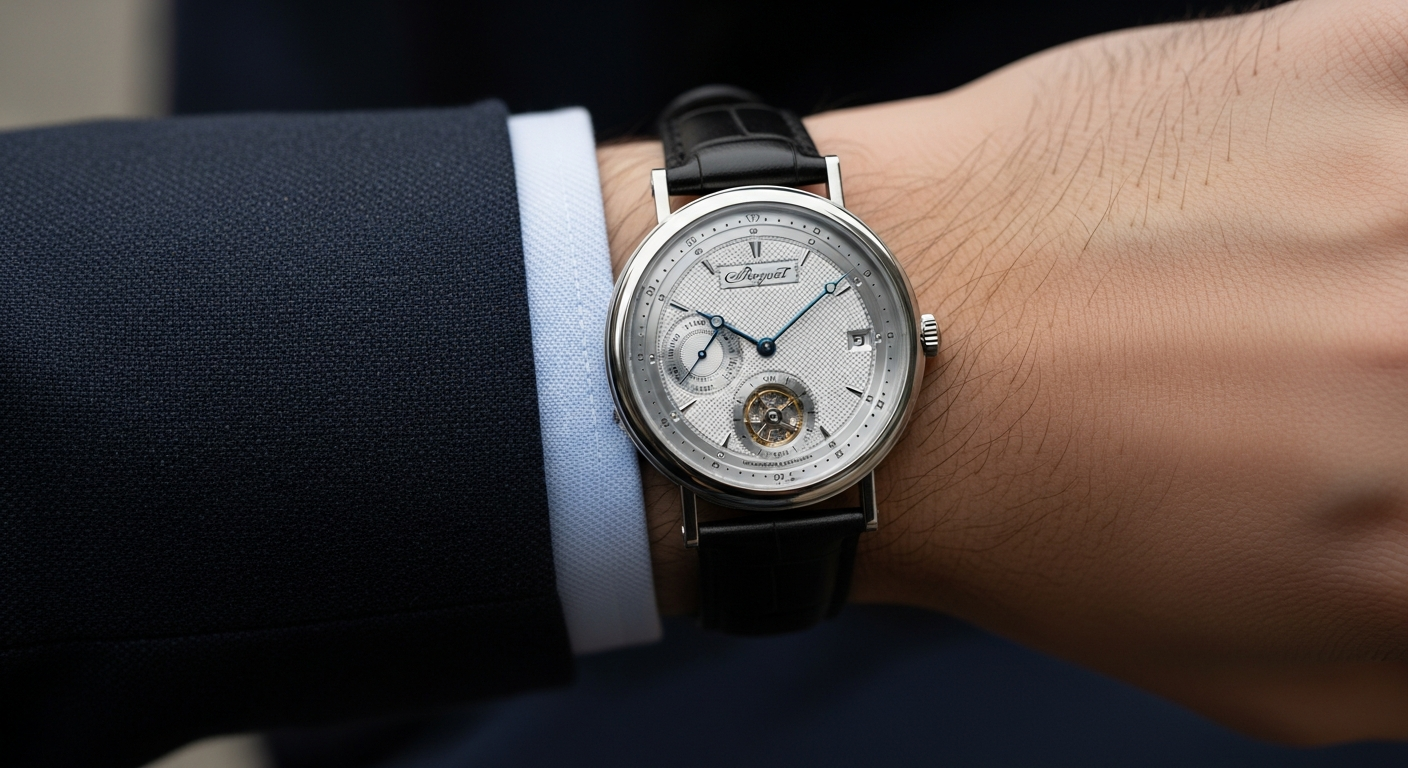
On certain Paris mornings, the city seems to keep time the way it always has: the hush before shutters rise, the first clatter of café cups, the river moving with the calm assurance of something that has outlasted every regime. Yet if you listen closely—closer than the romance, closer than the traffic—you can almost hear another rhythm beneath it, a more deliberate pulse: the sound of precision becoming a language. To speak of modern watchmaking is to speak of a man who turned time from a mystery into a discipline and then, somehow, made that discipline feel like poetry. Abraham-Louis Breguet did not merely improve watches. He reinvented what it meant to measure the world.
He arrived in Paris from Neuchâtel with the particular kind of confidence that belongs to someone who has spent years staring at small things until they reveal big truths. The late eighteenth century was not short on genius, but it was a genius of a different temperament than we think of today. It was patient. It was tactile. It smelled faintly of oil and metal and wood shavings. In workshops lit by high windows, people argued with matter and won, one file stroke at a time. Watches existed, of course—beautiful, temperamental, and often unreliable companions. They were miracles that needed excuses. They gained and lost minutes like forgetful friends. They were susceptible to jostling, to temperature, to gravity’s casual insistence on pulling everything toward imperfection. And then Breguet began to ask, with unsettling calm, why any of that should be tolerated.
The story of Breguet is often told as a list of inventions, as if he were a cabinet of patents wearing a plain coat. But that is like describing a symphony by its instruments. What made him singular was the way he looked at a watch and saw not a static object but a living system, a negotiator between physics and desire. He understood that people didn’t want a mechanism; they wanted trust. They wanted to glance at a dial and believe it. They wanted the inarguable authority of the minute hand. And to give them that, he needed to tame the very forces that conspired against accuracy.
His earliest triumphs were not loud. They were the kinds of innovations that slip into the bloodstream of a craft and become so normal we forget they were ever conceived. Consider the idea that a watch should be readable at a glance. It sounds obvious now, but it wasn’t then. Dials were sometimes indulgent and cluttered, ornament battling information. Breguet’s sense of design was not austere so much as lucid. He pared away confusion until clarity looked elegant. Numerals gained breathing room; hands became slim and instantly recognizable; the dial became a calm, organized face rather than a decorative puzzle. He made beauty serve function, which is perhaps the most modern instinct of all.
He also understood that readability is a kind of honesty. Time is unforgiving; the least a watch can do is speak plainly. That philosophy extended to the architecture within. While others accepted the fickleness of portable timekeeping as a fact of life, Breguet treated it as a set of solvable problems. One of the great culprits was temperature, quietly changing the length and behavior of springs and metals. Another was the irregular delivery of energy from the mainspring, whose force diminishes as it unwinds. Another still was position: a watch carried in a pocket does not sit like a clock on a wall; it tilts, it swings, it rests crown-up, crown-down, and every orientation invites gravity to meddle.
Breguet’s response was not just to correct errors but to redesign the very terms of the argument. If the force from the mainspring is inconsistent, then regulate the flow. If the balance is disturbed by shocks and positional changes, then stabilize it. If materials misbehave with heat and cold, then compensate. He moved through these challenges the way a great editor moves through prose: refining, clarifying, removing what doesn’t serve the meaning, adding structure where the message needs strength.
His clientele would become as dramatic as any novel. In an era when politics could change the course of a life overnight, Breguet sold time to the people who seemed to command it. Nobility, scientists, financiers, adventurers—those who wanted not merely luxury, but mastery. The most famous name in his orbit, shimmering with both glamour and tragedy, was Marie Antoinette. The legend of the watch commissioned for her—an object intended to contain every complication imaginable—sometimes overshadows the more revealing truth: that such a commission could even be conceived tells you what Breguet represented. He was not a jeweler of hours. He was an engineer of possibilities.
Then the Revolution came, and with it the reminder that even genius is not immune to history. Paris became dangerous for anyone associated with the old order. Breguet, so precise in his work, had to be equally precise in his survival. He left, returned, navigated, endured. It’s tempting to romanticize this as the heroic artisan weathering the storm, but what matters is that the storm did not interrupt his thinking. The problems of time remained, indifferent to politics, and he kept solving them.
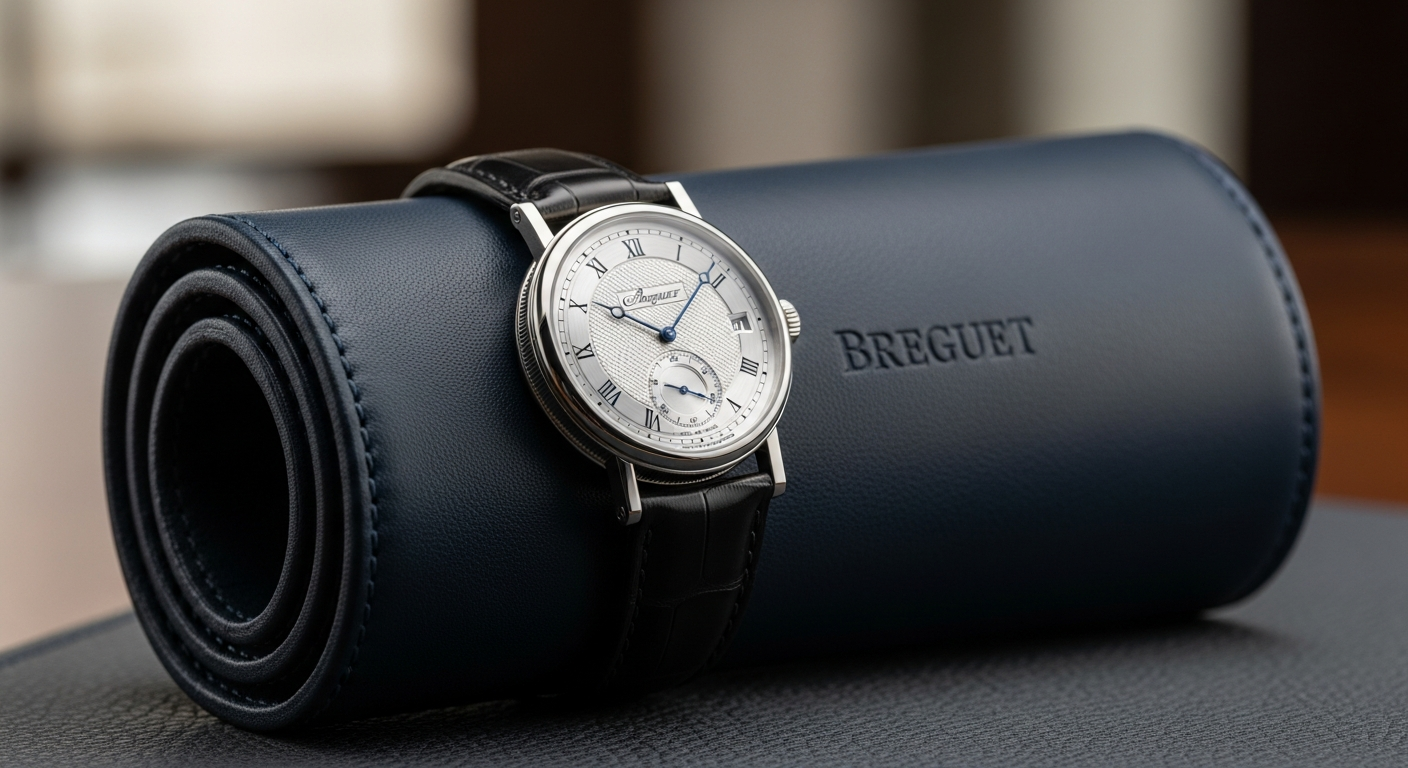
Among his most important contributions was a deeper understanding of what accuracy really costs. It is not gained by a single grand invention, but by controlling a thousand small variables. Breguet introduced or refined technical features that would become foundational: systems to improve shock resistance; methods to reduce friction; escapement innovations that aimed for efficiency and stability. Even when later watchmakers modified or surpassed particular solutions, they did so in the world Breguet had defined—a world where such problems were recognized as problems, and where the pursuit of chronometric performance became the true measure of a watchmaker’s seriousness.
And then there is the tourbillon, the invention most often spoken of in the same breath as his name, like a title. It is easy, in our era, to treat the tourbillon as a theatrical flourish, a spinning cage behind a cut-out dial meant to dazzle dinner guests. But its origin was not spectacle. It was a confrontation with gravity. In pocket watches, which spent much of their time in a vertical position, the balance and escapement could develop positional errors that affected rate consistency. Breguet’s idea was audacious and almost philosophical: if a mechanism misbehaves in certain positions, then keep it from staying in any one position long enough for its errors to dominate. Rotate the regulating organ continuously and distribute the deviations evenly, so they cancel each other into something closer to truth.
In 1801 he patented it, and in doing so he didn’t just create a complication; he created a symbol. The tourbillon is modern watchmaking’s confession that perfection is not a destination but a strategy. You do not eliminate every flaw. You manage them intelligently. You design with humility toward physics and with ambition toward results. In that sense, the tourbillon is less a spinning showpiece than a manifesto in motion.
Yet if you only focus on the tourbillon, you miss the quieter genius: the way Breguet made the watch a coherent, legible object of use and beauty. His aesthetic decisions—the engine-turned guilloché dials, the secret signature hidden in plain sight, the distinctive hands—weren’t mere branding. They were early expressions of identity in an industry that would later be obsessed with it. He understood that trust in a timekeeper includes trust in its maker, and that authenticity must be both technical and visible. A Breguet watch would not only run well; it would announce, gently but unmistakably, that it belonged to a standard.
He also understood the human relationship with time. A watch is intimate. It lives against the body. It marks appointments, mistakes, longing, and luck. People do not merely own watches; they project their lives into them. Breguet’s creations met that intimacy with seriousness. They were not trinkets. They were instruments, refined enough to be heirlooms, functional enough to be used. In his hands, luxury did not mean excess. It meant exactness elevated to art.
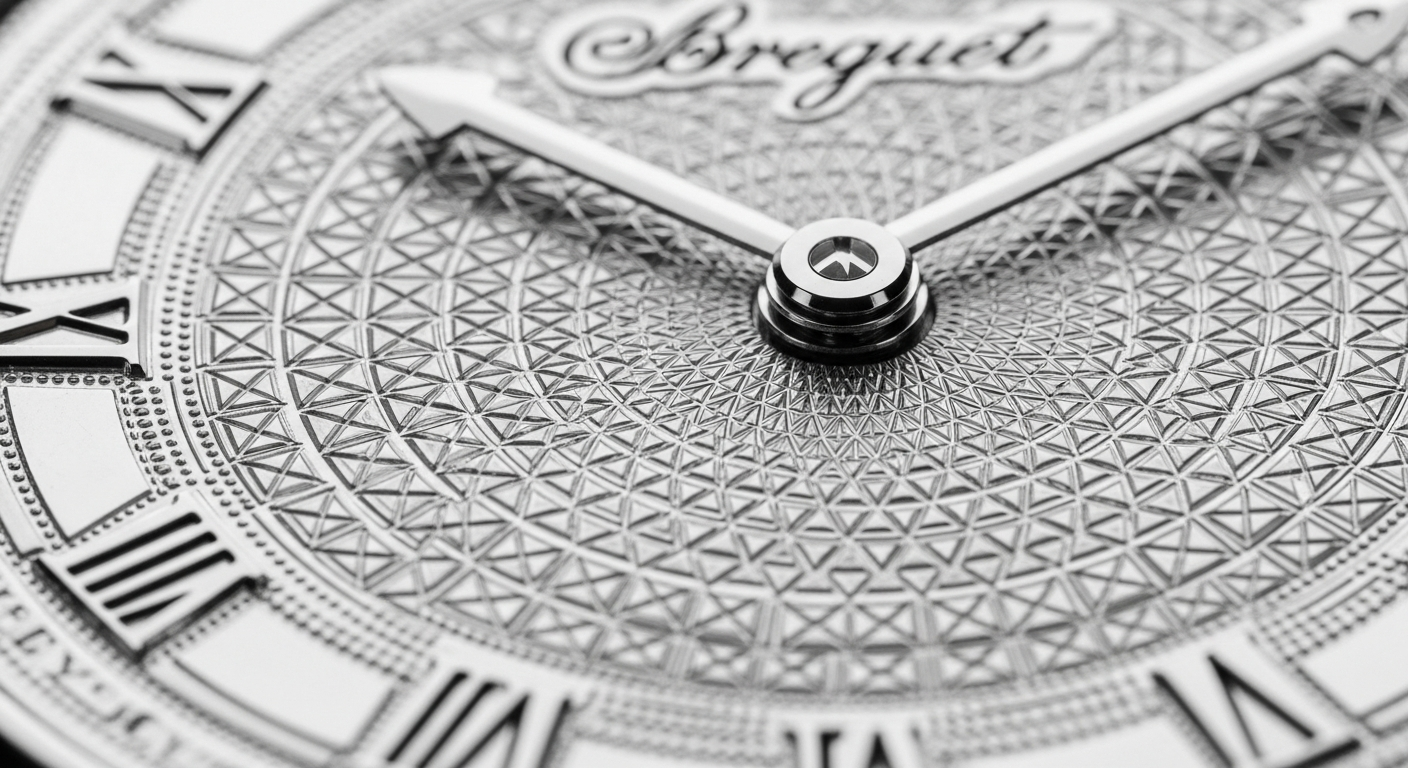
To say he “invented modern watchmaking” is, of course, an editorial claim. No single person invents a field. But Breguet did something rare: he set the agenda. Before him, portable timekeeping was a craft with marvels. After him, it became an industry with principles. He pushed accuracy from aspiration toward expectation. He made design rational and recognizable. He treated the watch as a system that could be optimized, not merely decorated. He built a bridge between artisanal skill and scientific method. If modern watchmaking has a foundation, it is this combination—beauty disciplined by physics, and physics made livable through beauty.
You see his influence in the way watchmakers talk. Listen to any serious discussion of movements and you will hear echoes of Breguet’s concerns: stability in different positions, isochronism, efficient escapements, clean indications. His mindset persists even where his exact mechanisms do not. When a brand today touts chronometry, when it speaks of regulating a movement in multiple positions, when it obsesses over reducing friction, improving power delivery, controlling magnetism and shock, it is speaking in a vocabulary Breguet helped standardize.
Perhaps the deeper reason he feels so modern is that he worked like a systems designer. He didn’t chase novelty for its own sake. He chased outcomes: legibility, precision, reliability. And he understood that those outcomes required not only invention but also consistency in execution. There’s a discipline in that, a refusal to be distracted by the merely impressive. It’s the kind of discipline that, in our time, we attribute to engineers building spacecraft or designing medical devices. Breguet was doing it with wheels and springs, at a scale that demanded both microscopic patience and sweeping vision.
There is also, in his story, a lesson about the relationship between technology and taste. Modern watchmaking lives in tension: it is part engineering, part emotion. Even the most technically sophisticated watch must still persuade the eye, the hand, the heart. Breguet’s genius was that he never treated those as separate. His solutions were often elegant because they were necessary, and beautiful because he refused to let necessity be ugly. He made restraint fashionable long before restraint was a marketing term. He made simplicity feel like the most luxurious choice in the room.
One can imagine him at his bench, surrounded by the subdued chaos of tools and parts, holding a component between fingers that knew the exact pressure required to avoid damage. In that moment, the world outside—wars, courts, whispers—would recede, and the only drama would be the stubbornness of metal. He would make an adjustment, assemble, test, listen. The watch would speak back in its ticking, a tiny verdict. In that exchange is the essence of horology: the dialogue between maker and time, mediated by mechanics.
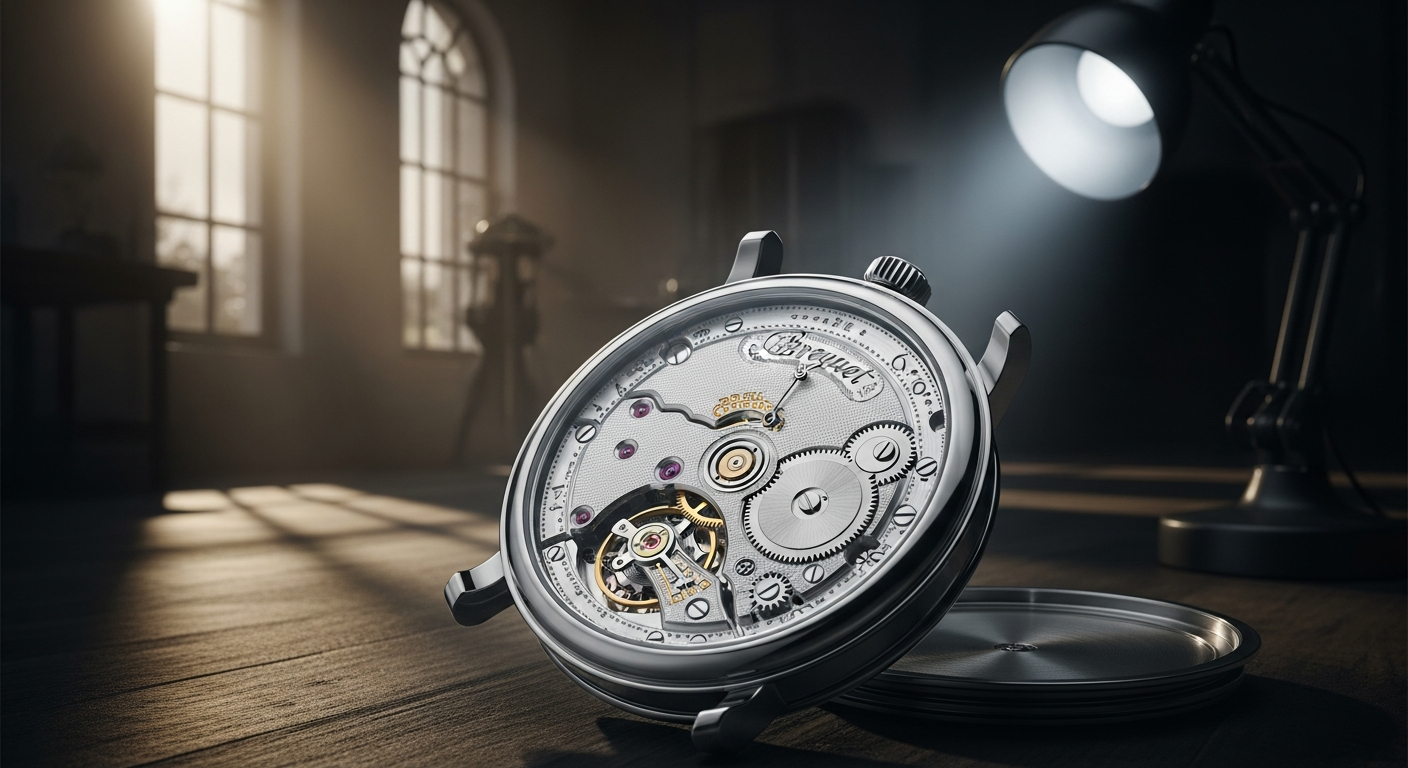
And what of the world that came after him? The nineteenth and twentieth centuries brought industrialization, standardization, mass production, and later the quartz crisis that nearly rewrote the meaning of a watch. Yet even as electronics made timekeeping cheap and perfect, mechanical watches survived not because they were rational purchases, but because they were human ones. In that survival, Breguet’s legacy feels especially sharp. He proved early that mechanical timekeeping could be more than utility. It could be culture. It could be identity. It could be a portable philosophy: that we can impose order on an indifferent universe, not completely, but enough to live by.
Today, when someone turns a watch over to admire the movement—when they linger over the choreography of gears, the careful finishing, the reassuring sweep of a hand—they are participating in a ritual Breguet helped invent. The modern collector’s language of complications and calibers, the admiration for guilloché and restrained dials, the reverence for chronometric performance—these are not accidents. They are the afterimage of one man’s insistence that timekeeping deserved to be taken seriously.
It is fashionable to call certain figures “ahead of their time,” a phrase that flatters us as much as it flatters them, because it implies we can recognize brilliance in retrospect. But Breguet wasn’t simply ahead of his time. He was shaping it. He was giving it tools. He was teaching it to demand more from the objects it carried close. The watch on a wrist today, whether it is a humble mechanical piece or an extravagant complication, lives in a world where precision is expected, legibility is valued, and engineering is admired. That world did not happen by itself.
In the end, the most compelling way to think about Breguet is not as a mythic inventor surrounded by famous patrons, or as a name engraved on museum pieces. Think of him instead as someone who took the most slippery concept in human life—time—and built a reliable conversation with it. He did so with methods that look, from a distance, almost absurdly delicate: a spring shaped just so, a wheel polished to reduce friction, a balance regulated until it obeyed. Yet out of those delicate acts came a revolution in expectation. He made it normal to believe that a small mechanical object could tell the truth.
Paris still keeps its mornings, and the river still moves. But somewhere, in the steady tick of a well-made watch, you can hear the legacy of a man who refused to accept approximation as destiny. Breguet gave modern watchmaking its spine: the belief that beauty and precision belong together, and that the measure of a life deserves an instrument as serious as the life itself.