Zenith in 2026: The El Primero Legacy, Reforged into Modern High-Frequency Luxury
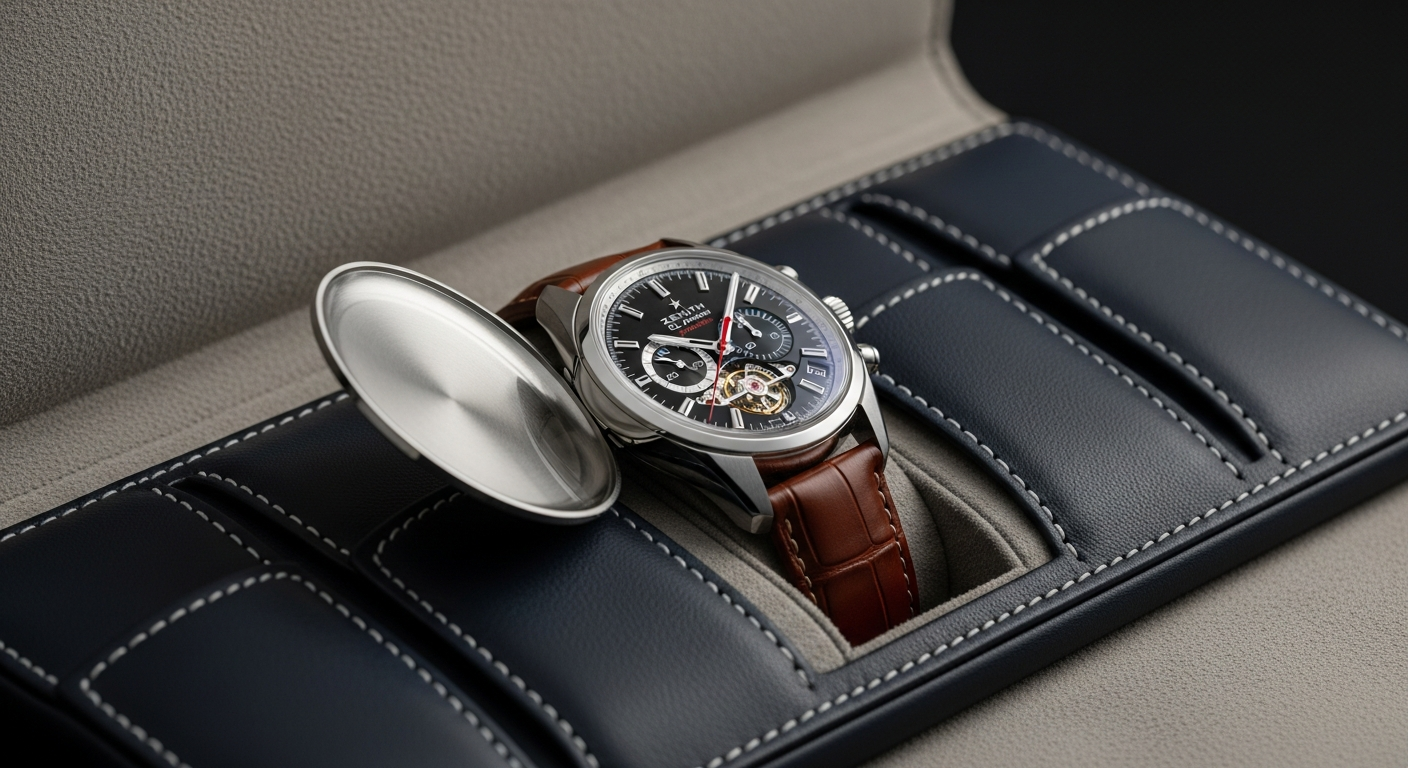
Zenith’s advantage isn’t that it once made history—it’s that it never stopped engineering it. While much of Swiss watchmaking sells romance first and mechanics second, Zenith has spent decades refining a simple, audacious promise: precision you can see, driven by high-frequency chronograph architecture that still defines the brand’s DNA. The result is a manufacture whose modern relevance isn’t borrowed from archives, but built from an ongoing obsession with timing at the edge of what’s mechanically possible—and wearable enough to be daily luxury, not lab equipment on a strap or bracelet.
Zenith’s real moat: a manufacture that thinks like an engine-builder
In 2026, Zenith’s positioning is unusually coherent for a heritage Swiss house: it behaves less like a curator of past greatness and more like an engine-maker with a recognizable technical accent. The market is saturated with “stories” that can be swapped between brands with minimal friction—vintage cues, faux-aged lume, anniversary reissues. Zenith can play that game, but it doesn’t need to. Its most credible claim is measurable performance delivered through an integrated, high-frequency chronograph architecture that has remained central rather than ornamental.
This matters because the chronograph category has bifurcated. On one side: lifestyle chronographs that lean on design mythology, sometimes with modular or outsourced solutions hidden behind closed casebacks. On the other: a smaller set of manufactures whose chronographs are the point, not an accessory. Zenith has not only stayed on that second path; it has continued to revise the same fundamental platform—El Primero—into something closer to a long-running R&D program than a historical artifact.
The strategic takeaway is simple: Zenith’s continuity of technical authorship is rare. Many brands claim continuity of style; far fewer can trace continuity of engineering, especially in chronographs. Zenith’s advantage is that it can show its work. That’s increasingly valuable in a high-end market where educated buyers want proof of competence, not just proof of taste.
El Primero as a platform, not a relic
El Primero’s status is well known: a landmark integrated automatic chronograph that helped define modern expectations for performance and robustness. But it’s the “afterlife” of El Primero that best explains Zenith’s modern relevance. The movement has been treated as a foundation—iterated, industrialized, and recontextualized—rather than frozen as a museum piece whose primary job is to authenticate retro design.
High frequency is the axis that keeps the story technical rather than sentimental. A faster balance doesn’t automatically guarantee better real-world accuracy, but it does allow finer measurement of elapsed time and can improve stability against small disturbances—if the rest of the architecture is designed to support it. Zenith has built its identity around that premise with an unusual degree of commitment: the chronograph is not just present, it is the brand’s laboratory.
Where other manufactures introduce “new” lines by cycling case shapes and dial colors, Zenith’s strongest releases tend to read like engineering statements that happen to be wearable luxury objects. That’s a critical distinction. It gives the brand a defensible reason to exist beyond aesthetic preference: you buy Zenith because you want this specific kind of mechanical intelligence—high-frequency timing—executed as a complete, integrated product.
From 1/10th to 1/100th: making precision legible
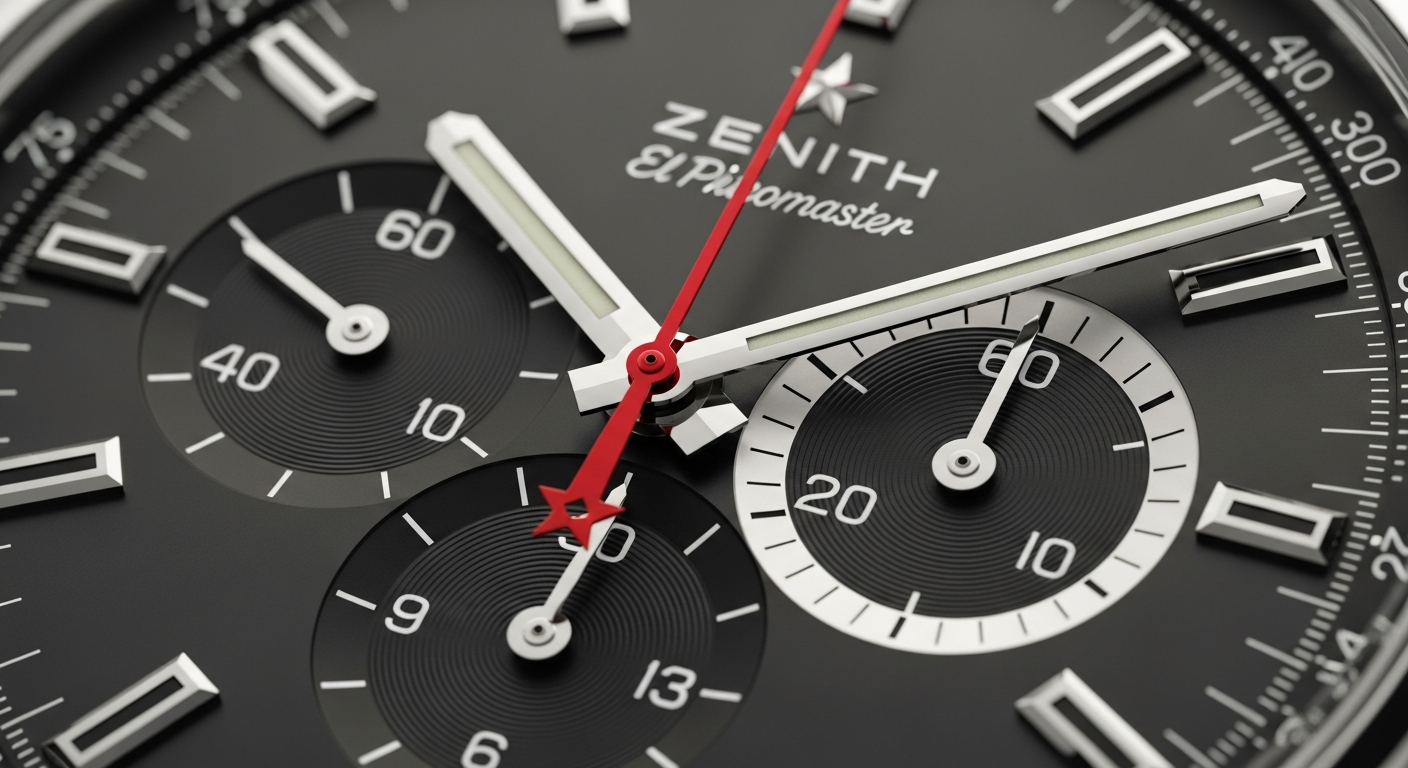
Zenith’s modern chronograph portfolio has leaned into a collector-friendly concept: precision should be both measurable and visible. The issue with most mechanical chronographs is that their “precision” is theoretical—scale markings and subdials imply resolution that the underlying frequency doesn’t truly support. Zenith, in contrast, has made the act of reading the measurement part of the experience. High-frequency chronographs aren’t just about the spec-sheet; they change what you see on the dial.
The 1/10th-second and 1/100th-second initiatives are best understood as Zenith translating its engineering advantage into a simple user-facing narrative: the hand moves fast because the movement is built to measure fast. That sounds obvious, but it’s surprisingly rare. Many complicated watches hide their complexity; Zenith tends to stage it. The result is a product identity that is technical without being sterile—dynamic on the wrist, but not reduced to a gimmick.
There is also a strategic benefit: this approach provides Zenith with an innovation ladder that doesn’t require abandoning its core. High-frequency chronograph development becomes a repeatable theme with room for incremental gains—power management, durability, readability, winding efficiency, and packaging—rather than a one-off “breakthrough” that the brand then struggles to productize.
Design codes that feel modern because the mechanics are modern
Zenith’s best contemporary design work doesn’t pretend it’s 1969. It takes cues from its own technical priorities: legibility, energy, and a certain industrial clarity. The more the movement becomes a protagonist—through open dials, partially visible organs, or assertive chronograph layouts—the less Zenith needs to borrow the visual language of mid-century tool watches.
This is where the brand distinguishes itself from nostalgia-first heritage houses. Zenith can certainly do handsome vintage-leaning pieces, but its sharper identity lives in watches that look engineered. Even when you disagree with a particular execution—an opening here, an aggressive scale there—the intent is consistent: the design is trying to communicate what the watch does, not merely what it references.
In a market where “timeless” often becomes a euphemism for “risk-averse,” Zenith has a credible permission slip to look contemporary. The mechanics justify the modernity. It is easier to accept a bolder case, more technical dial furniture, or more architectural layering when the chronograph underneath is legitimately different from the mainstream.
Product families as an engineering narrative
Zenith’s portfolio is most persuasive when it reads like a family of related solutions rather than disconnected style exercises. The Defy line, in particular, functions as a modern chassis for high-frequency experimentation and visually contemporary sport-luxury design. The Chronomaster line anchors the El Primero story in a more classic, collector-comfortable format—often the gateway for those who want the movement’s pedigree with less overt futurism. Other pillars, including pilot-oriented or dress-leaning propositions, matter most when they remain consistent with the same underlying thesis: Zenith equals chronograph competence and mechanical transparency.
From a collector’s perspective, this kind of segmentation is healthy. It allows the same mechanical DNA to be expressed at different levels of visual intensity and different wearing contexts. The buyer isn’t choosing between unrelated identities; they’re choosing an interface. That’s how genuine manufacture identity scales without becoming repetitive.
It’s also how Zenith can resist the gravitational pull of retro. If the movement is treated as a platform, then each product family becomes a way to translate that platform to different use-cases: daily steel sports watches, more formal chronographs, high-tech material plays, or collaborative editions that amplify a specific aesthetic subtheme.
Collaborations and limited editions: best when they reinforce the “engine-maker” thesis
In the current luxury environment, collaborations and limited runs are unavoidable. They can also be corrosive: a brand can quickly communicate that it has run out of ideas and is borrowing someone else’s audience. Zenith’s collaboration strategy works when it stays disciplined—when the partner is a lens, not a crutch.
The collaborations that make sense for Zenith are those that align with performance, engineering culture, and contemporary design rather than pure nostalgia. When the narrative is “we built a different chronograph and expressed it through a distinct visual code,” Zenith is playing to its strengths. When the narrative drifts into costume—design references that could sit on any generic chronograph—the brand’s differentiator blurs.
Collectors tend to be more forgiving of bold aesthetics when the mechanical proposition remains distinctive. Zenith can afford assertive colorways, skeletonization, modern materials, and unusual layouts, because the watch still answers a technical brief. That’s the key: the limited edition should feel like a variant of a real platform, not a distraction from it.
Wearable high frequency: the difficult part Zenith keeps solving
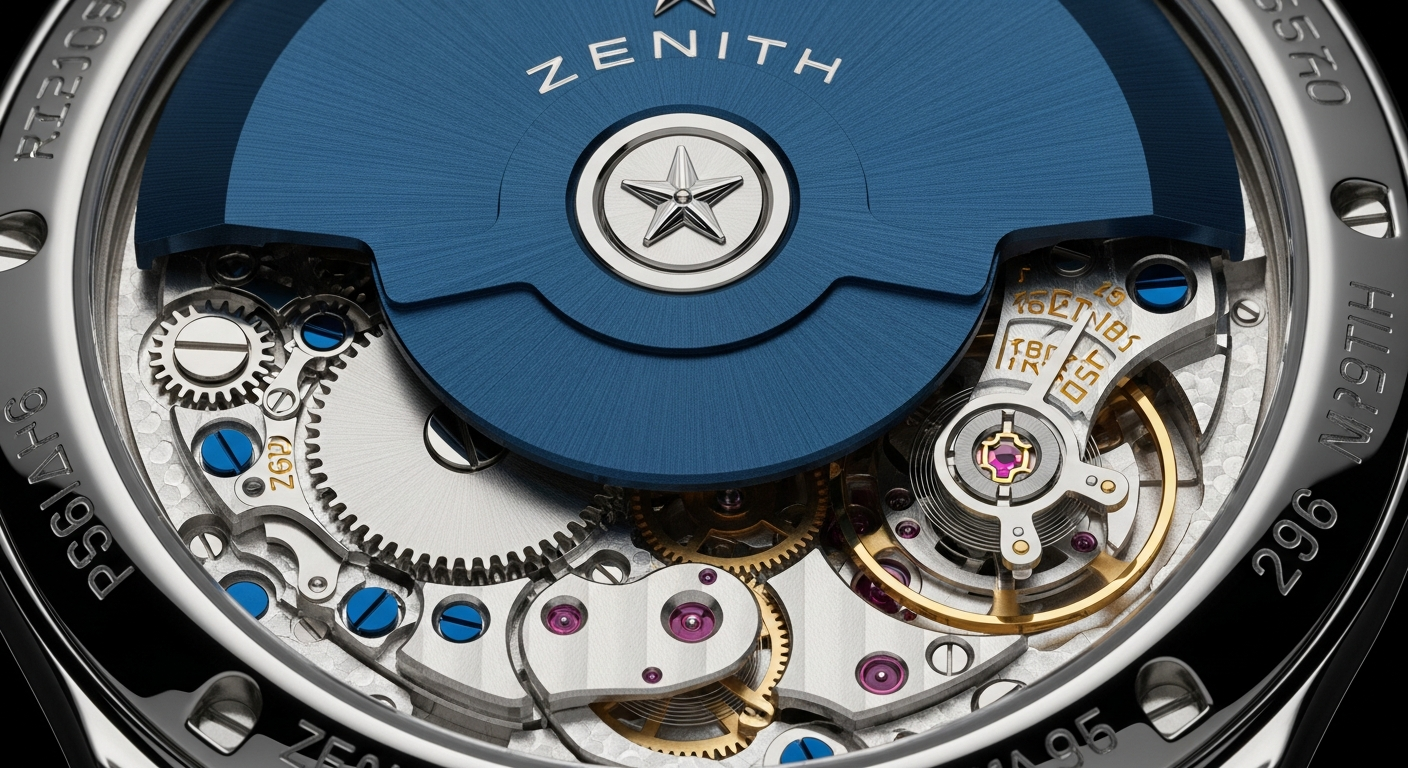
It’s easy to claim performance; it’s harder to deliver it in a package that behaves like a daily luxury watch. High-frequency chronographs bring legitimate engineering headaches: increased energy demand, lubrication considerations, wear implications, and the need to maintain amplitude and stability while also offering practical power reserve and serviceability. The achievement isn’t merely that the hand goes around quickly—it’s that the watch remains an object you can live with.
This is where Zenith’s steady refinement matters more than headline-grabbing specs. A brand that treats the chronograph as a living platform has to keep improving the unglamorous parts: efficient winding, durable components, sensible regulation, thoughtful case architecture, readable dials, and bracelets/straps that make the watch feel like a product, not a project.
Zenith’s collector appeal in 2026 is tied to this balance. There are more extreme expressions of experimental watchmaking, but they often sit outside normal wearing habits. Zenith occupies a more valuable niche: high-frequency chronograph engineering that fits into the rhythms of daily ownership. That’s what turns technical credibility into long-term brand equity.
How Zenith should be judged in 2026
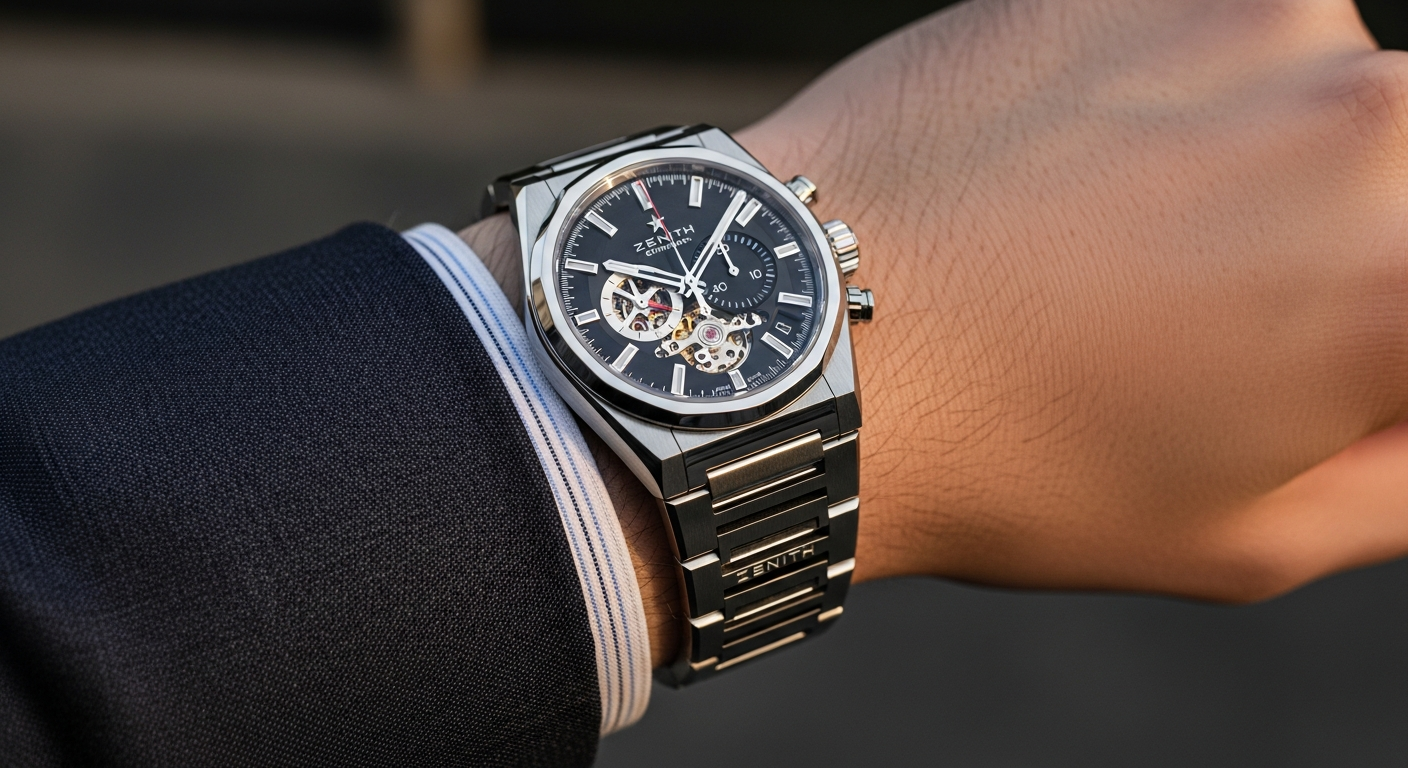
Zenith shouldn’t be evaluated primarily on whether it references its past tastefully. It should be judged on whether it continues to do what its best watches have always promised: make precision tangible through engineering you can observe and use. The right criteria are not just finishing and heritage—though both matter in this segment—but platform continuity, chronograph architecture, frequency strategy, and the brand’s ability to translate technical ambition into coherent product design.
A fair critique is that the market doesn’t always reward this kind of seriousness. Storytelling sells, and “engine-making” is a quieter virtue. But among collectors who care about what a chronograph is rather than what it symbolizes, Zenith remains unusually legible. You can point to the movement, the frequency, the measurement, and the layout, and explain what makes it distinct without leaning on romance.
The more crowded high-end watchmaking becomes, the more valuable that legibility is. Zenith’s most strategic asset is not the fact that El Primero happened. It’s that the brand keeps treating El Primero as a mandate: keep pushing high-frequency chronograph watchmaking forward, make the results visible, and package them as modern luxury objects meant to be worn hard and often. In 2026, that is a rarer—and more defensible—identity than another round of vintage echoes.