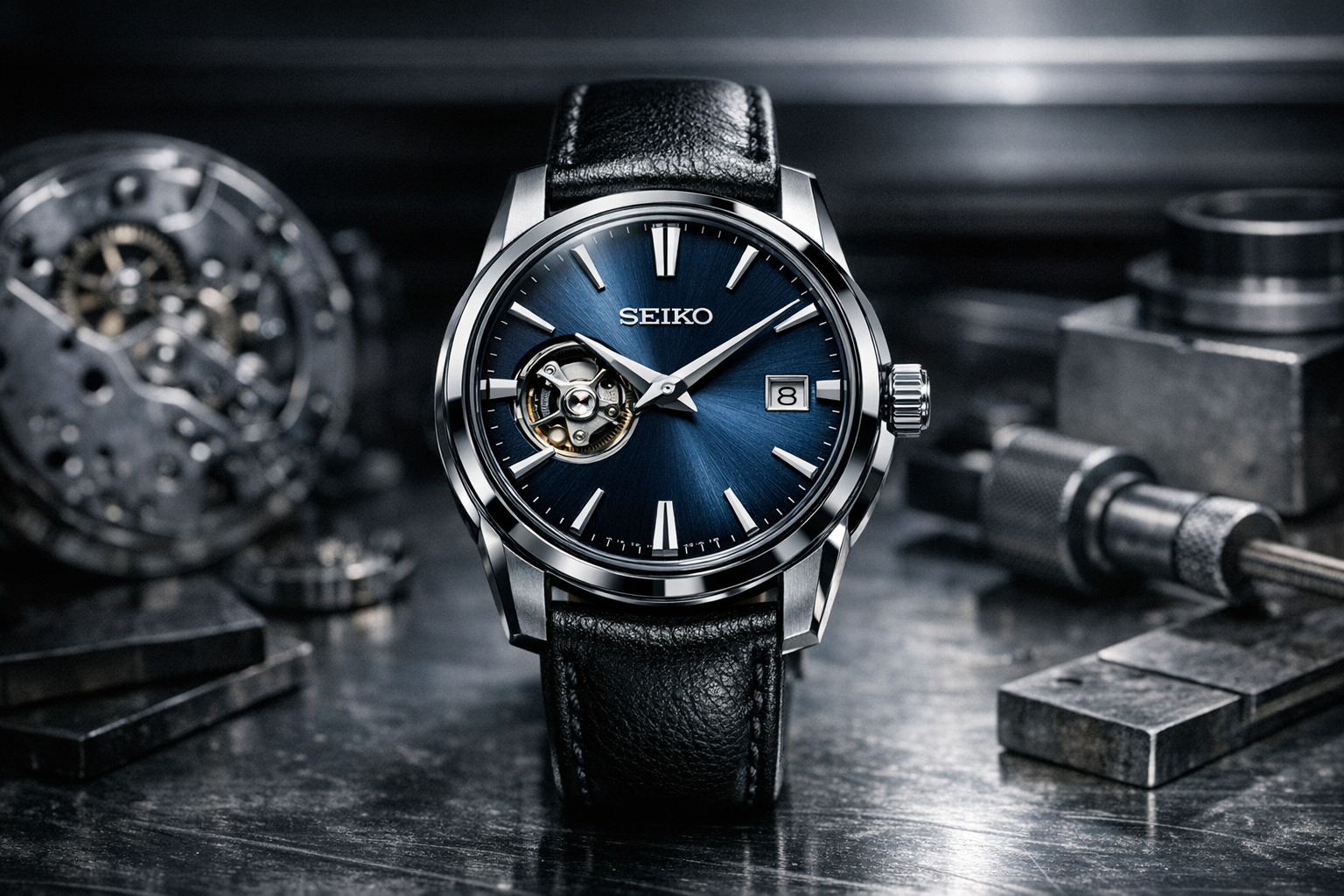
Seiko: The Japanese Giant That Redefined Mechanical Watchmaking
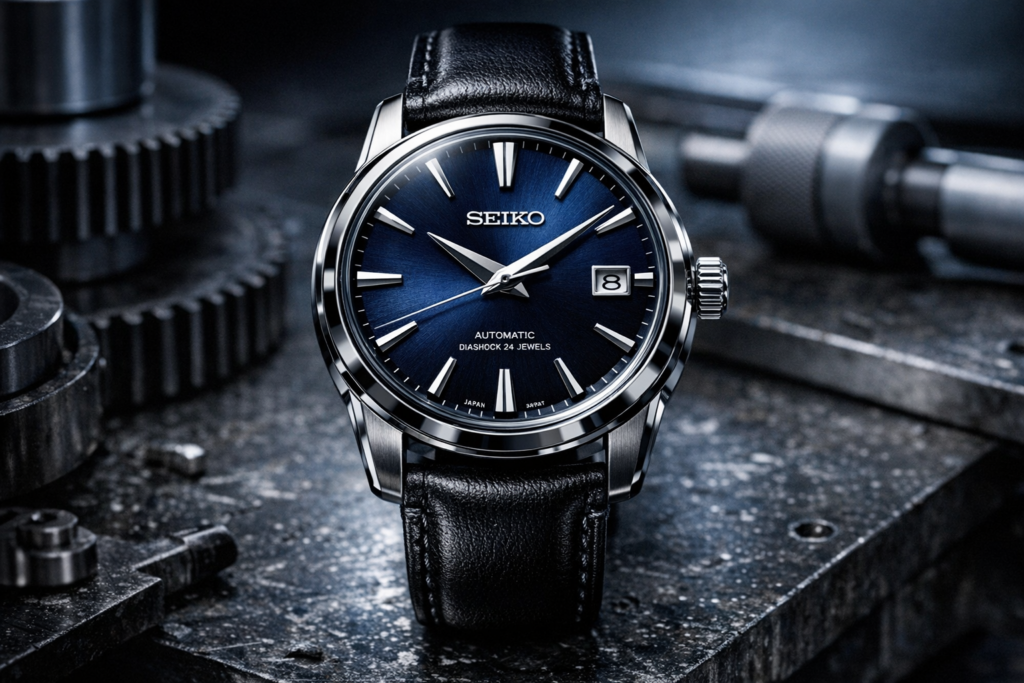
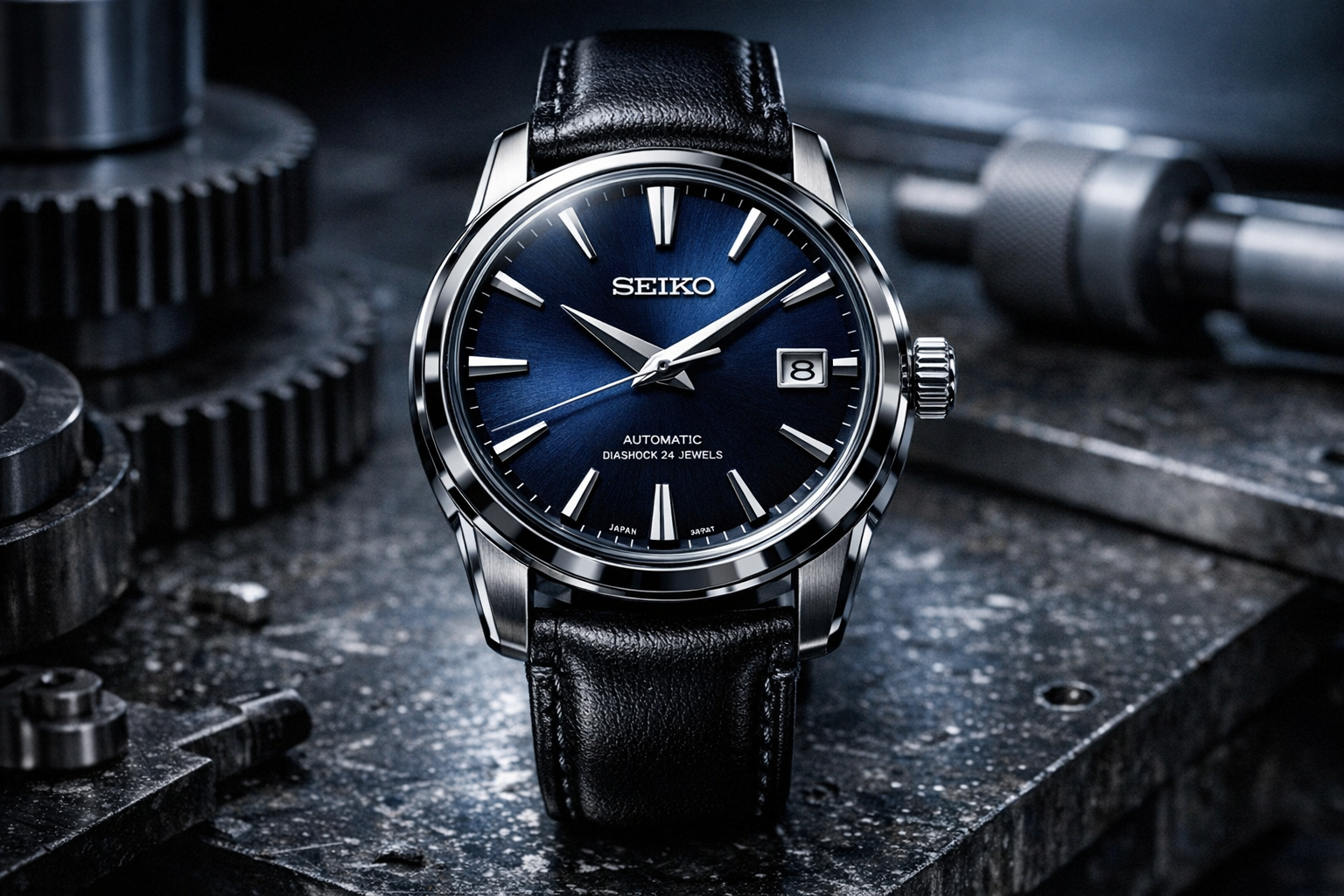
A watch can be a little machine you strap to your wrist, or it can be an argument about what a machine should be. For much of the twentieth century that argument sounded, to many ears, like it had a single accent. Swiss. Mechanical timekeeping was a cathedral built in the valleys of Neuchâtel and Geneva, with rules about finishing, pedigree, and what counted as “real” watchmaking. Then, from the other side of the world, a Japanese company that began as a retail shop started quietly rearranging the furniture. Not by copying the cathedral, but by asking a different question: what if mechanical excellence wasn’t a private club, but a public standard?
The story begins with Kintarō Hattori, a young entrepreneur in Tokyo who, in 1881, opened a shop selling and repairing clocks and watches. It’s a familiar origin myth in horology: the humble beginnings, the workbench, the apprentice’s patience. But Seiko’s origin has an extra current running beneath it—an almost stubborn belief that timekeeping should be made at home, by local hands, for a modernizing nation. Hattori didn’t just want to sell watches; he wanted to build them. By 1892 he established a factory, Seikosha, literally “House of Exquisite Workmanship,” a name that reads like a promise and a challenge at once.
In those early decades, Japan was racing to industrialize, importing ideas as aggressively as it imported machines. Seiko’s earliest products were clocks, then pocket watches, then the first Japanese wristwatch in 1913, the Laurel. None of this was glamorous in the way European collectors might define glamour. It was practical, forward-leaning, and relentlessly focused on learning. Seiko absorbed the logic of mass production without surrendering the ambition of precision. That combination—industrial scale paired with uncompromising targets—would become the company’s signature. And it would eventually remake mechanical watchmaking from the inside out.
The crucial thing to understand is that Seiko didn’t approach mechanical watches as heirlooms first. It approached them as instruments. The Swiss had given the world exquisite instruments, yes, but also an ecosystem of small supplier networks, artisanal bottlenecks, and a culture that treated certain inefficiencies as proof of authenticity. Seiko treated inefficiency as a problem. Not because it lacked romance, but because it had a different romance: the romance of progress, the belief that the best work is the work that can be repeated, improved, and shared broadly.
By the middle of the century, Seiko had already become a competitive force in observatory trials—those precision contests that once served as the Olympics of chronometry. The company’s movements earned respect not through marketing poetry but through measured performance. Yet respect is not the same as disruption. Disruption arrived like a clean shock: 1969, the Seiko Quartz Astron. In a single product, Seiko detonated centuries of mechanical dominance and, in the process, set in motion what the Swiss later named the Quartz Crisis.
It’s a strange twist, given the title of this story, that the event most people associate with Seiko’s rise is quartz, not mechanical. But to tell Seiko’s mechanical legacy honestly, you have to pass through that blast radius. Quartz didn’t just change what watches were; it changed what mechanical watchmaking had to become in order to survive. And Seiko, the very company that lit the fuse, also became one of the best at proving that mechanical could still matter—if it evolved.
When inexpensive, accurate quartz watches flooded the market, mechanical watches could no longer rely on being the most practical way to tell time. They had to become something else: an object of desire, a piece of heritage, a performance of craft. The Swiss pivoted toward luxury and storytelling. Seiko, interestingly, did both kinds of reinvention at once. It kept producing accessible mechanical watches, refusing to let the category turn into an elite museum exhibit, and it also built a high-end mechanical identity that could meet anyone on any playing field: Grand Seiko.
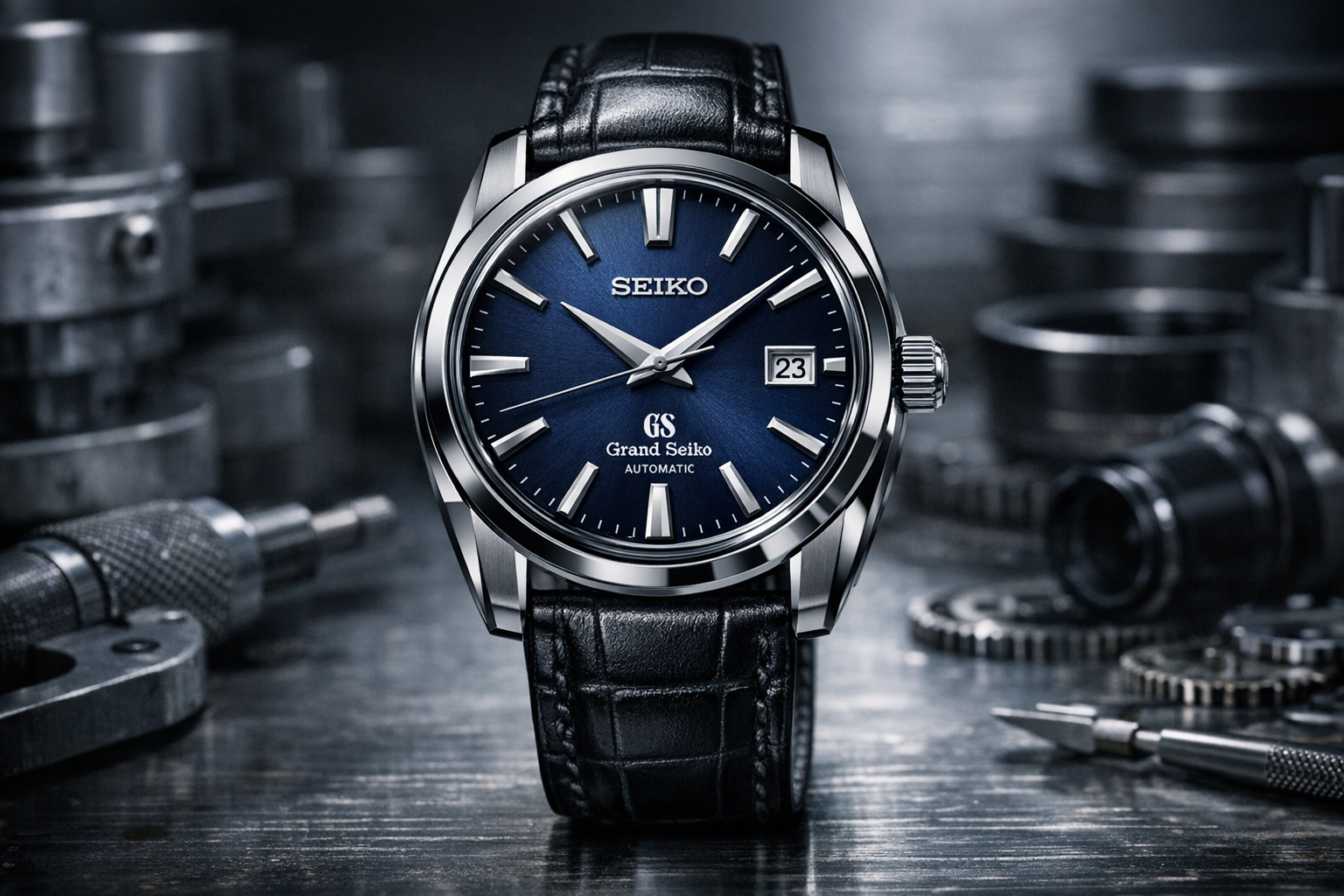
Grand Seiko had been introduced in 1960 with a deceptively simple goal: to create the ideal watch. That phrase can sound like advertising fluff until you look at what it meant in practice. It meant precision standards, rigorous inspection, and a refusal to accept that Swiss equals best by default. It meant movements adjusted with the same seriousness as chronometer-grade rivals. It meant cases and dials finished to a level that, at the time, many outside Japan barely noticed because they weren’t looking. The irony is that Seiko’s discretion—its tendency to let products speak without shouting—may have delayed global recognition. But it also made the work purer. The watches weren’t designed to win arguments online; they were designed to be right.
One of Seiko’s most quietly radical contributions to mechanical watchmaking was structural: vertical integration taken to its logical extreme. The Swiss industry had long been a tapestry of specialized makers: one company for hairsprings, another for escapements, another for cases, another assembling. Seiko built an ecosystem where it could make almost everything in-house, from movements to cases to dials, from lubricants to regulating organs. That sounds like corporate efficiency, but in watchmaking it’s also creative freedom. It means Seiko could iterate on problems without waiting on suppliers or negotiating traditions. The whole machine could evolve as a whole, like an organism.
That integration enabled Seiko to deliver something that felt almost unfair: consistency. Mechanical watches are often judged by their exceptions—the one perfect example, the one “Monday” movement that needs service too soon. Seiko’s industrial discipline lowered the noise floor. It made good performance normal, not miraculous. And that, in its own way, redefined the culture. It told ordinary buyers that “mechanical” did not have to mean fragile, temperamental, or financially reckless. It could mean sturdy, capable, and even democratic.
There’s a particular kind of Seiko story you hear again and again, spoken by people who aren’t trying to sound like collectors. The watch was a gift, or a first purchase, or something found in a drawer. It got dropped, knocked against doorframes, worn through summers, forgotten through winters. It kept going. That is not accidental. The company’s mechanical value proposition has always included durability not as a secondary trait but as a first principle. Movements like the 7S26, and later the 4R and 6R families, became famous not because they were ornate, but because they made mechanical ownership easy. They were the gateway drug that didn’t punish curiosity.
Yet Seiko never accepted the idea that accessible and exceptional must live in separate universes. If you follow the trail upward, you find the brand’s more rarefied mechanical achievements waiting like hidden rooms. Consider the high-beat movements—those 36,000 vibrations per hour engines that promise smoother seconds and better stability, at the cost of greater wear and tighter engineering demands. Swiss brands treated high-beat as a kind of technical flex. Seiko treated it as a field to master. From the 1960s onward, high-beat Grand Seiko calibers showed that Japan could not only match the established giants but could pursue precision with a distinct aesthetic philosophy: functional elegance, not baroque spectacle.
And then there is finishing, the realm where many assume Seiko’s mass-production DNA would fall short. But Seiko’s finishing changed the conversation by being different rather than merely comparable. Zaratsu polishing, for example, is not just a technique but a visual signature: distortion-free planes, edges that catch light like a blade, surfaces that look poured rather than machined. When you see it in person, you realize it’s not trying to imitate Swiss flourishes. It’s closer to Japanese craft traditions where precision is itself the decoration. The beauty isn’t in excess; it’s in control.
The dials tell a similar story. Swiss luxury often signals itself through obvious markers: guilloché, applied numerals, a certain theatricality. Seiko’s best dials can be almost austere at first glance, then endlessly deep once you pay attention. Snowflake textures, subtle sunbursts, minute indices cut with surgical clarity—these aren’t just pretty surfaces. They are part of a larger ethic: legibility as luxury, harmony as sophistication. It’s a concept that can take a Western eye time to learn, like learning to appreciate a different kind of music.
If Seiko were only about refinement, it would still be impressive, but perhaps not redefining. The redefinition comes from how it treated mechanical watchmaking as a living technology instead of a sacred relic. Nowhere is that clearer than in Seiko’s willingness to question the binary between mechanical and quartz. The Swiss and most of the industry tended to treat the two as mutually exclusive identities. Seiko blurred the line. The most famous example is Spring Drive, unveiled publicly in the late 1990s after decades of development: a movement powered by a mainspring like a mechanical watch, regulated by an electronic reference, with a perfectly smooth, gliding seconds hand.
Purists argued about whether Spring Drive “counts” as mechanical, which is exactly the kind of argument Seiko seems to invite without needing to win. The point wasn’t to pass an old test; it was to propose a better one. What matters more: that a watch adheres to a definition authored in another century, or that it delivers timekeeping with new grace? Spring Drive didn’t replace mechanical watchmaking; it expanded its vocabulary. It suggested that the future of the craft might include hybrids, not as compromises, but as innovations that respect the mainspring’s romance while refusing unnecessary inaccuracy.
Even within strictly mechanical territory, Seiko’s approach has often been less about fetishizing complexity and more about mastering fundamentals. It’s easy for a brand to impress by stacking complications like trophies; it’s harder to impress by making a simple three-hander that feels inevitable. Seiko’s best work, especially in Grand Seiko, often returns to that idea: the three hands, the date (or no date), the case proportions, the way the watch sits on the wrist and disappears until you need it. That restraint is not the absence of ambition. It is ambition refined.
At the other end of the spectrum, Seiko’s tool watches helped redefine what mechanical could be outside the drawing room. The 1965 diver, the 62MAS, wasn’t the first dive watch in the world, but it was Japan’s first, and it arrived with the kind of practicality that would become a Seiko hallmark: robust construction, clear readability, and a seriousness about purpose. In 1968, Seiko introduced a high-beat diver; later, the brand’s professional dive instruments would turn into icons—watches that seemed built not for wrists but for missions. Mechanical watchmaking, in Seiko’s hands, wasn’t fragile nostalgia. It was equipment.
This matters because it affects who gets to participate in the culture. If mechanical watches are only precious objects, the audience narrows to those comfortable with preciousness. Seiko kept the door open. It created a ladder: an affordable mechanical Seiko that teaches you the charm of winding and wearing, a Prospex or similar tool watch that makes you trust the category, and then, if you choose, a Grand Seiko that can stand beside anything in Geneva without needing to apologize for its passport. That ladder has brought millions into mechanical watchmaking who might otherwise have stayed outside, assuming it was either too expensive or too delicate to be enjoyable.
And alongside that democratization came another redefinition: the idea that a giant company, not just tiny ateliers, could produce watches with soul. “Soul” is a dangerous word in manufacturing because it can become an excuse for inconsistency. Seiko’s version of soul is different. It’s the quiet personality of design choices, the stubborn commitment to certain engineering paths, the willingness to pursue perfection in areas most consumers never articulate. It’s the feeling you get when you realize a watch was made not to win a trend cycle, but to satisfy an internal standard.
Seiko also redefined the global map of watchmaking. Before Seiko’s full ascent, the industry’s center of gravity tilted strongly toward Europe. Japan was a consumer, an apprentice, an imitator in the eyes of some. Seiko forced the world to accept a multipolar reality. Fine watchmaking could emerge from Shizukuishi and Shinshu, from studios that combined modern process discipline with craftsman-led finishing. It could carry a philosophy shaped by Japanese aesthetics: light and shadow, texture and restraint, the appreciation of minute differences. In doing so, Seiko didn’t just compete with Switzerland; it corrected the assumption that Switzerland was the only possible homeland of horological excellence.
If all of this sounds like a corporate success story, it’s worth remembering that it also reads like a human one. Behind every movement family and finishing technique there are watchmakers adjusting tiny regulators, engineers solving problems no customer will ever see, designers trying to capture the look of freshly fallen snow on a dial without making it feel like a gimmick. Seiko’s greatness has always been distributed across teams, across factories, across decades. It’s less a single heroic inventor and more a long, collective discipline. That, too, is a redefinition. It suggests that mastery doesn’t always announce itself with a lone genius; sometimes it arrives as an institution that learns.
Today, mechanical watchmaking lives in a paradox. It is simultaneously obsolete and irresistible. Your phone will always be more accurate. Your smartwatch will always do more. And yet a mechanical watch persists because it offers something neither can: a relationship with time that you can feel. The ticking, the winding, the slow drift of a day, the knowledge that your watch is keeping pace through the tension of a spring and the release of an escapement. Seiko understood, earlier than most, that if mechanical was to remain vital, it had to be honest about what it was. Not the best tool for time, but the best expression of time as craft.
That honesty is why Seiko’s impact on mechanical watchmaking is so persistent. It didn’t merely survive the quartz era; it authored it, and then helped define what the mechanical renaissance could look like afterward. It proved that industrial scale can coexist with finesse. It proved that value can be a form of respect, not just a price point. It proved that innovation does not insult tradition; it can rescue tradition from stagnation.
In the end, Seiko’s redefinition of mechanical watchmaking is less about a single breakthrough than a philosophy that kept showing up in different forms: make it better, make it reliable, make it attainable, make it beautiful without begging for attention. In a world where luxury often equates to scarcity and loudness, Seiko built a different kind of prestige—one measured in daily wear, in quiet satisfaction, in the way a watch can become part of your life rather than a performance for someone else’s gaze.
There are cathedrals and there are workshops. Seiko built a workshop so vast it became a world, and then filled that world with machines that still, improbably, beat their tiny hearts against the present. The Japanese giant didn’t ask permission to redefine mechanical watchmaking. It simply did the work, year after year, until the definition had no choice but to expand.